
Peeling is one of the cosmetic procedures that aims to lighten skin color and remove pigmentation and dead skin cells in order to restore vitality and freshness to the skin. There are many types of peeling, and it is performed in many areas of the body, including sensitive areas. However, care must be taken to choose a reliable place to do this, given that these areas require special treatment. It is preferable to visit Al Mousa Specialized Center for this purpose, given that it provides a high degree of medical care in this regard. For more details about peeling for sensitive areas, follow the article with us until the end.
What is peeling for the sensitive area?
It is primarily a cosmetic procedure that works to exfoliate pigmentation from the anus, bikini, and genital areas in general, by removing dead skin cells that cause unwanted, violent pigmentation in these areas.
There are many types of peeling, including the chemical type, which relies on the use of chemicals that remove the upper layer of the skin, in addition to peeling with natural fruit acids, in addition to cold peeling.
In addition to the possibility of peeling using a laser, which is one of the newest and most expensive methods of peeling, note that peeling can be performed by using some natural recipes at home.
Exfoliation of the sensitive area provides many cosmetic benefits, such as removing dead skin and making it extremely smooth, in addition to removing pigmentation and dark spots and renewing skin cells in this area.
However, it is worth noting that this area of the body is very sensitive and can be affected by some substances. Therefore, it is necessary to consult a specialist doctor before taking any action in this regard.
Learn about: تقشير كوزميلان: الحل المثالي لعلاج الكلف والتصبغات
How to exfoliate the sensitive area
Exfoliation of the sensitive area can be done by cold exfoliation or by doing some natural recipes at home. Here are the most important details:
First: cold peeling
A set of important procedures are performed when exfoliating the sensitive area using the cold method, as follows:
- First, the specialist doctor performs an examination of the area to ensure that there are no medical contraindications that hinder this matter.
- After that, the sterilization process begins in order to get rid of any type of bacteria or dirt that causes infection in this area.
- The materials for the peeling process are distributed over the intended area and then left for approximately 6 hours.
- Wash the area with lukewarm water after the time is up, then moisten the area well.
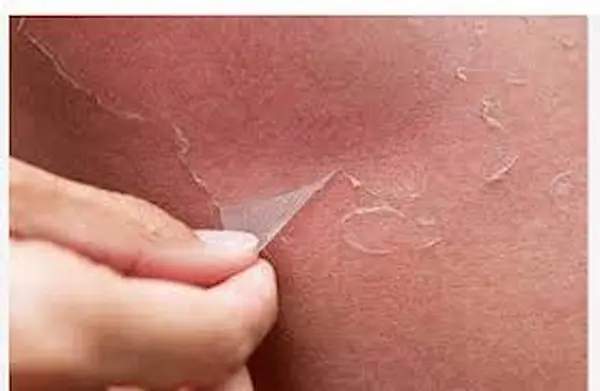
- After that, dead skin is observed to fall off automatically, without any intervention, and the pigmentation is removed along with it.
- It takes about 5 days and this area needs about 5 sessions at most.
Second: natural exfoliation
This can be done by using the recipe of olive oil and sugar. Here are the most important details:
- Add half a cup of peppermint or lavender oil with half a cup of brown sugar, in addition to half a cup of olive oil.
- Combine these ingredients together, rub the area with them, and leave for a quarter of an hour.
- Then the area is washed with lukewarm water, making sure to moisturize it well afterward. This is one of the most important exfoliation recipes for sensitive areas.
The importance of exfoliation for sensitive areas
The process of exfoliating the sensitive area includes several important benefits, the most prominent of which are the following:
- Getting rid of dead skin cells.
- Unifying and lightening skin tone as a result of eliminating pigmentation and dark spots.
- Removing the upper layer of skin, which makes the skin smoother and brighter.
- Getting rid of the hair that grows under the skin, known as (goose skin), and lightening and cleaning the pores.
- It enhances collagen production, which helps eliminate signs of aging and tighten the skin.
- It helps increase the rate of skin absorption of moisturizers, which helps prevent dry skin and makes it softer and more moisturized.
- It stimulates blood circulation, which helps eliminate toxins and nourishes the skin with the necessary nutrients.
How to exfoliate the sensitive area at home
This can be done by using some natural recipes that help exfoliate the sensitive area without using any chemicals. Here are the most important details:
1. Cucumber with potatoes recipe
Add a spoonful of each of sugar and honey with 2 tablespoons of potato juice and cucumber juice and combine these ingredients together, then distribute it on the sensitive area and leave it for a quarter of an hour before rubbing it and rinsing it with lukewarm water.
2. Papaya recipe with vitamin E
Take a spoonful each of papaya, yoghurt and honey, in addition to a vitamin E capsule, then stir these ingredients together until they are completely combined.
Spread it on the area and leave for up to 15 minutes, then wash with lukewarm water and moisturize afterward.
3. Orange peel recipe with milk
Add a spoonful of milk and rose water, as well as dried and crushed orange peels, then stir and distribute on the sensitive area, massaging gently.
Finally, it is washed with lukewarm water and a strong moisturizer is added to avoid dryness of this area.
4. Turmeric recipe with aloe vera
Add a teaspoon of turmeric and a spoonful of aloe vera together, then stir and distribute it gently on the area. Leave it for 30 minutes, then wash with lukewarm water.
Book your consultation now at مركز الجلدية والتجميل At Al Mousa Specialist Hospital.
Tips for exfoliating the sensitive area
There are a set of important tips that must be taken into account when wanting to perform peeling on the sensitive area, which are as follows:
- Make sure to use natural exfoliants and stay away from chemical exfoliants as much as possible, which can cause a lot of damage to the skin.
- Choose a reliable place to perform the peeling in order to guarantee the best results, such as Al Mousa Specialized Center.
- Consult a doctor if you want to exfoliate the sensitive area using ointments.
- Be careful to avoid violence with the skin during the peeling process so as not to cause inflammation of the area.
- Make sure to cleanse the skin well before starting to peel the sensitive area in order to avoid infection and the spread of bacteria.
- Deep moisturizing of the area to prevent it from drying out, preferably without any perfumes.
- Wear cotton clothes so that the area does not sweat and cause redness or inflammation.
- Make sure to remove hair from the area well before the peeling process.
- Avoid removing the skin manually after peeling as it is left to disappear on its own.
In conclusion;
Frequently asked questions
Does exfoliation remove darkening of sensitive areas?
Exfoliation helps remove darkening of sensitive areas, but it is not the only way or the final solution to this matter, as there is a special routine for this area that must be followed while making sure to consult a doctor and find out the best solution, whether creams, peeling, or otherwise.
What is the best peeling for sensitive areas?
It is preferable to exfoliate the sensitive area using natural materials such as fruits or natural oils with sugar because they do not cause sensitivity to these areas, unlike chemical peeling, which may cause a lot of damage to the skin.
Sources
Hydrate & Restore – cerave