
The nose is not just a passage for air, it is a vital organ that affects breathing, sleep, the sense of smell, and even the quality of the voice.
Who is a rhinologist?
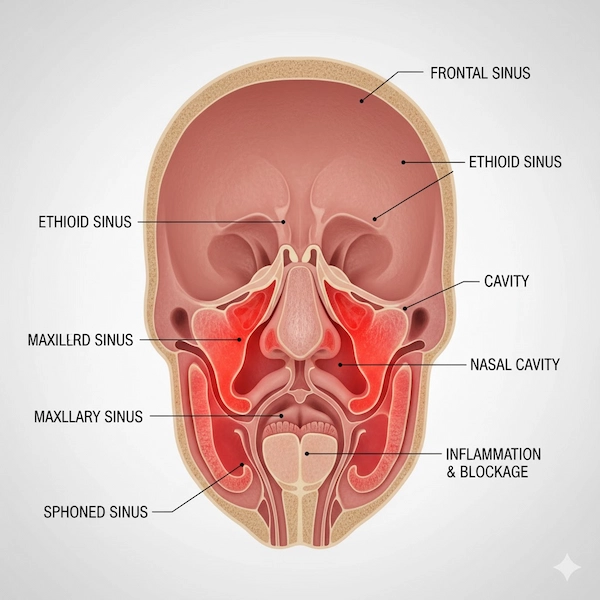
A doctor who specializes in diagnosing and treating diseases that affect the nose and sinuses, and is part of the ear, nose and throat specialty. He has experience in dealing with:
- Nasal breathing disorders.
- Acute and chronic sinus infections.
- Seasonal and perennial allergies.
- مشاكل الشم والتذوق.
- Structural deformities such as a deviated nasal septum.
- Polyps and benign tumors.
- Snoring and sleep apnea.
Symptoms that require a visit to a rhinologist
The following symptoms should not be ignored, Especially if it lasts more than a week or affects your quality of life:
- Permanent or recurrent nasal blockage.
- Headache in the forehead or around the eyes.
- Yellow, green, or odorous nasal discharge.
- Loss or weakness of sense of smell.
- Frequent nosebleeds for no apparent reason.
- A nasal voice or difficulty speaking.
- Snoring or sleep apnea.
- Pain in the face or around the eyes.
- Breathe through the mouth constantly.
The most important examinations performed by a rhinologist
When visiting a doctor, the specialist conducts a series of precise examinations to accurately determine the cause. منها:
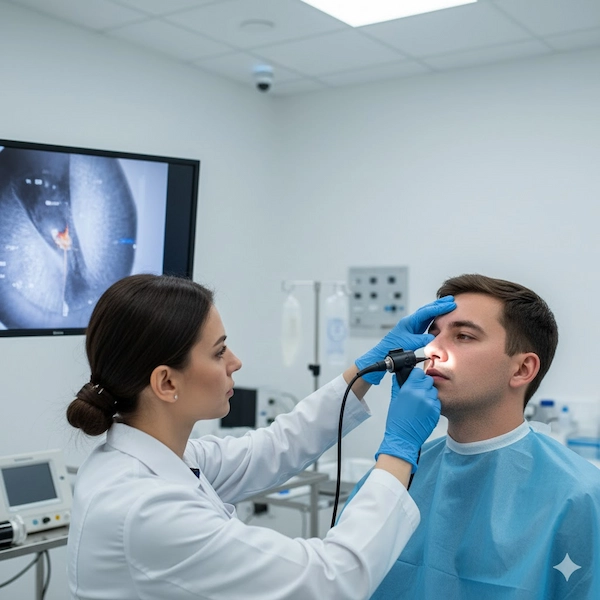
- Endonasal endoscopy
A tiny camera is inserted through the nostril to examine the cavities and sinuses and identify infections or growths.
- CT scan of the sinuses
It is used to evaluate the extent of sinus obstruction or structural abnormalities.
- Smell and taste tests
To determine the extent to which the sensory nerves associated with the nose are affected.
- Nasal allergy tests
It is performed to identify allergens such as dust, pollen, or animals.
- Nasal airflow measurement
It is used to evaluate the efficiency of nasal breathing, especially in cases of deviated septum or polyps.
Treatments provided by a rhinologist
Treatment depends on the type of problem, It includes multiple options:
The importance of the rhinologist in improving the quality of life
Its role is not limited to treating symptoms, Rather, it extends to:
- Restoring the ability to breathe normally.
- Improve sleep quality and get rid of snoring.
- Regaining the sense of smell and taste.
- Reduce dependence on chronic medications.
- Preventing complications such as ear or chest infections.
This technique precisely shrinks enlarged or inflamed tissue without causing bleeding or damage to surrounding tissue. It is characterized by:
- A quick procedure that does not exceed 30 minutes.
- No need for general anesthesia.
- Fast recovery within days.
- Reducing the possibility of symptoms returning.
This option is ideal for patients who do not want surgery or have chronic diseases that prevent them from undergoing anesthesia.
Using a balloon to expand the sinuses (Balloon Sinuplasty)
An innovative technique used to treat chronic sinus obstruction, especially in cases that do not respond to drug treatment.
It is an excellent choice for patients who suffer from sinus headaches, facial pressure, or chronic nasal discharge.
Assisted breathing devices at home
In conditions such as snoring or sleep apnea caused by nasal congestion, The rhinologist recommends the use of assistive breathing devices such as:
- CPAP machine (continuous positive airway pressure):
It is used to stabilize the airways during sleep, preventing obstruction that causes respiratory arrest.
- Air humidifiers:
Reduces dryness of mucous membranes and relieves congestion, especially in dry or air-conditioned environments.
- Nasal cleaning devices with pressure or steam:
It helps remove secretions, reduce swelling, and improve daily breathing.
These devices are used under medical supervision, and are part of an integrated treatment plan to improve the quality of sleep and breathing without surgical intervention.
Do children need a rhinologist?
Early intervention is necessary to avoid the impact of these problems on growth, concentration, and sleep.
Accurate diagnosis using the latest devices
In our center, diagnosis is not left to guesswork or superficial examination; Rather, it is done using advanced technologies such as:
- High-resolution nasal endoscopy.
- Computed tomography of the sinuses (CT).
- Digital smell and taste tests.
- Flow measurement الهواء Nasal.
- Advanced allergy tests.
These tools allow the doctor to accurately view the nasal cavities and determine the real cause of the problem, ensuring the selection of the most appropriate treatment.
Integrated treatments include pharmacological, surgical and functional
The rhinologist in our group does not limit himself to prescribing medications; Rather, it offers comprehensive solutions that include:
- Customized drug treatment according to the type of inflammation or allergy.
- Delicate surgeries such as nasal septum adjustment or endoscopic sinus cleaning.
- Occupational therapy to improve breathing and sleep, especially in cases of snoring or nocturnal apnea.
- Immunotherapy programs for chronic allergies.
Each treatment plan is designed specifically for the patient's condition, with careful follow-up to ensure its success.
Humane care and continuous follow-up after treatment
What distinguishes the rhinologist in our center is the personal attention to each patient. Where it takes place:
- Provide a detailed explanation of the condition and treatment options.
- Follow up on the development of the condition after treatment or surgery.
- Providing psychological support to the patient in cases of loss of smell or sleep disorders.
- Responding to inquiries and modifying the treatment plan as needed.
This continuous care gives the patient a feeling of confidence and reassurance, and contributes to improving his quality of life.
A safe medical environment that combines comfort and technology
Treatment is carried out within an integrated medical environment. تشمل:
- Examination rooms equipped with the latest equipment.
- Strict sterilization system to ensure safety.
- Complete privacy in dealing with sensitive cases.
- A nursing team trained to deal with nasal and sinus conditions.
Frequently asked questions about rhinologists
Does a rhinologist treat loss of sense of smell?
Yes, especially if the cause is related to an infection or stuffy nose.
Does a rhinologist perform rhinoplasty?
Some rhinoplasty specialists have additional training in rhinoplasty, but the patient is often referred to a specialist plastic surgeon if the procedure is for aesthetic purposes only.
Does a rhinologist treat recurrent nosebleeds?
Yes, the cause is evaluated, whether it is high blood pressure, dry membranes, or vascular problems, and the appropriate treatment is provided, which may include cauterization or surgery.
What is the difference between a rhinologist and an ENT consultant?
A specialist is a doctor with a specialist degree in ear, nose and throat, while a consultant has broader experience and additional years of practice, and may be responsible for complex cases or delicate surgeries.
Does treatment always require surgery?
No, many cases are treated medicinally or through non-surgical techniques such as nasal sprays, immunotherapy, or endoscopic sinus cleaning.
تعرف أيضاً على: اهمية جبيرة الانف الداخلية
If you suffer from chronic nasal problems, or are looking for an accurate diagnosis and effective treatment, the rhinologist at our center is your ideal choice.
Visiting a rhinologist is not a luxury, but rather a necessary step when chronic symptoms appear or affect breathing and sleep. Al Mousa Health GroupHealth begins with proper breathing.