
Ear blockage is one of the common problems experienced by many people of all age groups. It often causes an annoying feeling of fullness or temporary hearing loss, and is sometimes accompanied by tinnitus or dizziness that affects daily comfort. There are many causes of ear blockage, ranging from the accumulation of excess wax or the entry of a foreign body, in addition to ear infections, allergies, or even sudden changes in air pressure during travel or diving. It should be noted that understanding the causes helps in determining the appropriate treatment and avoiding possible complications, so with Al Mousa Specialist Hospital we learn together about the most important factors.
What is ear blockage?
Ear blockage is a common condition in which a person feels fullness or pressure inside the ear, and may be accompanied by hearing loss, tinnitus, or dizziness. It occurs as a result of obstacles that prevent sound or air from passing normally into the auditory canal, such as wax accumulation, infections, allergies, the entry of foreign bodies, or changes in atmospheric pressure. It is often temporary and can be easily treated when the cause is known.
Learn about: علاج الم الاذن دليل شامل لفهم الأسباب وطرق العلاج
Causes of ear blockage
The causes of ear blockage vary from simple and temporary to others that require medical treatment, the most prominent of which are:
Hardening of earwax
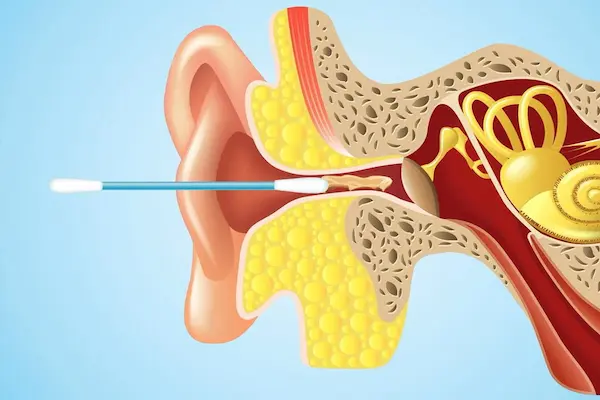
Hardened earwax is a condition in which the wax dries and hardens inside the auditory canal, making it accumulate and difficult to exit naturally. This leads to blockage of the ear, a feeling of pressure, poor hearing, and sometimes tinnitus and dizziness. The problem may increase when trying to clean the ear using incorrect methods, such as using cotton swabs that push the wax further inward. Hardened wax usually requires simple intervention by a doctor to remove it safely through washing, suction, or specialized tools, while avoiding random home methods that may cause damage to the eardrum.
A foreign body enters the ear
The entry of a foreign body into the ear is a common problem, especially in children, as they may unconsciously place small beads or toys inside the ear. It can also happen in adults when a small insect enters during sleep or work. This condition causes a blockage in the auditory canal and may lead to severe pain, tinnitus, hearing impairment, or even bleeding if the ear wall is injured. It should be noted that incorrect handling, such as inserting sharp tools to extract the body, may cause serious complications such as a perforated eardrum, so it is always recommended to see a doctor to remove the foreign body in a safe and quick way.
Middle or external ear infections
Middle or external ear infections are among the most prominent causes of ear blockage and pain, and their nature varies depending on the location of the infection. External otitis often occurs as a result of the entry of contaminated water or bacteria and fungi that lead to swelling of the auditory canal, itching, and pain when touching the ear, while middle ear infection is often associated with viral or bacterial infections after colds or sinus infections, and causes fluid to accumulate behind the eardrum, which leads to pressure, poor hearing, and sometimes high temperature.
Sinus congestion and colds
Sinus congestion and colds are common causes of ear blockage, as the accumulation of mucus secretions and congestion leads to blockage of the Eustachian tube, which is responsible for equalizing pressure between the middle ear and the nose, causing a feeling of fullness, temporary hearing loss, and sometimes annoying tinnitus. This blockage often increases when lying down or while traveling by plane due to pressure changes. In most cases, the blockage disappears with the improvement of the cold or sinusitis, but sometimes the patient may need to use
Atmospheric pressure changes (barotrauma)
Atmospheric pressure changes, or what is known as barotrauma, occur when the pressure changes between the middle ear and the external environment. They are often felt by travelers during take-off and landing of an airplane or by divers in the depths of the sea. This difference also leads to the blockage of the Eustachian tube and its inability to equalize the pressure, causing a feeling of blockage in the ear, severe pain, tinnitus, or even dizziness. In severe cases, a rupture of the eardrum may occur. This condition can be alleviated by chewing gum, yawning, or using a maneuvering technique.
الحساسية الموسمية
Seasonal allergies are among the causes of ear blockage, as exposure to pollen, dust, or irritating factors stimulates the immune system and the secretion of histamine, causing nasal congestion, swelling of the mucous membranes, and blockage of the Eustachian tube, which is responsible for equalizing pressure in the ear. This results in a feeling of fullness in the ear, temporary hearing loss, and sometimes tinnitus or mild dizziness.
Eustachian tube blockage
Eustachian tube blockage is one of the most common causes of ear blockage, as this small channel connects the middle ear to the nose to help equalize pressure and drain fluids. When it becomes blocked as a result of colds, sinus infections, allergies, or even changes in atmospheric pressure, the person feels fullness in the ear, poor hearing, and sometimes tinnitus or mild dizziness. The blockage is often temporary and goes away with treatment of the cause, but if it continues for a long time, it may lead to fluid accumulation behind the eardrum or infections.
Problems with the ear bone or rare tumors
Ear bone problems or rare tumors are considered among the less common causes of ear blockage, but they may be more serious if they are not detected early. Some deformities or changes in the ear ossicles responsible for transmitting sound can lead to hearing loss or a feeling of chronic blockage. Also, the presence of benign or malignant tumors inside the auditory canal or in the middle ear may obstruct the passage of sound and cause symptoms such as tinnitus, dizziness or gradual hearing loss. These cases require careful evaluation by an ear and nose doctor and examinations such as x-rays or
The easiest way to open a blocked ear
The easiest way to open a blocked ear depends on the causes of the ear blockage, but in simple cases such as ear blockage as a result of changes in atmospheric pressure during a plane or diving, you can try yawning, chewing gum, or performing a Valsalva maneuver to open the Eustachian tube. However, if the cause is wax accumulation, you can use wax softening drops sold in pharmacies, while avoiding using cotton swabs that may increase the blockage. In the case of blockage resulting from a cold or allergy, steam inhalation or using a decongestant nasal spray helps.
Book your consultation now at قسم الأنف والأذن والحنجرة At Al Mousa Specialist Hospital.
Ear blocking exercises
After we learned about the causes of ear blockage, come with us to learn about ear blockage exercises that help open the Eustachian tube and relieve the feeling of fullness or pressure inside the ear, especially in cases of cold or changes in atmospheric pressure, the most prominent of which are:
- Valsalva maneuver, where you gently close your nose and mouth and then blow out a little air, until you feel a slight pop in the ear.
- The Toynbee maneuver involves closing the nose while simultaneously swallowing saliva, which helps equalize the pressure.
- Frequent chewing or yawning stimulates the opening of the Eustachian tube naturally.
- Steam and deep breathing exercises, which work by inhaling warm water vapor, relieves congestion and opens the nasal passages.
These exercises are safe in simple cases, but if the blockage persists or is accompanied by severe pain, it is preferable to consult a doctor.
When should I visit the doctor?
It is recommended to visit a doctor in case of ear blockage if the symptoms persist for more than a few days despite the home experiment, or if it is accompanied by severe pain, abnormal or bloody discharge from the ear, noticeable or gradual hearing loss, severe dizziness or loss of balance, or if a foreign body enters the ear and is difficult to remove. It is also necessary to see a doctor immediately if the blockage occurs after a direct injury to the head or ear, or if the patient is a young child suffering from continuous crying or fever, because these symptoms may indicate an infection or a more serious problem that requires urgent medical intervention.
Frequently asked questions
What causes a clogged ear on one side?
One-sided ear blockage may occur as a result of excessive wax accumulation in one ear, or as a result of an infection in the outer or middle ear that leads to swelling and blockage of the auditory canal. It can also arise from a blockage of the Eustachian tube due to a cold or allergy, or the entry of a foreign body, especially in children. Sometimes it is the result of more rare problems such as the presence of a tumor or defect in the ossicles of the ear, so it is advised not to neglect the symptoms, especially if they persist for a long time or are accompanied by pain and noticeable hearing loss.
When is ear blockage dangerous?
Ear blockage is dangerous when it continues for a long time without improvement, or if it is accompanied by sudden or gradual hearing loss, severe pain that does not go away, purulent or bloody discharge from the ear, dizziness, loss of balance, or high temperature. It is also dangerous if it occurs after a direct injury to the head or exposure of the ear to strong trauma, as these signs may indicate an acute infection, a perforation of the eardrum, or the presence of a more serious problem such as a tumor. In these cases, you must see a doctor urgently to avoid complications.
What diseases cause ear blockage?
There are several diseases that may cause ear blockage, including middle or external ear infections that lead to fluid accumulation or swelling of the auditory canal, sinus infections and colds that cause blockage of the Eustachian tube, in addition to seasonal allergies that lead to nasal and ear congestion. Blockage can also be associated with more rare diseases such as problems with the ear ossicles or benign and malignant tumors inside the auditory canal or middle ear. It may be the first symptom of some autoimmune diseases that affect hearing, so early diagnosis is required to determine the cause and treat it.
If you suffer from recurring or persistent ear blockage, do not neglect the symptoms. Early diagnosis helps you avoid complications and protect your hearing. Book now at Al Mousa Specialist Hospital, where you will find a team of doctors specializing in ear, nose and throat to accurately diagnose the cause and provide optimal treatment with the latest medical technologies.
Medical sources
healthline – Why Does My Ear Feel Clogged
mayoclinic – Plugged ears: What is the remedy?
