
There are many skin diseases that cause skin rashes and itching, and among these diseases is urticaria, also known as urticaria.
What is skin allergy urticaria and its types?
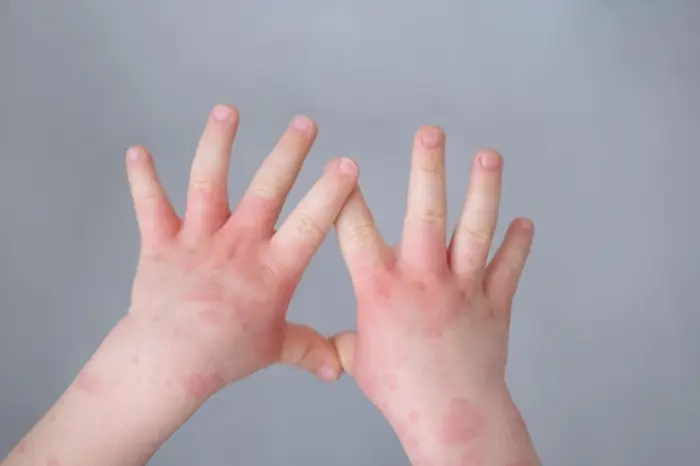
It is a skin condition that appears as red bumps or spots on the skin.
The size of these bumps can range from small to large.
Anyone may develop urticaria when the body suffers from an allergic reaction, when the immune system comes into contact with allergens.
Types of urticaria
-
Acute urticaria
This type appears suddenly and lasts for a short period of less than six weeks.
-
Chronic urticaria
This type occurs at least twice a week, and lasts for a period of more than six weeks up to months or years, and there is usually no reason behind this type.
-
Induced urticaria
Some people may develop this type when exposed to cold, heat, or sun.
This type appears within an hour after exposure.
Causes of urticaria
The causes vary depending on the type of urticaria, as follows:
Causes of acute urticaria
Often, this type occurs as a result of the release of histamine in the body from the body cells, as an allergic reaction to a specific thing, such as food, drink, medicine, etc.
Urticaria triggers may include:
- Some foods may cause urticaria حساسية الجلد من الأكل, such as peanuts, eggs, and nuts.
- وبر الحيوانات الأليفة.
- حبوب اللقاح.
- Some plants.
- لدغات الحشرات.
- Viral infections, including the common cold and hepatitis.
- Bacterial infections, including urinary tract infections and sore throat.
- Medications, such as antibiotics (especially penicillin and sulfa), aspirin and ibuprofen.
- Physical stimuli, such as pressure, cold, heat, exercise, or exposure to sunlight.
Causes of chronic urticaria
Unlike acute urticaria, chronic urticaria is not usually caused by allergies.
In general, it can be difficult to determine the cause of chronic urticaria.
The most important symptoms of urticaria
Symptoms of urticaria allergy vary from person to person, and these symptoms may include the following:
- Raised, swollen bumps on the skin, ranging in size from a pinprick to several inches in size.
- The bumps may be red, pink, or skin-colored.
- When you press on these bumps, the center of the bumps turns white.
- حكة في الجلد.
- Swelling of the tissue under the skin.
- Painful swelling may also appear around the lips, eyes, and inside the throat.
The symptoms of acute and chronic urticaria are similar, but chronic urticaria may appear and disappear and then reappear again at least every few days for long periods, up to months or years. Book your consultation now at مركز الجلدية والتجميل At Al Mousa Specialist Hospital.
People most susceptible to urticaria, also known as urticaria
Anyone can develop urticaria, with one in five children or adults experiencing an episode of severe urticaria during their lifetime.
Although urticaria in newborns and infants is uncommon, it can occur in them.
Urticaria in children is usually caused by infection, but can also be caused by food, medications, and inhaled allergens.
Types of food that cause urticaria
The type of food that causes hives or urticaria varies from one person to another.
- القمح.
- milk.
- الشوكولاتة.
- Dairy products, such as yogurt and cheese.
- البيض.
- الفول السوداني.
- فول الصويا.
- Peas and chickpeas.
- Shellfish, such as shrimp and crab.
- Nuts, such as walnuts, almonds, hazelnuts, cashews, and pistachios.
- Some fruits, such as strawberries and bananas.
Is skin urticaria a contagious disease?
Urticaria or urticaria is not a contagious skin disease, but if it occurs due to exposure to secretions of a plant such as poison ivy, the patient can spread these secretions to others.
How to diagnose urticaria
A doctor can diagnose urticaria just by looking at the skin.
Allergy tests include:
- اختبار الجلد: During this test, the doctor tests different allergens on the skin.
- اختبارات الدم: This test is used;
Is urticaria dangerous?
Allergy to urticaria is not a serious disease;
However, in more severe cases, allergic reactions can cause angioedema, which is severe swelling of the bronchi and lungs.
Angioedema is a life-threatening condition that requires rapid medical intervention, as the doctor gives the patient an epinephrine injection in this case.
In some cases, urticaria may negatively affect a person's life, making them feel stressed or anxious and can even lead to depression.
Methods of treating urticaria
Determining the appropriate treatment depends on the cause and type of urticaria, as follows:
Treatment of acute urticaria
Some home remedies can help soothe the itching until the rash goes away, if the symptoms are mild and appear after exposure to a specific allergen.
Your doctor may prescribe certain medications, including the following:
- Antihistamine medications.
- Soothing ointments and creams to reduce itching.
- Antiseptic creams to prevent secondary infections.
- Apply a topical corticosteroid for a short period.
- Epinephrine injection for emergency use.
Treatment of chronic allergic urticaria
A person with chronic urticaria may need to take antihistamines regularly until symptoms go away.
Your doctor may prescribe omalizumab, an injectable medication that blocks immunoglobulin E, a substance that plays a role in allergic responses.
Ways to treat allergic urticaria at home
It can be treated at home with many effective methods, including the following:
كمادات باردة
Applying a cool, damp cloth to the affected area may help relieve irritation and swelling, and reduce inflammation.
Apply cold compresses for up to 10 minutes, then repeat as needed throughout the day.
Bathing with an anti-itch solution
Many products, such as oatmeal and baking soda, soothe the skin and reduce irritation when bathed in them.
Keeping the body cool
Exposure to high heat may increase itching and inflammation.
Aloe vera
Aloe vera has some healing properties that help soothe and reduce urticaria.
Keeping in mind that it is best to perform a test on a small spot on the body before applying aloe vera to a wider area.
Ways to prevent allergic urticaria
Prevention methods vary depending on the type of urticaria, as follows:
Prevention of acute allergic urticaria
Acute urticaria allergy can be avoided, after conducting allergy tests and knowing the substances that cause urticaria.
Prevention methods may include:
- Avoid eating causative foods.
- Reduce exposure to airborne allergens.
- Use scent-free detergents and soaps.
- Avoid extreme temperature changes.
- Take a break when feeling stressed or exhausted.
- Wear loose, lightweight clothing.
Prevention of chronic allergic urticaria
This type may be difficult to prevent, because it may be difficult to determine its exact causes.
In conclusion, it is clear that allergic urticaria is a common skin disease that can appear for many reasons.
Don't let urticaria hold you back, book now and get rid of itching and irritation.
Frequently asked questions
When does urticaria allergy go away?
Urticaria or urticaria may disappear from a few hours to up to a week or two.
If urticaria is the result of an allergic reaction, it may last longer and require medical treatment.
In some cases, chronic urticaria can last for months or even years.
Is urticaria a skin or immune disease?
Allergic urticaria or urticaria is an autoimmune skin disease.
Also, in some cases, urticaria may be due to some autoimmune diseases such as lupus.
Urticaria falls under the section of skin diseases;
Does urticaria cause death?
Usually, urticaria does not cause death.
Sources and references
What are hives – cleveland clinic
Check if it’s hives – nhs
