
Inflammation of the seventh nerve appears in the form of a sudden loss of strength or partial paralysis of the facial muscles, which causes anxiety and dread in the patient and those around him.
What is the seventh nerve?
1. Cranial nerve VII is also known as the facial nerve CN VII.
2. It is the nerve responsible for many of the nerve signals issued and received in the head and neck.
3. It carries nerve fibers that control facial movement and natural expressions. It also carries nerves related to taste to the front two-thirds of the tongue and the secretion of tears from glands in the eyes.
4. It has small branches that participate in reducing ear sensitivity to noise, and many other functions.
5. The facial nerve originates from the brain stem, and extends to the face and neck, and its extension is near the eighth nerve, which makes it have an impact on the external ear and the sense of hearing and balance as well.
6. Death or damage to the seventh nerve may lead to symptoms, such as difficulty smiling, blinking, moving the mouth, tasting, and others.
Inflammation of the seventh nerve
Inflammation of the seventh nerve is known as Bell's palsy or Bell's palsy
1. It is a condition in which the facial nerve becomes inflamed
2. The effect of this appears in the form of weakness or paralysis of the muscles of one side of the face.
3. The condition usually appears suddenly and worsens over 48 hours.
4. More common in pregnant women, and individuals with some predisposing factors, e.g مرض السكري Influenza, colds, or other upper respiratory illnesses.
It is also worth noting that Bell's palsy affects men and women in the same proportion, and is less common in individuals under the age of 15 or over the age of 60.
Inflammation of the seventh nerve in the ear
Inflammation of the seventh nerve in the ear is a medical condition among the cases of paralysis of the facial muscles. Inflammation occurs when:
1. The seventh nerve, which controls facial movement and expressions, is affected.
2. Or be The cause in most cases is a viral or bacterial infection of the middle or inner ear.
3. Or it is due to viral infections, such as a cold, influenza, or shingles virus, which causes inflammation.
Although the disease refers to the seventh nerve, it extends to include the ear, and given the relationship between seventh nerve inflammation and the ear, in most cases the pain is behind the ear, and is one of the first symptoms of seventh nerve inflammation. The pain is severe and can increase with movement. Seventh nerve inflammation is also associated with middle ear infection, which increases the feeling of pain and discomfort. The individual may also suffer from difficulty hearing sounds in the ear due to weakness of the facial muscles affecting the function of the ear canal.
يمكنك قراءة Symptoms of seventh nerve infection: causes, treatment, and how to diagnose
What are the symptoms of the seventh nerve?
Symptoms of Bell's palsy vary from person to person, but the most common signs are:
1. Weakness or paralysis of the facial muscles on one side.
2. Difficulty in making natural facial expressions, such as smiling, staring, or moving the eyelid.
3. Drooping corner of the mouth and sagging eyebrow.
4. Loss of sensation in the face.
5. Headache.
6. Dryness or increased eye sensitivity on the affected side due to decreased tear production.
7. Loss of sense of taste, especially the front side of the tongue.
8. Hypersensitivity of hearing in the affected ear.
9. Inability to close the eye on the affected side of the face.
It is important to remember that these symptoms may resemble other conditions or medical problems that also carry a high risk, so it is necessary to consult a neurologist;
Symptoms of seventh nerve infection before it occurs
Symptoms that indicate an injury to the seventh nerve vary depending on the underlying cause.
- Pain or discomfort behind the ear on the affected side.
- Early signs of facial muscle weakness appear.
- Slight fever.
- The nasolabial folds appear clearly, and changes in the appearance of the mouth.
- Unusual contractions or movements on the affected side.
These symptoms may indicate the onset of injury or damage to the seventh nerve.
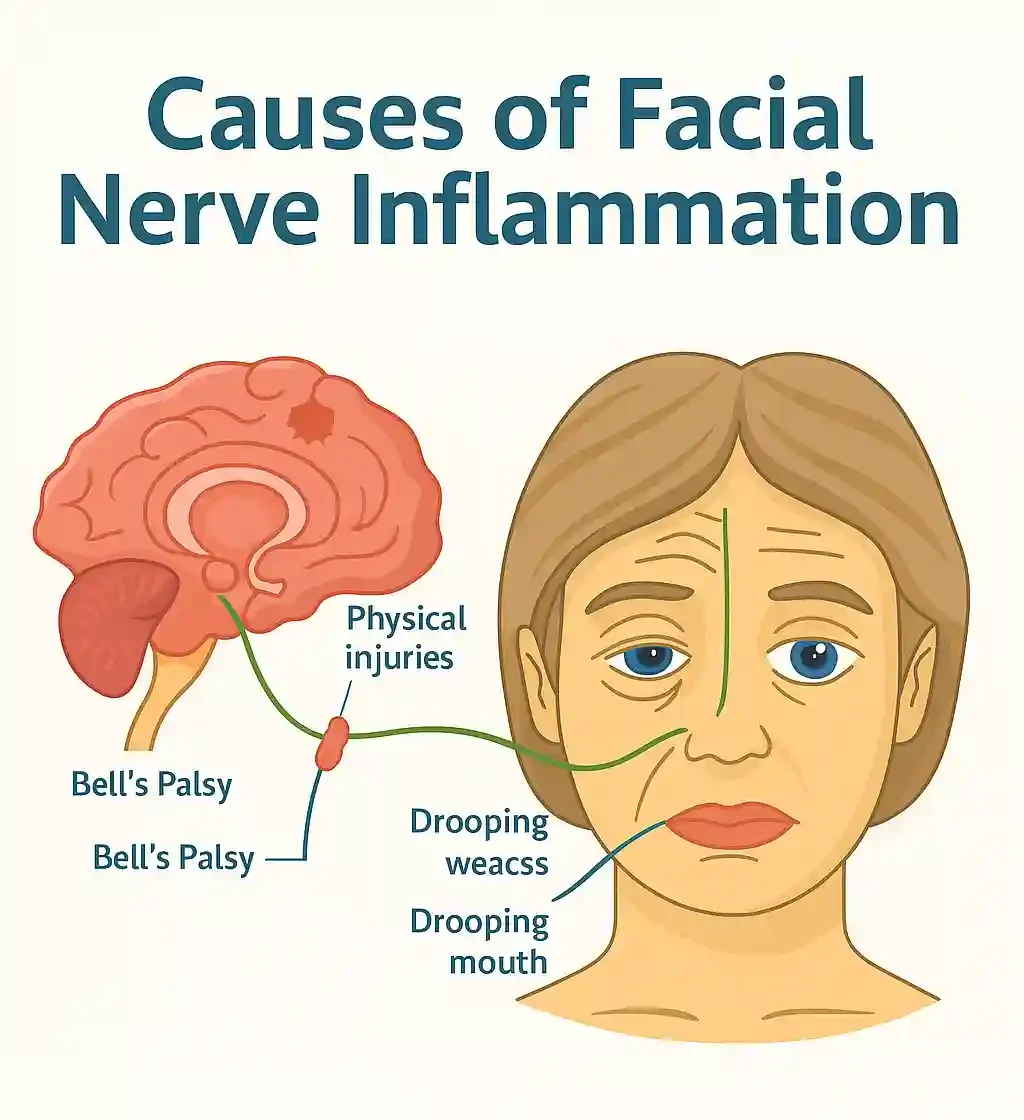
Causes of seventh nerve inflammation
The exact cause of Bell's palsy is still unknown, however, it is thought to be related to inflammation directed by the body's immune system against the facial nerve.
Some factors have also been linked to its development or occurrence in individuals.
- The presence of some chronic diseases, the most important of which are diabetes and high blood pressure.
- Injury. Facial neuritis can occur as a result of physical trauma, such as a skull fracture or injury to the face or neck.
- Viral infections, especially after herpes simplex virus infection and shingles.
- Exposure to upper nerve cell lesions, such as stroke, multiple sclerosis, subdural hemorrhage, and intracranial tumors.
- Exposure to some toxins.
- Cases of Lyme disease, a bacterial disease caused by a tick bite.
- Guillain-Barre Syndrome, a rare disorder in which the immune system attacks the nerves.
- Myasthenia and autoimmune diseases, such as multiple sclerosis.
It is important to note that the presence of any of these factors does not guarantee the development of Bell's palsy, but it may increase the risk.
Book your consultation now at مركز العلوم العصبية At Al Mousa Specialist Hospital
How is seventh nerve infection detected?
Diagnosis of Bell's palsy usually includes a comprehensive examination of the patient's symptoms and medical history. While there are no specific tests used to diagnose trigeminal neuralgia, there are tests done to rule out other conditions with similar symptoms or to determine the extent of nerve damage. These may include:
- Electromyography (EMG);
- blood tests;
- Magnetic resonance imaging (MRI) or computed tomography (CT) scan;
It is important to note that these tests are primarily performed to eliminate other possible causes and confirm the diagnosis of Bell's palsy.
Treatment of seventh nerve infection
The treatment approach for Bell's palsy depends on the underlying cause if it is found, but if no clear cause is identified, such as an infection, the doctor treats the symptoms individually based on their severity.
An essential aspect of Bell's palsy treatment is protecting the eyes from dryness during sleep or prolonged computer use.
In addition to eye care, doctors may suggest several treatment options based on individual circumstances, including:
- Steroids, which are commonly prescribed to reduce inflammation and promote healing.
- Antiviral medications, such as acyclovir, especially if your doctor suspects a viral infection.
- Analgesics and antipyretics, to relieve pain and symptoms.
- Physical therapy, as it may help treat the facial nerve by stimulating muscle function and accelerating the healing process.
Some individuals may choose to resort to alternative treatments, such as relaxation techniques, acupuncture, electrical stimulation, or treatment with vitamins, including B12, B6, and zinc. However, the effectiveness of these methods in treating Bell's palsy has not been scientifically proven, but they may be a contributing factor in recovery.
Is seventh nerve infection dangerous?
Trigeminal neuralgia is not serious in itself, however, in some cases, it can lead to significant functional disability and impact on quality of life, if left untreated.
Most individuals recover and regain their full ability to express and move their face within two weeks to six months after the onset of symptoms.
Does seventh nerve paralysis cause harm?
Some complications of untreated facial nerve damage are likely to include:
1. Permanently inconsistent facial appearance and movement.
2. Oral health problems due to lack of saliva.
3. Corneal ulcers resulting from dehydration and inability to blink properly.
4. Psychological distress as a result of appearance changes and social challenges.
It is essential to consult a specialist immediately if you suspect facial nerve damage to ensure proper evaluation and management of your condition.
Signs of improvement of the seventh nerve
As individuals progress through the treatment process and move toward recovery, gradual signs of improvement may be observed, including:
- Regain strength and ability to control facial muscles.
- Improves the ability to close the eye on the affected side of the face.
- Reduced pain and comfort.
- Restoring the sense of taste on the front side of the tongue.
- Reducing hearing sensitivity in the affected ear.
It is important to remember that the healing process varies from person to person, and patience is key.
Frequently asked questions
How do I know that I have the seventh nerve?
There are two ways to determine the location of the seventh nerve and determine whether you have it or not. They are visual examination and tactile examination, as the seventh nerve is located behind the ear and facing the outer ear. In most individuals, the point where the nerve exits from the skin can be seen as a small bump in front of the outer ear. This bump may be more noticeable in some individuals than others. Also, through tactile examination, the finger is carefully placed behind the outer ear, and press it gently. You will feel the small bump under the skin, and you will feel a slight tingling sensation when pressed.
As for the most common symptoms, they include weakness or paralysis in the facial muscles, difficulty in showing expressions, drooping in the corner of the mouth, and pain behind the ear. When you notice any of these symptoms, you must consult a doctor for an accurate diagnosis and the necessary tests, so that the doctor will immediately provide you with the appropriate treatment according to your health condition.
Does the seventh nerve come on suddenly?
In fact, the seventh nerve does not come suddenly. In fact, there are a number of common causes that develop problems with the seventh nerve over a period of time, and the most important of these reasons are the following:
- Inflammation of the seventh nerve occurs as a result of a viral infection such as syphilis or scarlet fever. The inflammation also causes swelling and pressure on the nerve, leading to gradual weakness in functions.
- Pressure can occur on the seventh nerve due to a tumor or sprain in the head and neck area, and injuries to that area, such as fractures or wounds, can gradually lead to damage to the seventh nerve.
- Genetic disorders and weakness may also cause damage to the seventh nerve.
It should be noted that in most cases, seventh nerve problems develop slowly, and seventh nerve problems do not occur suddenly except in some rare cases, but you should consult a doctor if you notice any weakness or changes in your facial functions.
Does the psychological state affect the seventh nerve?
There is a relationship between the psychological state and problems affecting the seventh nerve, and this relationship is represented in the following:
- Chronic stress and anxiety, which negatively affect the seventh nerve, as the secretion of stress hormones increases when a person is in a state of constant anxiety or stress, which causes inflammation and swelling in the seventh nerve, which gradually leads to weakness in its functions.
- Negative psychological states, such as tension and depression, affect the ability to move the facial muscles, which are controlled by the seventh nerve, as the muscle tension that results from the psychological state leads to weakness and imbalance in facial muscle movement.
- Moreover, deterioration in the functions of the seventh nerve can have negative psychological effects on the patient, and changes in facial expressions and weakness in facial muscle movement cause psychological problems.
Thus, the relationship between the psychological state and the seventh nerve is a mutual relationship, as each of them affects the other. Therefore, the problem must be solved, whether by treating the psychological problem or treating the seventh nerve.
Is massage beneficial for the seventh nerve?
Massage can be useful for treatment, and in some cases there are a number of methods required for massage that help improve nerve functions, as a light massage of the face and neck helps stimulate blood circulation and improve nerve nutrition, and massage helps reduce swelling and inflammation that is associated with nerve problems, and it helps relieve muscle tension and spasms in the area.
Massaging pressure points on both the face and neck is also beneficial, as it is linked to the seventh nerve, and a light massage improves its functions. In some cases, targeted massage of the facial muscles is beneficial as it contributes to reactivating and strengthening muscles weakened due to problems with the seventh nerve.
The most important benefits of nerve massage include improving blood circulation by supplying the muscles with oxygen, relieving pain and helping to relax the muscles, alleviating pain, and restoring the natural movement of the facial muscles. It also helps speed up the healing process by stimulating the healing process of nerve fibers.
Although seventh nerve inflammation may be a worrying challenge, signs of improvement can be noticed gradually during the treatment journey, without any complications, which makes it necessary for those affected to adhere to treatment and appropriate care, to restore their natural facial appearance and daily expressions, and to enjoy life with confidence again.
Sources and references
Bell’s palsy – mayo clinic
Bell’s Palsy – cleveland clinic
