
As medical professionals working at Almoosa Hospitals Group, we are proud to provide the services of Almoosa Occupational Therapy Center as an essential part of the rehabilitation care system we provide to patients of all ages.
Occupational therapy is considered the cornerstone of the rehabilitation journey, not only on the physical level, but also on the psychological, social and functional levels, which is directly reflected in the quality of life of patients, their self-confidence and their ability to interact with their environment naturally and effectively.
What is Almoosa Occupational Therapy Center?
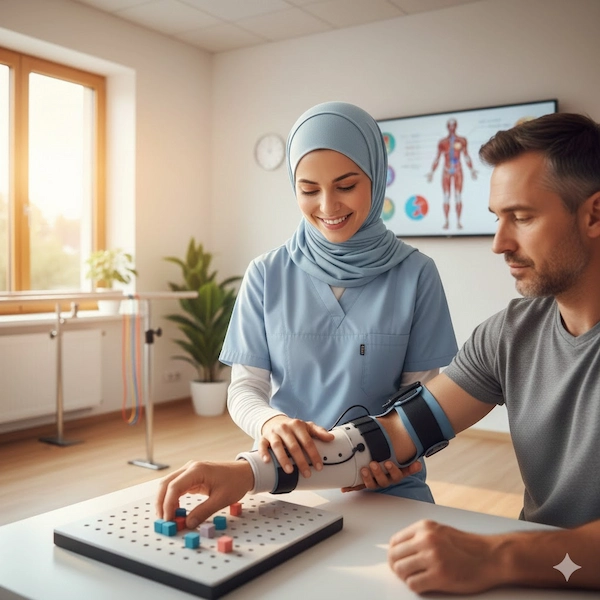
Almoosa Occupational Therapy Center is a specialized medical unit within the Almoosa Hospitals system, focusing on providing occupational therapy services to individuals who face difficulties in performing daily activities due to injuries, diseases, developmental disorders, or the natural process of aging.
In this center, our medical team relies on a comprehensive assessment of each person’s condition, followed by developing an individual treatment plan that includes exercises, educational activities, practical exercises, and strategies to modify the patient’s environment to ensure the best possible treatment results.
The center offers an integrated range of services that combine high medical expertise and a humane approach that places the patient's needs at the heart of every treatment plan.
Why is occupational therapy important?
Occupational therapy is one of the medical specialties that focuses on enabling individuals to perform daily activities with the greatest degree of independence, whether they suffer from motor, cognitive, or sensory difficulties. This type of treatment helps patients:
- Regaining the ability to perform basic activities such as eating, dressing, bathing, and moving from one place to another.
- Improve fine motor and gross motor skills.
- Learn to use appropriate supportive tools and techniques to facilitate daily life.
- Modifying the surrounding environment to ensure safety and reduce the risk of accidents.
These elements make occupational therapy an essential part of the recovery journey and preventing the recurrence of difficulties, whether at home, work or the community.
Read also: A comprehensive guide to what occupational therapy is
Who benefits from the services of Almoosa Occupational Therapy Center?
Almoosa Occupational Therapy Center’s services are not limited to a specific age group, but rather extend to various ages and medical conditions that require specialized rehabilitative intervention. Among the beneficiary groups:
1. Children
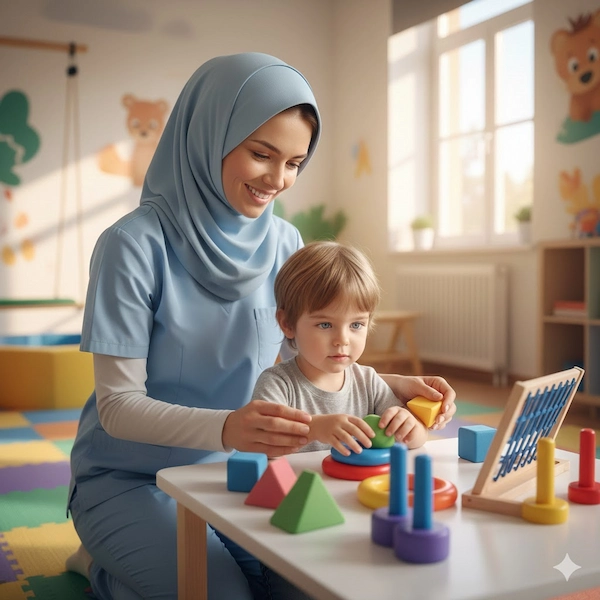
Children with difficulties in motor or cognitive development, or disorders such as delayed fine motor skills, attention disorders, and autism, may find effective support in occupational therapy programs that help them improve their participation in school, home, and social life.
2. Adults
Adults who have suffered accidents or complex surgeries, or who suffer from decreased motor or sensory abilities as a result of a chronic illness, can benefit from occupational therapy programs that restore their confidence in movement and reduce dependence on others.
3. The elderly
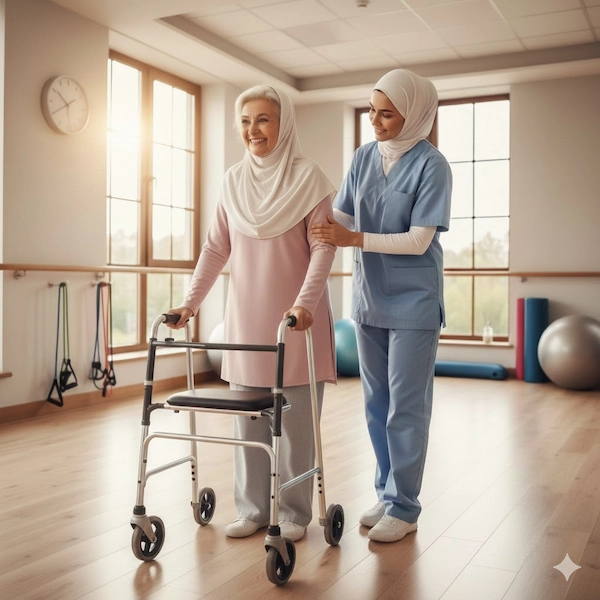
As older adults age, they may lose some motor skills or balance. This may increase the risk of falling or relying on others to perform basic tasks. Occupational therapy provides them with training designed to improve balance, promote daily independence, and reduce the risk of falling.
4. People with special needs
This includes individuals with physical or mental disabilities who need support to develop their daily skills, and to provide a more suitable environment for them to live safely and comfortably.
Read more about Occupational therapy for children
Therapeutic services available at the center
The services provided by Almoosa Occupational Therapy Center vary to meet the multiple needs of patients. Among the most prominent of these services:
1. Comprehensive medical evaluation
Treatment begins with a careful assessment of the patient's condition, including motor, cognitive, and functional abilities, with the aim of identifying strengths and weaknesses and setting clear treatment goals in line with his needs.
2. Customized treatment methods
The treatment plan includes a set of exercises and activities that focus on:
- Enhance muscle strength and motor control.
- Improve balance and coordination.
- Developing sensory and cognitive skills.
- Support the ability to perform daily tasks safely.
3. Training on the use of supports and devices
Patients are trained to choose and use appropriate supportive devices such as wheelchairs, crutches, braces, etc. to suit the individual’s needs, which enhances their independence in daily movement.
4. Modifying the surrounding environment
One of the most important components of occupational therapy is creating the patient's environment so that it is safe and easy to use, through modifications in the home or workplace to improve safety and reduce risks.
5. Family support and participation
We don't just treat the patient;
6. Developing cognitive skills
Educational and training activities help improve concentration, memory, and organization of daily tasks, especially for patients with cognitive difficulties.
7. Psychological and social support
Improving the ability to perform daily activities enhances self-confidence and reduces feelings of frustration and isolation, which reflects positively on the patient’s psychological and social health.
How are occupational therapy sessions conducted at the center?
- Occupational therapy sessionsIt is carried out according to organized steps that reflect our medical experience and take into account the individual differences of patients:
- Reception and recording of medical historyComprehensive information is collected about health status, treatment goals, and motor or cognitive limitations.
- Job performance evaluation: The patient's ability to perform basic daily tasks is measured to determine the level of challenges and skills required.
- Design an individual treatment programBased on the assessment, a customized treatment plan is developed that includes activities and exercises aimed at improving different abilities.
- Practical training sessionsThe therapist conducts practical sessions with the patient that include motor exercises, sensory activities, and cognitive skills development as needed.
- Re-evaluation and modificationProgress is evaluated periodically and the treatment plan is modified according to improvement or changes in the patient’s needs.
How are assistive technology such as gadgets or special devices used?
At Almoosa Occupational Therapy Center, modern supportive technologies and devices play an essential role in enabling patients to achieve the highest levels of independence and reduce dependence on others through the use of smart and advanced tools that are integrated into the occupational treatment plan.
- Various devices to enhance functionality: Assistive technology includes devices such as advanced wheelchairs, modified home appliances, braces, and alternative communication devices that help patients perform daily tasks easily and safely without constant assistance.
- Integration of smart technology with treatment: Assistive technology is combined with smart technologies such as voice communication devices, task management apps, and digital systems that improve learning, communication, and mobility, enhancing patients' abilities to interact with their environment more effectively and reducing the need for direct support from caregivers or family.
- Selection and training of specialists: Assistive technology is not limited to the mere availability of devices. Rather, the occupational therapist intervenes to assess the patient’s needs, select the most appropriate devices, and train the patient to use them effectively and safely to ensure maximum benefit and achieve therapeutic goals. This approach ensures that technology is a real part of rehabilitation and achieves a tangible improvement in quality of life and independence of daily functioning.
Find out more about: Health care skills training
Modern supporting technologies and devices
Here are concrete examples of devices used in occupational therapy to support independence and reduce dependence on others:
Mobility devices
- Manual and electric wheelchairs: It helps people with mobility difficulties move around within the home and community, and improves their independence.
- Gait Trainer: A device that helps patients learn or relearn how to walk safely and with support.
- Walkers/Rollators: Tools that provide additional balance while walking and reduce the risk of falling.
Tools for daily activities
- Upgraded handles and tools: Tools to facilitate dressing, eating, opening lids, and daily use of objects.
- Shower seats and safety bolsters: Increases safety during bathing and reduces dependence on assistants.
Support communication and sensory functions
- Supportive communication devices: Such as text or audio communication media to help interact with people with speech or hearing difficulties.
- Voice recognition software and interface modification capabilities: Facilitates the use of smart devices and interaction with applications.
Intelligent technology and environmental modification
- Smart home appliances: Such as systems that allow lighting, doors, and appliances to be controlled via phone or voice commands to enhance home independence.
- Advanced prosthetic and prosthetic limbs: Helps restore movement and functions of damaged or lost limbs.
Various recent examples of supportive techniques in occupational therapy:
- Virtual Reality and Augmented Reality (VR/AR): Virtual reality is used to create safe training environments that mimic real-life tasks, helping patients develop movement, coordination, and interaction in a simulated environment before applying them in real life.
- Robots and Exoskeletons: Robotic devices and exocycle systems support patients in improving walking, movement, and repetition of exercises in an advanced manner, especially in cases of... Spinal cord injuries And strokes.
- Smart wearables: Smart watches and wearable sensors track movement, activity level, and biometric functions in real time, helping the therapist customize precise treatment programs based on real-time data.
- Artificial intelligence and data analysis: Artificial intelligence is used to analyze motor performance data and anticipate patient needs, which helps improve planning and personalized treatment
These examples represent only a portion of the assistive technology available, and each device is selected and customized according to the patient's needs and functional goal within the occupational therapy plan.
What distinguishes Almoosa Occupational Therapy Center?
Almoosa Occupational Therapy Center is distinguished by several elements that make it at the forefront of rehabilitation services:
- A comprehensive and integrated therapeutic approach that takes into account the physical, mental and behavioral aspects of the patient.
- A specialized medical team with high experience in designing and implementing effective treatment programs.
- A safe therapeutic environment equipped with the latest tools that facilitate the achievement of therapeutic goals.
- Focus on modifying the environment and family support to ensure that treatment strategies are implemented outside of therapy sessions.
- A humane treatment vision that puts the patient's needs first, with the aim of enhancing his quality of life in the long term.
- When you visit Almoosa Occupational Therapy Center at Almoosa Hospitals Group, you will find an integrated team of medical specialists who work with you step by step to clearly set and achieve measurable treatment goals.
- Our goal is for you to return to your normal life with the greatest possible strength, confidence, and independence, and for you to feel that every effort you make with us brings you closer to a healthier, more active, and more comfortable life.
Frequently asked questions about Almoosa Occupational Therapy Center
What is the difference between occupational therapy and physical therapy?
Occupational therapy focuses on enabling the patient to perform daily activities such as dressing, eating, moving around the home, and managing life tasks, while physical therapy focuses on improving general mobility, strength, flexibility and reducing pain.
How long is each session?
The duration of the treatment session usually ranges between 30 to 60 minutes, and may vary depending on the patient’s condition and treatment needs.
Do you see clear and quick results from the treatment?
Yes, gradual improvement in the ability to perform daily activities often appears after several sessions, and this depends on the patient’s adherence to the treatment plan.
Does the patient need assistive devices?
Each patient's need for assistive devices is assessed and trained to use them safely and efficiently as part of the treatment plan.
Is Almoosa Hospital government or private?
Almoosa Hospital is a private hospital that was established in Al-Ahsa in 1996 as the first private hospital in the Eastern Province of the Kingdom of Saudi Arabia.
What is an occupational therapy session?
An occupational therapy session is a treatment session led by an occupational therapist to develop skills in performing daily activities, including individual exercises and exercises to improve movement and autonomic functions.
What problems require occupational therapy?
Occupational therapy is used for conditions that impair daily activities such as brain or spinal cord injuries, strokes, poor mobility, developmental disabilities and chronic conditions that affect life functions.
Conclusion
After we reviewed in this article the importance of the role of Almoosa Occupational Therapy Center in supporting patients and regaining their daily independence, we affirm our continued commitment to providing distinguished and personalized therapeutic care that puts the needs of each patient in the first place with a strong focus on practical results and real improvement in quality of life. We also invite you to contact us at Al moosa Specialist Hospital؛ إذا كنت تبحث عن دعم فعّال لك أو لأحد أفراد أسرتك في رحلتكم نحو التعافي الوظيفي، فريقنا الطبي مستعد للإجابة على استفساراتك وتقديم خطة علاجية مصمّمة خصيصًا لك، Book Appointment.
