Almoosa Health · Medical specialties

Physical Therapy

Support for movement and recovery.

Overview

Physical therapy is often the lifeline back to mobility, independence, and daily functioning when recovering from an illness, injury, or surgery.
Our goal is to improve mobility, strength, balance, and functional ability so each patient can achieve their highest possible level of physical performance and quality of life.

Our physical therapists work as part of an interdisciplinary rehabilitation team, collaborating closely with patients and their families to create individualized care plans.
We provide physical therapy across multiple settings—including inpatient rehabilitation and outpatient clinics—ensuring a seamless, coordinated, and patient-centered recovery journey.

Physical therapy helps address movement impairments by:

  • Correcting abnormal movement patterns
  • Preventing scar tissue and stiffness
  • Increasing flexibility and joint mobility
  • Strengthening muscles and correcting imbalances
  • Reducing pain and preventing further injury
  • Improving overall quality of life

What We Treat

We provide specialized evaluation and treatment for a wide range of conditions that limit movement, function, and physical performance, including:
  • Back, neck, shoulder, knee, and joint pain
  • Tendonitis, muscle strain, ligament injuries
  • Post-fracture stiffness and weakness
  • Post-operative rehabilitation (ACL, TKR, rotator cuff, spine surgery)
  • Scoliosis, posture disorders, chronic musculoskeletal pain
  • Stroke rehabilitation
  • Spinal cord injuries
  • Traumatic and acquired brain injury
  • Parkinson’s disease, multiple sclerosis, neuropathies
  • Gait, balance, and coordination disorders
  • Cerebral palsy
  • Developmental motor delays
  • Neuromuscular disorders & congenital myopathies
  • Gait and balance disorders
  • Aquatic therapy
  • Cardiopulmonary rehabilitation
  • Foot & ankle physical therapy
  • Gait and balance rehabilitation
  • Headache and cervical management
  • Lymphedema management
  • Orthopedic and sports rehabilitation
  • Parkinson’s disease rehabilitation
  • Pelvic floor physical therapy
  • Pediatric physical therapy
  • Functional Capacity Evaluation (FCE)
  • Reduced strength, endurance, or mobility
  • Chronic pain
  • Movement dysfunction
  • Limitations in performing daily activities
  • Difficulty returning to work or sports

Almoosa Rehabilitation Hospital

Technology to help you move forward.

Walking with more confidence. Using your hand for everyday tasks. Explore the technology that can support your rehabilitation goals.

Explore by what you want to improve

11 technologies and treatment units

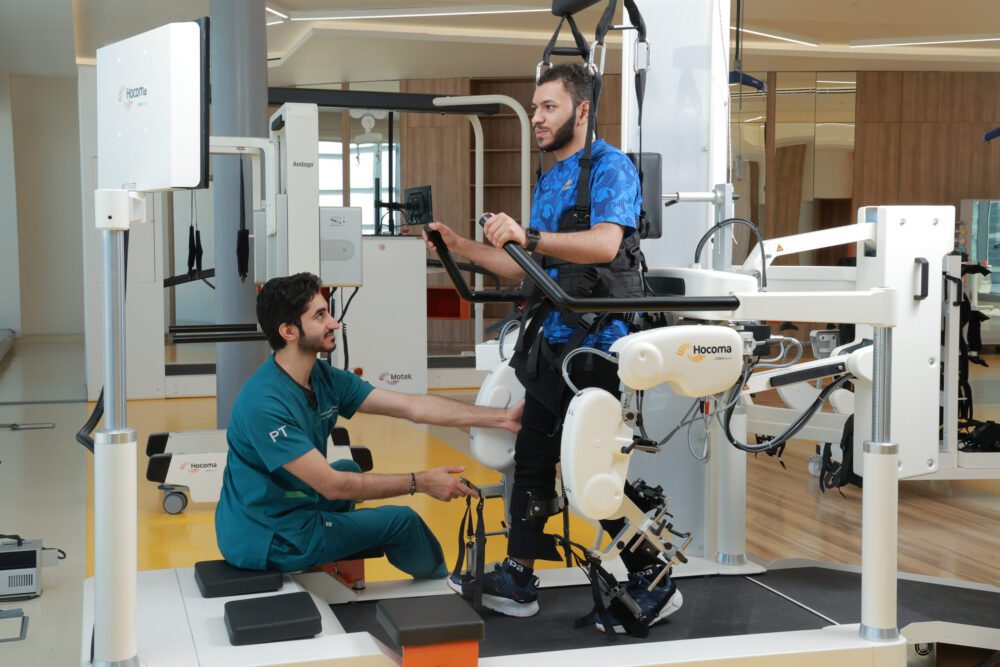
Lokomat

Lokomat

Walking after a stroke

A robotic system supports your body weight and guides your legs as you practice a walking pattern at your own level.

How can this help?

What you can work on

  • Repeat stepping movements with support adjusted to your needs.
  • Track your walking performance so your therapist can adapt your sessions.

When it may be part of your care

Walking difficulties after a stroke or spinal cord injury, and certain neurological conditions such as multiple sclerosis or cerebral palsy.

Andago

Andago

More support while you walk

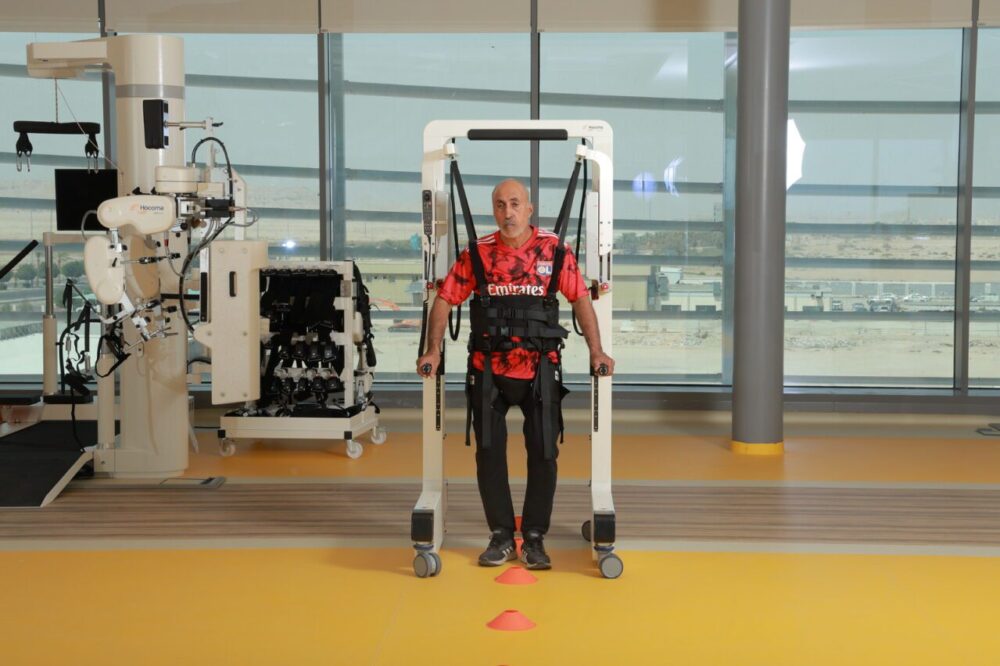
Body-weight support helps you practice walking over the ground, including moving forward and changing direction.

How can this help?

What you can work on

  • Practice walking and balance in a setting closer to everyday movement.
  • Receive adjustable support as your therapist guides your training.

When it may be part of your care

Walking difficulties after a stroke, spinal cord injury, certain neurological conditions or lower-limb surgery.

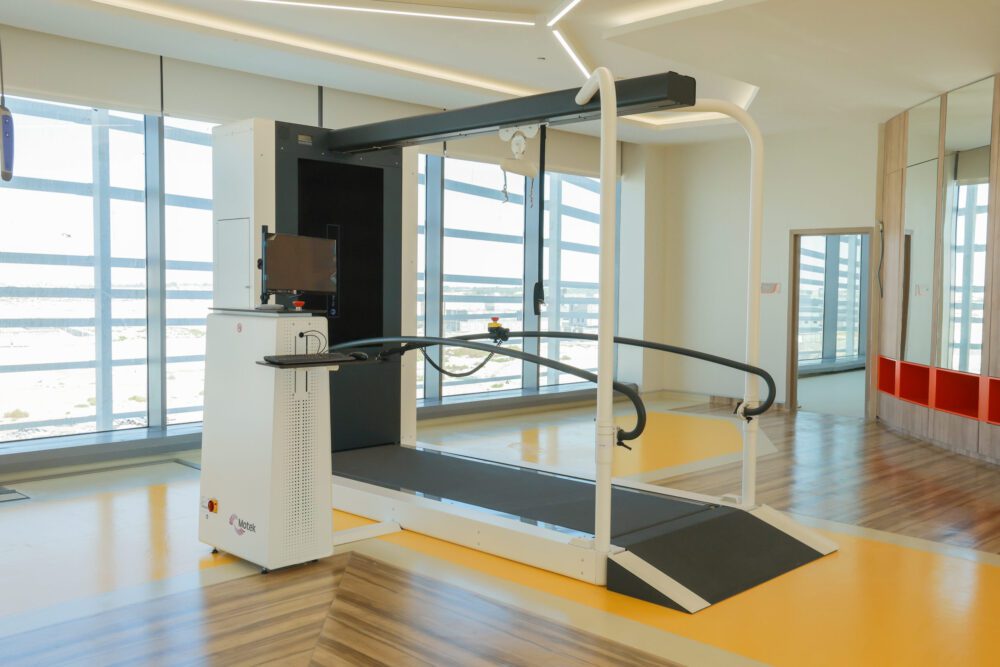
C-Mill

C-Mill

Steadier steps in everyday situations

Visual cues and simulated obstacles turn treadmill walking into practice for everyday challenges.

How can this help?

What you can work on

  • Practice adjusting where and when you step.
  • Work on balance and adapting your walk to changing situations.

When it may be part of your care

Gait and balance difficulties that make changing direction or stepping around obstacles challenging.

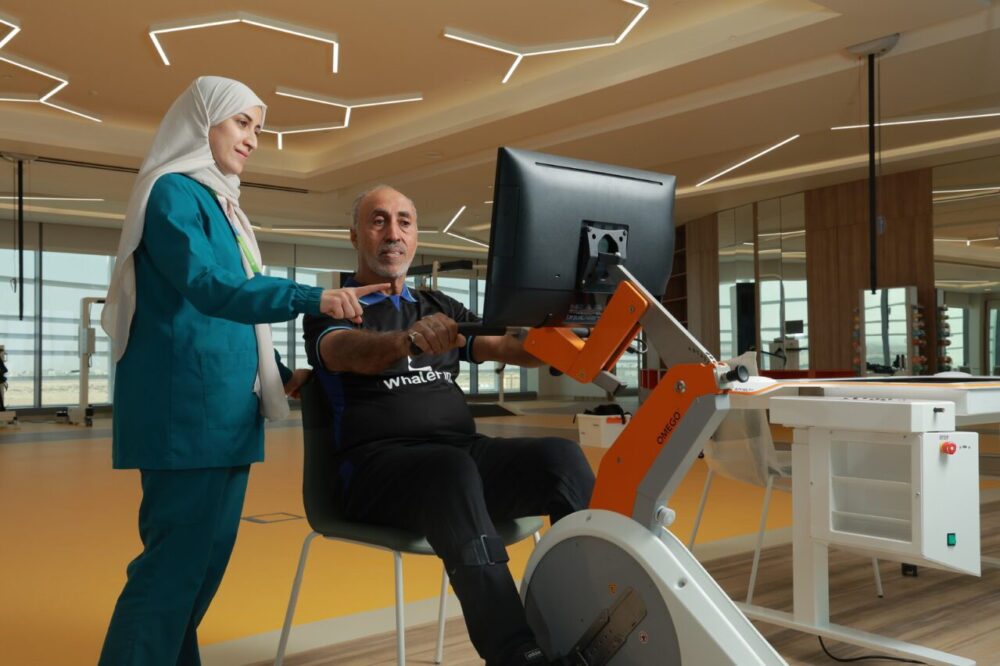
OMEGO

OMEGO

Building strength for movement

Adjustable lower-limb exercises help you work on movement, strength and endurance at a level that suits you.

How can this help?

What you can work on

  • Practice leg movements that support walking.
  • Work with your therapist to adjust the challenge and track your progress.

When it may be part of your care

Weakness or reduced lower-limb movement during neurological or orthopedic rehabilitation.

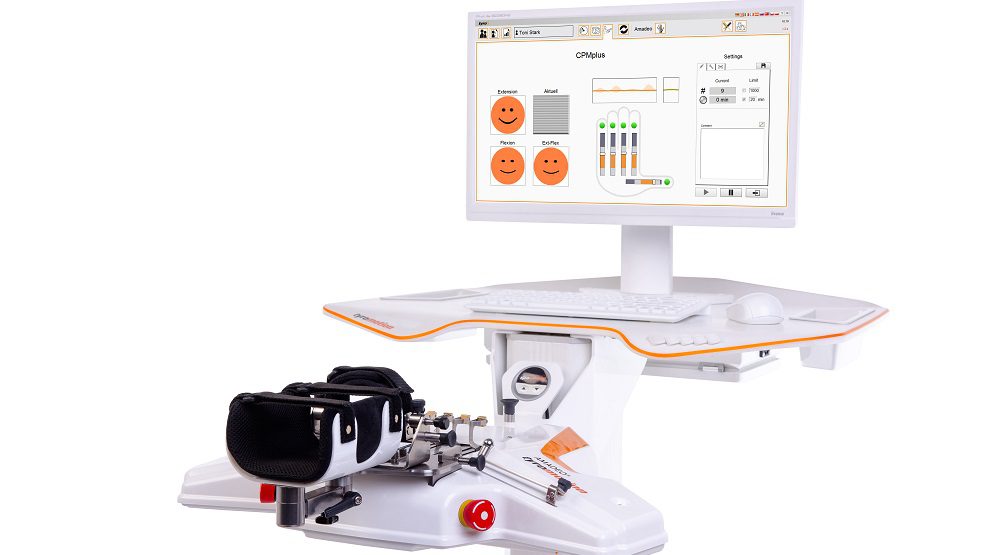
AMADEO

AMADEO

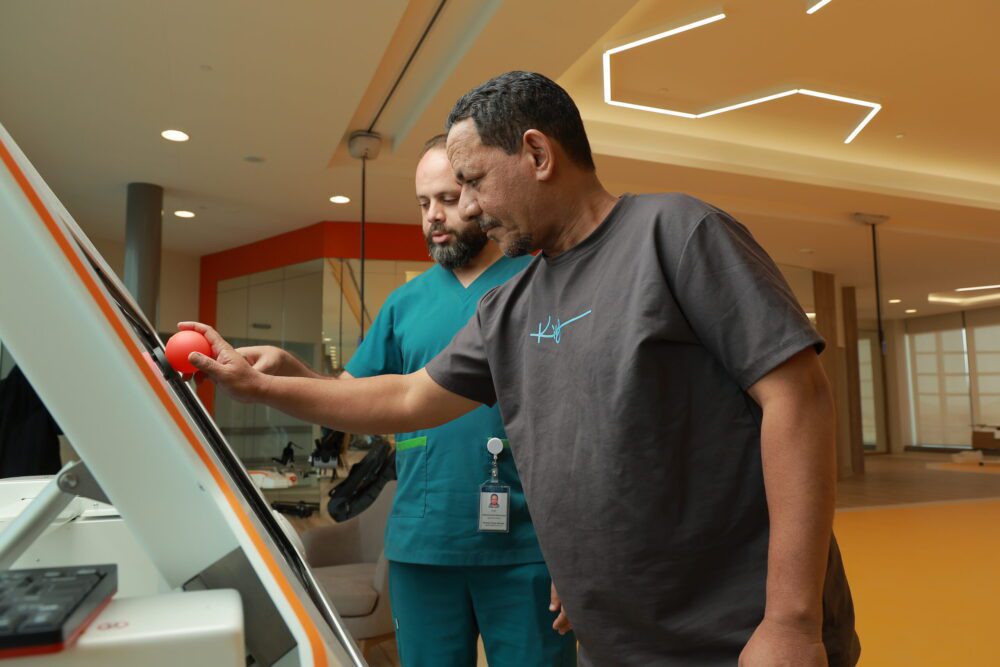
Opening your hand. Moving your fingers.

Robotic support helps you practice grasping and extending your fingers, with assistance matched to your abilities.

How can this help?

What you can work on

  • Work on finger movement and range of motion.
  • Measure movement and strength to help your therapist track changes.

When it may be part of your care

Hand and finger weakness after a stroke or nerve injury, based on your rehabilitation assessment.

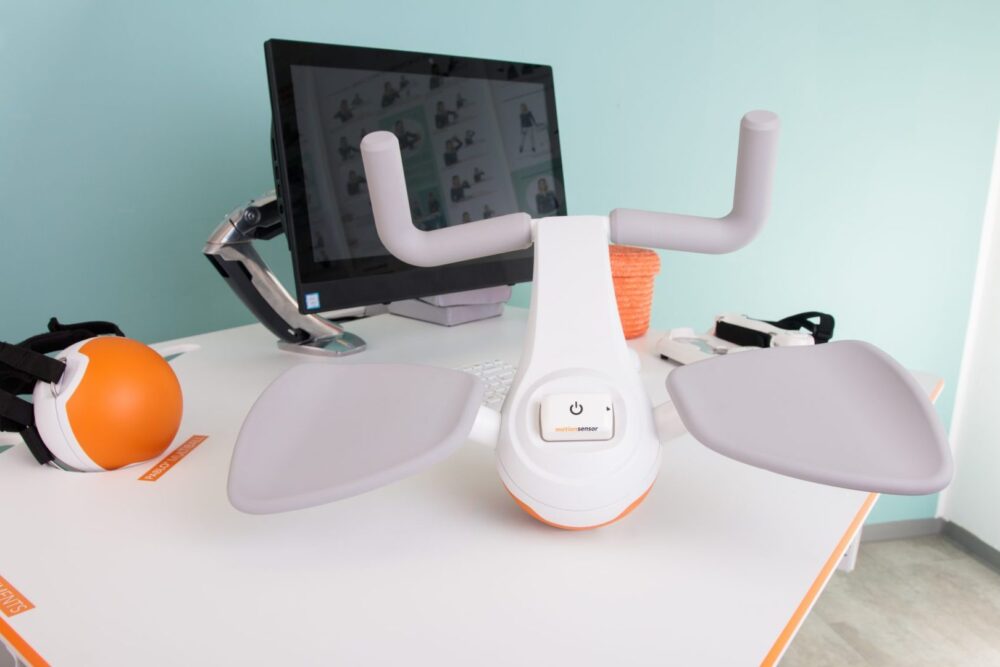
PABLO

PABLO

A stronger grip on daily tasks

Sensors turn hand and arm movements into interactive exercises while measuring grip strength and range of motion.

How can this help?

What you can work on

  • Practice grasping and controlling hand and arm movements.
  • Work on coordination through interactive tasks with feedback on your performance.

When it may be part of your care

Movement and coordination difficulties during neurological rehabilitation, including recovery after a stroke.

MYRO

MYRO

Bringing focus and movement together

Touch, reach and move real objects on an interactive surface to practice hand movement and thinking skills together.

How can this help?

What you can work on

  • Work on hand-eye coordination and handling everyday objects.
  • Practice attention and visual processing through tasks selected by your therapist.

When it may be part of your care

Upper-limb movement difficulties or challenges with attention and visual processing during rehabilitation.

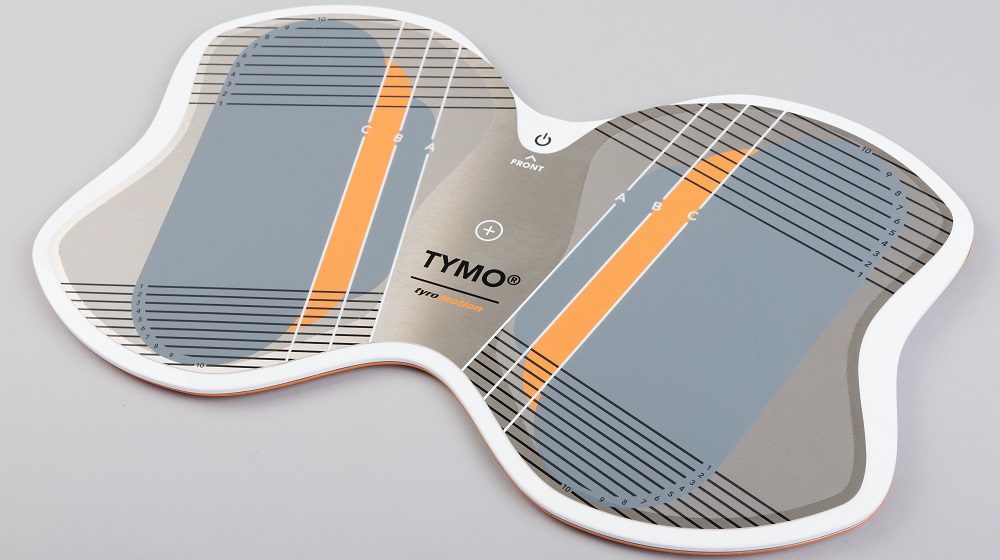
TYMO

TYMO

Working toward better balance

An interactive platform measures weight distribution as you practice balance and control of your posture.

How can this help?

What you can work on

  • Practice shifting your weight in positions chosen by your therapist.
  • Use performance feedback to guide exercises matched to your abilities.

When it may be part of your care

Balance and coordination difficulties related to neurological or orthopedic conditions.

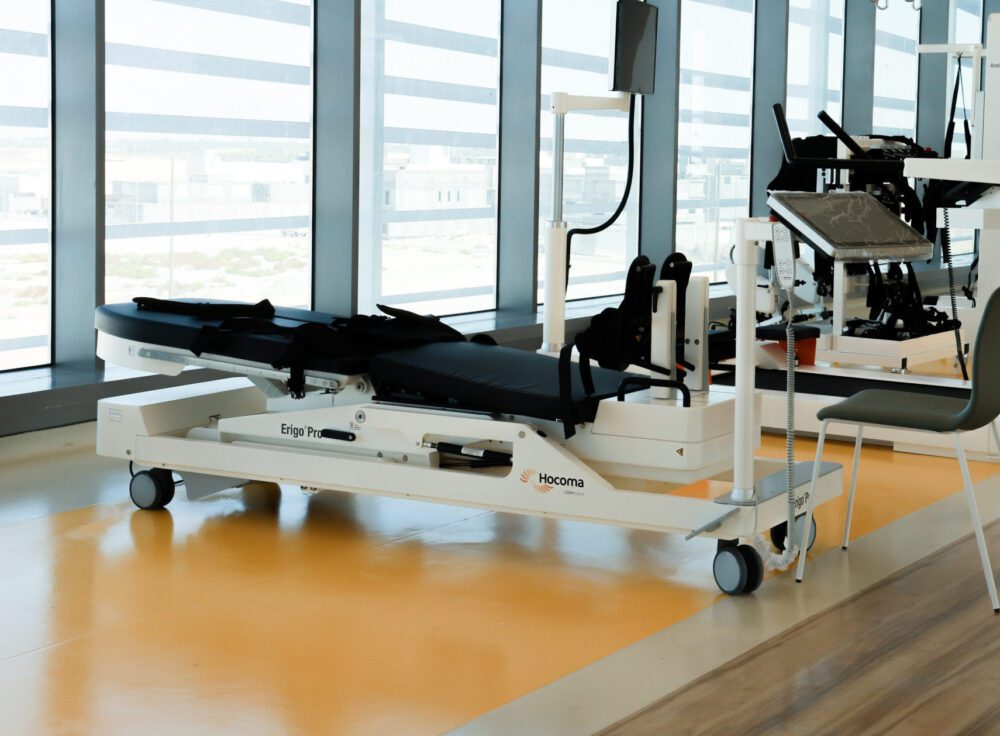
Erigo

Erigo

Taking the first steps toward standing

Gradual upright positioning and guided leg movement support early rehabilitation when standing is difficult.

How can this help?

What you can work on

  • Build tolerance for an upright position with body support.
  • Move your legs during the early stages of rehabilitation.

When it may be part of your care

Severely limited mobility during early rehabilitation, including certain stroke and spinal cord injury cases.

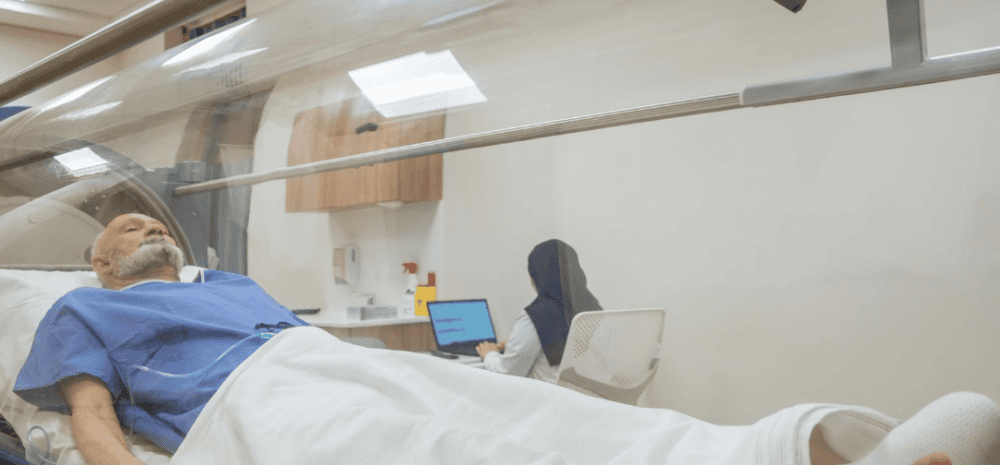
Hyperbaric Oxygen Therapy

Hyperbaric Oxygen Therapy

Support for wounds that are slow to heal

Breathing oxygen in a pressurized chamber delivers more oxygen to tissues as part of treatment for selected conditions.

How can this help?

What you can work on

  • Support tissue healing alongside a comprehensive wound care plan.
  • Receive treatment tailored to your diagnosis and response.

When it may be part of your care

Certain diabetic foot ulcers, nonhealing wounds and radiation-related tissue injuries, after a medical assessment.

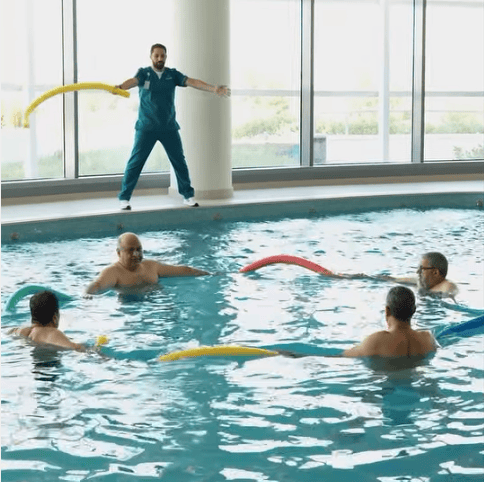
Aquatic Therapy

Aquatic Therapy

When joint pain makes exercise difficult

Water supports your movement and reduces the load on your joints during exercises guided by your physical therapy team.

How can this help?

What you can work on

  • Work on flexibility, strength and balance in the water.
  • Practice movement when exercise on land is difficult or painful.

When it may be part of your care

Certain joint and mobility problems, and rehabilitation after surgery when your care team determines it is appropriate.

Your care team will assess your needs, abilities and goals to choose the right technology for your rehabilitation plan.

Book an appointment

Meet our doctors

Call today to book your appointment and take the next step toward better health.

🍀 Don't miss your reservation with our medical offers
Your health is our priority... and our offers are designed for you
00Days
:
00Hrs
:
00Min
:
00Sec
Almoosa Health

How can we help?

Human First