
One of the most complex medical conditions is abdominal tumors in children because they involve many organs and cause serious symptoms that develop rapidly over time. Abdominal tumors only represent about 20 to 30% of the various types of childhood tumors, whether benign or cancerous, so in this article we will learn about this condition in terms of types, symptoms, and effective methods of diagnosis and treatment.
What are abdominal tumors in children?
Abdominal tumors in children are subtle pathological conditions that indicate the presence of masses or abnormal growth in the abdominal area and include either benign, malignant, or cancerous tumors. Abdominal tumors may arise in different organs in the abdomen such as the liver, kidneys, intestines, lymph nodes, or any other tissues depending on the type of tumor.
Types of abdominal tumors in children
We now learn about the most important types of abdominal tumors in children, each of which carries specific characteristics and a different age of infection:
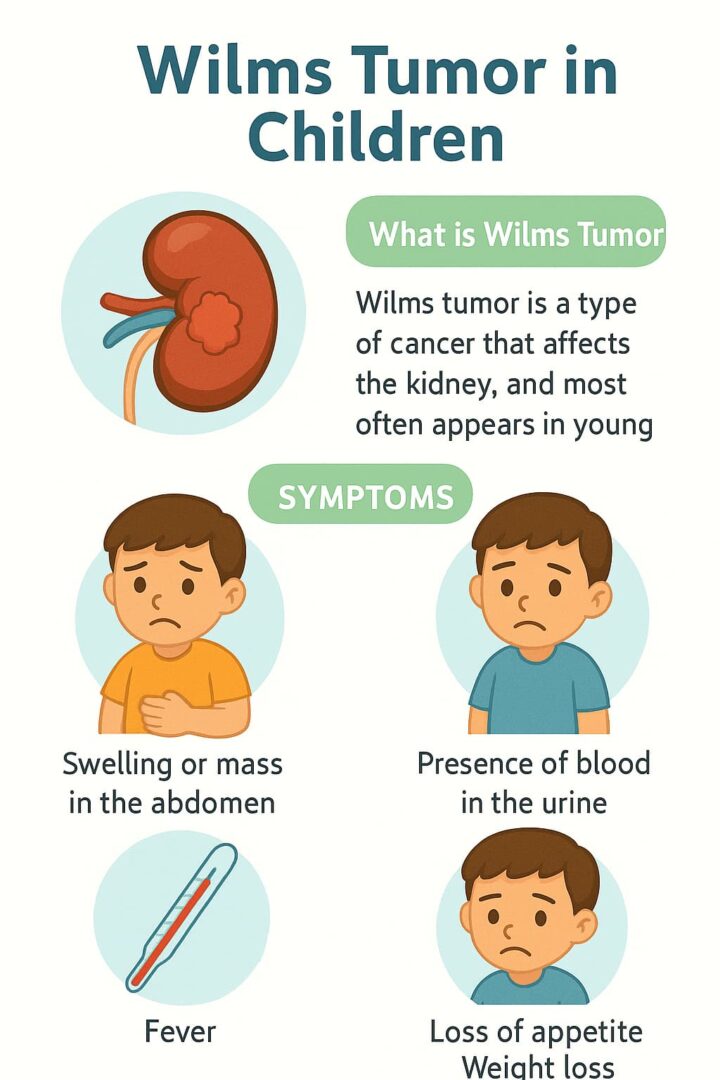
Wilms’ tumor
Wilms' tumor is one of the most common types, representing 5 to 10% of childhood cancers. It is a malignant tumor that arises from immature kidney tissue and affects children from 2 to 5 years old.
Hepatoblastoma
Hepatoblastoma is the most common tumor in children under 3 years of age, but it is generally rare in other ages older than 3 years. It is a malignant tumor that affects liver tissue, and the child may appear yellowing of the skin or jaundice with some other symptoms.
Neuroblastoma
Neuroblastoma is a malignant tumor that affects sympathetic nerve cells in the adrenal gland above the kidneys. It affects children under 5 years of age, and in some cases it may compress the spinal cord, causing weakness in movement or paralysis.
Tumors of the lymph nodes (lymphoma)
Split Lymphomas To Non-Hodgkin Lymphoma, which begins in the lymph nodes in the abdomen, causing solid masses that grow rapidly with persistent diarrhea and abdominal pain. The second type is Hodgkin Lymphoma, which is less common in the abdomen, but sometimes affects the lymph nodes.
Tumors of soft tissue and muscles
It includes rhabdomyosarcoma, which is a malignant tumor that originates in the abdominal muscles and appears clearly in the abdominal wall and bladder in the form of a moving mass under the skin, with pain and bleeding if the tumor presses on neighboring organs.
Symptoms of abdominal tumors in children
Abdominal symptoms in children may be similar to some other diseases, so it is best, while noticing the symptoms, to make an accurate diagnosis of the condition with the necessary tests. The most important symptoms include the following:
- A palpable lump when touching the abdomen.
- Constant or intermittent pain in the abdominal area.
- Repeated high temperature or fever.
- Loss of appetite and abnormal weight for no apparent reason.
- Facial paleness, fatigue, and general weakness due to anemia.
- A constant feeling of nausea and vomiting that is not related to a cause and clearly appears with eating.
- Change in bowel habits, such as diarrhea or constipation, along with severe swelling and flatulence in the abdomen.
- In some advanced cases of abdominal tumors, delayed growth or signs of puberty appear in the child.
The appearance of abdominal tumors in children can be alarming, but early detection and appropriate treatment make a big difference. Oncology center Specialized care for children, with a multidisciplinary medical team and personalized treatment plans for each case.
Methods of diagnosing abdominal tumors in children
There are multiple methods for diagnosing abdominal tumors in children, including the following:
- الفحص السريري: By examining the abdomen and touching the mass or any abnormal enlargement in the abdomen, while discussing with the child’s family the symptoms appearing on him and taking a complete medical history.
- Laboratory tests: It includes performing many tests, such as a complete blood count, kidney function test, liver function test, tumor markers, and urine and stool analysis.
- Imaging examination: It includes an abdominal ultrasound as a preliminary examination, then a CT scan to show the details of the tumor, and a PET scan in some cases to evaluate the extent of the tumor's spread.
- Sample or biopsy: It is the most important test to confirm the type of tumor and is done by removing part of the mass or lymph nodes for examination with a microscope to determine whether the tumor is benign or malignant.
How to treat abdominal tumors in children?
The treatment plan for abdominal tumors is determined according to the type of tumor, whether benign or malignant, and the stage of the tumor. There are several advanced and effective treatment plans that include:
العلاج الجراحي
Surgical treatment in the case of benign abdominal tumors includes removing the entire tumor without affecting other organs. However, in malignant tumors, the tumor is removed along with some surrounding healthy tissue to ensure that the tumor does not return. If the tumor is attached to vital organs in the abdomen, the child may need a more precise and complex surgery.
Chemotherapy
Chemotherapy is usually used before surgery to size or reduce the tumor, and then after it to kill any cancer cells that have not been surgically removed. It usually depends on certain medications and a number of sessions determined by the doctor depending on the child’s condition, and it may cause some side effects in the body such as hair loss and immunodeficiency.
Radiotherapy
Radiotherapy It is used for some malignant tumors in the abdomen that cannot be treated by complete surgical removal. Treatment involves directing rays precisely at the cancer cells to avoid damaging healthy tissue.
Immunotherapy
Immunotherapy includes modern medications that stimulate the body's immunity to confront and attack cancer cells. It is an effective treatment in some cases, and its results must be tested on the body.
Supportive care during treatment
Supportive care during treatment with any of the previous methods includes 3 different axes:
- Healthy nutrition: The child may need a feeding tube or vitamins due to loss of appetite.
- Pain relief: By giving the child strong painkillers that reduce the severity of the pain along with anti-inflammatory drugs.
- Psychological support: During the treatment stage, attention must be paid to supporting the child psychologically, because treatment in general affects the child’s psychological state and increases the state of tension and depression.
We must never forget the importance of following up with the doctor by performing periodic examinations such as x-rays and analyzes to detect a return or relapse of the condition, in addition to monitoring the child’s growth due to the body’s effect on some treatments.
Al Mousa Specialist Hospital has an integrated unit for diagnosing abdominal tumors in children and treating them in multiple ways according to the type and extent of the tumor’s spread, through a group of the best oncologists in the Kingdom. The hospital provides the best service and medical care to patients around the clock, in addition to the multiple safe and advanced methods of treating tumors in the hospital.
Book your consultation now at Oncology center At Al Mousa Specialist Hospital
Frequently asked questions
Below we answer the most frequently asked questions about abdominal tumors in children and their characteristics:
How is cancer detected in children?
Cancer in children is detected by observing symptoms in addition to medical examinations, CT scans, and finally a biopsy to confirm the infection.
Is the cancerous tumor hard or soft?
Most of the different types of cancer in children are solid, painless, and do not move when touched. They include kidney tumors and sarcomas.
What does a malignant tumor look like?
The appearance of a malignant tumor varies depending on its location and type, but in general it is characterized by the presence of hard masses, sometimes like stones, immovable or fixed in place, irregular in shape, and rarely painless at first.
Medical references
Pediatric abdominal tumors – childrens
Pediatric Abdominal Masses – radiologykey
