
We hear a lot about vascular catheterization as one of the best and most important minimally invasive surgeries that treat vascular problems such as narrowed arteries and other problems, but do we know all its uses and how to perform it?
What is angioplasty?
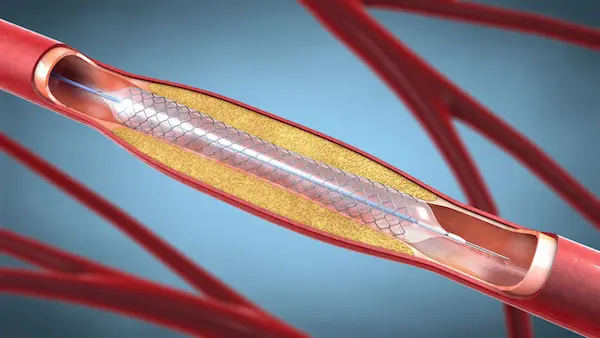
Angioplasty is a minimally invasive surgical procedure that involves inserting a long, thin tube into a blood vessel, guided into a blocked coronary artery, and aims to open the blocked coronary arteries, restoring blood flow to the heart muscle without the need for open-heart surgery.
How does an angioplasty work?
Vascular catheterization works to remove blockages or narrowing of the arteries by inserting a thin tube into the blood vessel and then directing it to the coronary artery in the area of the blockage. The catheter contains a small balloon at the tip. When the catheter is installed in the target location, the balloon is inflated in the narrowed area of the artery, which results in pushing away or removing the blood clot on both sides of the artery wall, which restores blood flow again and removes the blockage.
Uses of vascular catheterization
The uses of vascular catheterization vary between medical diagnosis or treatment, and we will learn about each of them in detail below:
First: catheter diagnosis
Diagnostic catheterization has many uses, as it detects many vascular problems, such as:
- Detection of blood vessel blockage.
- Measuring blood pressure inside the arteries or veins.
- Sometimes used to draw samples of blood inside the heart or blood vessels for analysis.
Second: therapeutic catheterization
As for the uses of therapeutic catheters, they are considered one of the most important and best minimally invasive medical procedures that help in:
- Widening and opening blocked arteries.
- Installing stents inside the artery to keep it open.
- Treating cardiac arrhythmias, such as treating atrial fibrillation.
- Dissolving blood clots by injecting medications into the blood vessels.
- Repairing aneurysms to strengthen the arterial wall and prevent them from rupturing.
- Closing abnormal blood vessels such as those that bleed or feed tumors.
Types of vascular catheterization
There are 6 most important types of vascular catheters, each of which has special uses, including:
- Central venous catheter (CVC): It is inserted into large veins such as the femoral vein or the subclavian vein, and is used to administer some long-term medications for intravenous feeding.
- PVC peripheral venous catheters: These are used in the veins of the extremities, such as the veins in the arm or hand, to administer fluids or medications.
- القسطرة القلبية CC: It is used to diagnose and treat various heart diseases such as widening the arteries with stents.
- AC arterial catheter: It is used to monitor and monitor blood pressure in an accurate manner, and is inserted into the femoral or radial artery.
- Subcutaneous intravenous catheter: It is implanted under the skin and then connected to the central vein, and is used to administer long-term medications in case of repeated medication.
- Intravenous epidural catheter (PICC): It is inserted into a large vein in the arm and extends to the central veins, and is used in chemotherapy sessions.
How to perform angioplasty
The steps for performing a vascular catheterization are very precise and require specialized doctors with a great deal of experience and competence, such as the doctors at Al-Mousa Specialist Hospital in Al-Ahsa. The actual steps for performing it include the following:
- Preparing the patient through the necessary examination and tests, and he must fast for 8 hours before the catheterization.
- The doctor gives the patient mild sedative medications to help him relax while the catheter is inserted.
- The skin is sterilized at the site of the catheter insertion, either in the thigh, arm, or neck.
- The doctor injects the site with a local anesthetic to reduce pain before insertion.
- A fine needle is inserted into the affected or targeted blood vessel.
- A thin wire is passed through the needle, then the needle is removed and the catheter is inserted.
- Follow the catheter along the wire with the help of X-rays.
- Injection of a radioactive dye into the vessels in case of diagnosis.
- The therapeutic catheter does the work for which it was inserted.
- After the catheter is finished, it is withdrawn with extreme caution.
- The insertion site is kept under pressure for 20 minutes to prevent bleeding.
- Finally, the doctor places a sterile bandage on the catheter site after removing it.
5 tips after vascular catheterization
Here, dear reader, are the 5 most important tips after performing a vascular catheterization procedure, presented to you by the doctors at Al-Mousa Specialist Hospital in Al-Ahsa:
- Take care of the catheter site by cleaning the wound and keeping it dry and clean at all times.
- Avoid stress, rest completely, and do not do any physical effort for a day or two after the catheterization.
- Drink plenty of water and fluids to help wash away the radioactive dye used during catheterization.
- Monitor any strange symptoms, and if severe pain appears along with swelling and a change in skin color, you must inform the doctor.
- Continuous medical follow-up to ensure that complications do not occur, while avoiding any medications that help thin the blood to prevent bleeding.
Book your consultation now at مركز القلب والأوعية الدموية At Al Mousa Specialist Hospital.
When do you need a vascular catheter?
There are some cases that require urgent vascular catheterization and it is necessary for the doctor to perform it as quickly as possible. These cases include:
- Suspicion With a heart attack Or a blockage in the blood vessels.
- When blood flow to the extremities such as the legs or arms is poor.
- In cases of stroke resulting from narrowing of the cerebral arteries.
- With severe chest pain or suspected symptoms of a heart attack.
When should a catheterization procedure be avoided?
Catheterization should be avoided in many medical conditions indicated by specialist doctors, such as:
- Blood clotting and bleeding disorders.
- With the use of blood thinning medications.
- Allergy to the components of the catheter or the dye used.
- Kidney patients should not be exposed to the dye used in the catheter.
- Conditions such as a severe drop in blood pressure, or cardiogenic shock.
- Active infection or infection in the catheter insertion sites, which transmits the infection.
- In cases of severe blockage and narrowing of the target blood vessels, the use of catheters is not recommended.
Doctors at Al Mousa Specialist Hospital successfully perform vascular catheterization for patients in order to solve any health problem with blood vessels after ensuring that the case is suitable for that procedure. There is an integrated unit for diagnosis and treatment that aims to provide the best medical service to patients in the Kingdom with safety and high effectiveness at the hands of experienced and competent doctors.
اسئلة شائعة
We receive many questions about vascular catheterization, so we present them to you below with a satisfactory answer:
What is the difference between a catheter and a stent?
A catheter is a thin tube that is inserted into an artery to diagnose and treat problems with blood vessels and arteries, while a stent is a small metal mesh used to widen narrowed arteries and is placed using a catheter.
How long is the rest period after the catheterization procedure?
Rest in the hospital after the catheterization procedure may take only one day, but the general rest period from the procedure may take 7 full days for the person to return to physical activity.
Does a person return to normal after catheterization?
Yes, in most cases the person returns to normal after the catheterization, but the duration depends on many factors, including the type of catheterization, whether therapeutic or diagnostic, and the patient’s general health and the extent of his commitment to the instructions after the operation.
How long does it take for the groin to heal after cardiac catheterization?
The recovery time of the thigh after cardiac catheterization depends on several factors, including the type of catheter, the patient’s general health, in addition to his adherence to the doctors’ instructions. Most patients can walk 12 hours after the thigh catheterization.
Sources..
Angioplasty – clevelandclinic
Angioplasty and Stent Placement for the Heart – hopkinsmedicine
