
Many of us may see cases of patients with Duchenne muscular dystrophy and do not know what the nature of this disease is, its symptoms, and its causes that led to this condition that affects the child’s daily life due to muscle weakness and weakness, which results in the necessity of resorting to accurate diagnosis and effective treatment to control this condition and give the child a better life, and this is what we will learn about in detail in this article.
What is Duchenne muscular dystrophy?
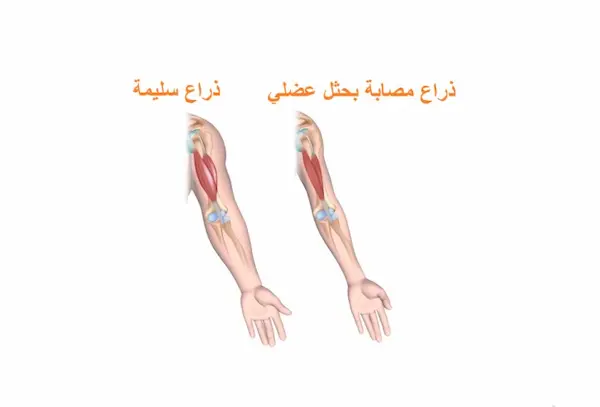
Duchenne Muscular Dystrophy (DMD) is a hereditary muscle disease that affects the body's muscles and gradually weakens them. It usually appears in early childhood, and as the disease progresses, the patient loses the ability to walk and breathe as well due to the heart muscle being affected.
ما هي أنواع الحثل العضلي؟
There are 5 different types of muscular dystrophy, which differ according to the genes affected and the age at which they appear, in addition to the symptoms that appear on the patient. These types include the following:
- Duchenne muscular dystrophy (DMD), which we talk about in detail in this article, is specific to children, especially males.
- Becker muscular dystrophy (BMD) is similar to Duchenne, but appears in adulthood, develops slowly, and has milder symptoms than Duchenne.
- Limb muscular dystrophy (LGMD) affects the hip and shoulder muscles and begins either in childhood or during adulthood.
- Myotonic muscular dystrophy (MD) is the only type that does not begin at a specific age and is characterized by slow muscle contraction, which affects movement and, over time, affects the heart as well.
- Facioscapulohumeral muscular dystrophy (FSHD), which begins in the muscles of the face and shoulder along with the upper arm, appears clearly in adulthood.
Causes of Duchenne muscular dystrophy
The main cause of Duchenne muscular dystrophy is the presence of a mutation in a gene called DMD located on a chromosome, so this disease affects males at a higher rate. This gene is responsible for the production of the dystrophin protein, which maintains the strength and integrity of the muscles and protects them from damage and contraction during movement. It is primarily a hereditary disease.
Get to know Diagnosis of muscular dystrophy Genetics and treatment methods
Symptoms of Duchenne muscular dystrophy
Symptoms of Duchenne muscular dystrophy are divided into two categories according to the time or period of their appearance:
- Early symptoms:
These are symptoms that appear in early childhood and include delayed walking, difficulty running or climbing stairs, the child being exposed to frequent falls, and enlargement of the leg muscles, so the child uses his hand to help him stand. - Advanced symptoms:
As for the symptoms that appear with advancing age, they include muscle weakness that increases gradually, severe difficulty in walking, leading to the child using a wheelchair from the age of 10 years, the appearance of a problem in the spine, with breathing problems due to a weak heart muscle, and sometimes a delay in learning and a problem in behavior appear.
How does Duchenne muscular dystrophy affect daily life?
Duchenne muscular dystrophy may greatly affect daily life due to deterioration in muscle strength, especially if the disease is not controlled well. Complications increase, affecting walking and movement. The child will need special equipment to move around at home and outside the home. He will also face difficulty in learning and concentrating, so he will not be able to participate in any activity like his peers.
Book your consultation now at Orthopedic center At Al Mousa Specialist Hospital.
How to diagnose Duchenne muscular dystrophy?
Duchenne muscular dystrophy is usually diagnosed by a specialist through various methods, including:
- Clinical examination and observation of symptoms appearing in the child, such as delayed walking or leg muscle enlargement.
- Genetic analysis is a necessary test, as it confirms the diagnosis of the disease and reveals the genetic mutations causing it.
- Creatine kinase enzyme test. In the case of injury, its percentage becomes higher than normal, which indicates muscle damage.
- EMG, which is used to resolve the debate whether the weakness is due to a problem in the muscles or nerves.
- An MRI or ECG is done to examine the heart and lung muscles because the disease also affects them.
Treatment of Duchenne muscular dystrophy
After knowing how to diagnose the disease accurately, we learn together about the journey of treating Duchenne muscular dystrophy to live with the disease better without complications, which includes the following:
العلاج بالأدوية
Treatment with medications is the first line of defense to prevent the worsening of symptoms, especially muscle weakness, and the most prominent medications that perform this function are:
- Corticosteroids: such as prednisone, which delays muscle weakness and maintains lung and heart function for as long as possible. However, one must be aware of the need to follow up on medication doses with the doctor because it may affect weight and growth.
- Heart and lung medications: These include beta blockers to preserve the heart muscle, with some bronchodilator medications before bed to improve breathing.
Physical and rehabilitation therapy
Physical therapy Rehabilitation is absolutely indispensable for a patient with muscular dystrophy, as it helps strengthen muscles, reduce stiffness, and maintain joint mobility as much as possible. There are some devices that help straighten a child’s leg, such as splints, as they delay the use of a wheelchair at an early age.
The Al Mousa Rehabilitation Therapy Center team provides distinguished medical care to patients through the latest devices that help strengthen the body’s muscles and strengthen the legs, while performing appropriate movement and breathing exercises with the help of experienced and competent doctors and specialists.
Treating breathing problems
Due to weak breathing muscles, the patient needs some devices during sleep that help strengthen the muscles, in addition to well-known breathing exercises, and conducting sessions to suction secretions when needed. It is necessary to follow the child when sleeping to avoid any problem related to breathing during sleep.
Providing psychological support to the patient and family
One of the most important and best ways to help the success and completion of treatment is to provide psychological support to the patient and family through support sessions and communication groups that help the family how to deal with the sick child in the correct way and to be patient in completing and following up on treatment for years until the child is physically and psychologically qualified to live with this condition.
The Rafah Center affiliated with Al Mousa Specialist Hospital helps provide effective psychological support to the child and family through an elite group of experienced and competent doctors and psychologists, which facilitates the treatment journey so that it does not become a burden on the family, but rather a distinct experience and a great challenge.
If you have a child suffering from Duchenne muscular dystrophy and are looking for an effective treatment for him, contact the specialized doctors at Al Mousa Specialist Hospital so that an appropriate treatment plan is created for the child at an early stage, while qualifying him to regain his daily activities and perform them on his own through Al Mousa Physical Therapy and Rehabilitation Center, which includes an elite group of the best rehabilitation therapy doctors. Just contact us.
اسئلة شائعة
Below we answer the most common questions we receive from our followers about Duchenne muscular dystrophy:
Is Duchenne dangerous?
If early diagnosis and rapid treatment are used, Duchenne dystrophy can be well controlled, which does not expose the patient to any danger, and it is necessary to continue lifelong follow-up with a specialized doctor.
Is Duchenne muscular dystrophy a contagious disease?
No, Duchenne muscular dystrophy is not a contagious disease. Rather, it is a hereditary disease resulting from a genetic defect, as we mentioned. It is not transmitted from person to person through infection or contact.
When does brain atrophy appear in infants?
Brain atrophy usually appears in infants during the first months or first year of the child's life, and there is a delay in motor development with apparent muscle relaxation, which results in difficulty in breastfeeding and epileptic seizures.
Are there cases of recovery from myasthenia gravis?
Complete recovery from myasthenia gravis may be difficult, but there are successful and effective treatment methods that help the patient adapt to the condition and live with good control of the symptoms and prevent them from getting worse or developing complications.
Sources and references
Types of muscular dystrophy – nhs
Duchenne Muscular Dystrophy (DMD) – clevelandclinic
