
An early miscarriage for the mother represents a painful experience for the woman and the family due to the feelings of sadness and loss that accompany it.

What is the occurrence of early miscarriage in the mother?
It is a spontaneous loss of pregnancy that occurs during the first trimester of pregnancy, often before the tenth week of pregnancy spontaneously without medical intervention.
The actual percentage may be higher because some miscarriages occur very early before the pregnancy is confirmed. On the other hand, repeating an early miscarriage more than once is not common;
Causes of early miscarriage
An important question may come to a woman’s mind after this experience: “Why did I miscarry early?” ومن أبرزها:
1- Chromosomal imbalances (the genetic material of the fetus): Chromosomal problems in the fetus are the main cause of more than half of early miscarriages.
2- Mother’s age: Maternal age plays a role in the risk of miscarriage;
3- Health problems in the mother: Some medical conditions in the mother may contribute to miscarriage. Examples of this include:
- Irregular diabetes.
- Thyroid disorders.
- Hormonal imbalances (such as a lack of progesterone, which is necessary to maintain pregnancy).
- Migrating uterine lining (endometriosis).
- Certain immune diseases.
- Abnormalities or problems in the uterus or cervix (such as large uterine fibroids or weakness of the cervix).
4- Unhealthy lifestyle: This includes all types of smoking, drinking alcoholic beverages, and using drugs.
5- Consuming large amounts of caffeine: Excessive caffeine consumption (more than 200 milligrams per day, which is about two cups of coffee) may be associated with a slightly increased risk of miscarriage early.
6- Inappropriate weight: Both excessive obesity or extreme thinness in the mother can be associated with complications in pregnancy, including a higher risk of miscarriage.
7- A previous history of recurrent miscarriage: A woman having had two or more consecutive miscarriages may indicate a higher risk of having another miscarriage.
8- Rare genetic or immunological factors: In rare cases, there may be special factors that increase the risk of miscarriage, such as hereditary clotting disorders (excessive blood clotting due to a genetic mutation) or some immune disorders that affect the continuation of the pregnancy.
How do I know that I had an early miscarriage?
Signs of miscarriage usually appear during the first weeks of pregnancy, and vary from one woman to another and from one pregnancy to another, and can also vary in severity depending on the age of the pregnancy.
In some very rare cases, no obvious symptoms appear at all in what is known as a silent (missed) miscarriage, where the growth of the fetus stops without bleeding or pain and this is only discovered during a routine ultrasound examination.
in general, There are a group of common symptoms that may indicate a miscarriage and you should pay attention to them:
- Vaginal bleeding: Bleeding or the appearance of blood spots is one of the first and most important signs of miscarriage.
- Lower abdominal cramps and pain: Feeling cramps or cramps in the lower abdomen or pelvis during early pregnancy may be normal if they are mild and intermittent.
- Lower back pain: A miscarriage may be accompanied by pain in the lumbar region (lower back).
- Excretion of tissue or fluid through the vagina: A woman may notice pieces of gray or pink tissue coming out, or relatively large blood clots coming out.
- Disappearance of early signs of pregnancy: For example, if the mother suffers from morning sickness or tenderness and swelling of the breasts and then notices that these symptoms subside clearly and suddenly in conjunction with bleeding or cramps, this may be an indication of changing hormonal levels due to the loss of the pregnancy.
اقرأ أيضاً: Folic acid is a protective shield for pregnant women during their motherhood journey
Diagnosis and how to confirm miscarriage
Diagnosing an early miscarriage requires a medical evaluation to confirm that it actually occurred and to ascertain the condition of the uterus afterward. The doctor will usually take the following steps to properly diagnose the condition:
- Pelvic examination: The doctor checks the condition of the cervix;
- Blood pregnancy tests: In normal pregnancy, the level of the pregnancy hormone (HCG) rises regularly in the early stages.
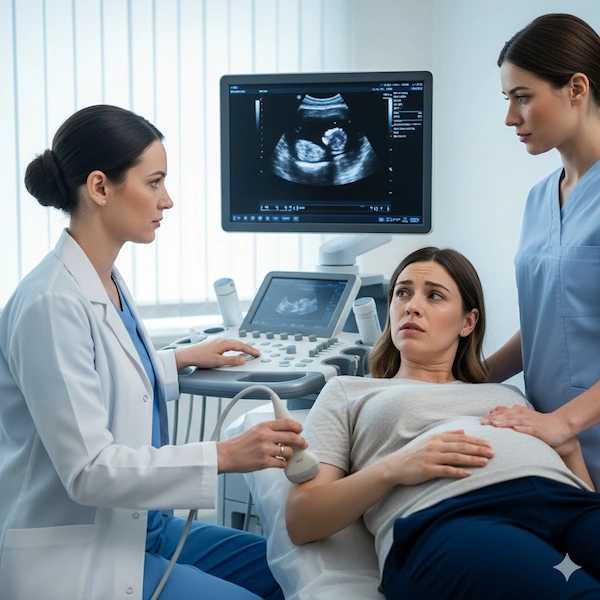
- Ultrasound imaging (sonar): The doctor takes an image of the pelvic area to see if the gestational sac and fetus are visible and whether there is a fetal heartbeat or not.
Symptoms of silent miscarriage
silent miscarriage (missed miscarriage); Here the doctor finds on the ultrasound:
- The absence of a fetal heartbeat despite its presence inside the uterus.
- Or the gestational sac is present without a fetus inside.
This condition may require medical intervention to stimulate the tissue to come out because it does not come out spontaneously.

Early miscarriage treatment
If a miscarriage is confirmed and the pregnancy ends, the medical focus is on treating the mother and protecting her from any complications.
There are three treatment paths that doctors may follow to deal with early miscarriage:
- Natural waiting (conservative treatment): In many cases, especially if the gestational age is young and the symptoms are stable, the woman may choose, in agreement with her doctor, not to have immediate medical intervention and wait for the pregnancy tissue to come out naturally and spontaneously.
The miscarriage usually completes spontaneously within a short period (days to a week or two) if it is incomplete, and may last a little longer in the case of a silent miscarriage before the tissue begins to descend.
- العلاج الدوائي: If the patient does not want to wait or if there is a need to speed up the process for medical reasons, some medications that stimulate uterine contraction can be used to help the body expel the remaining pregnancy tissue.
The most popular of these medications are in the form of tablets or vaginal suppositories that contain a substance that makes the uterus contract (such as misoprostol).
- Surgical intervention (uterus cleaning operation): In some cases, surgery is a necessary or preferred option.
Doctors resort to this solution in specific cases, such as: continued heavy bleeding or signs of infection in the uterus, or if other methods do not succeed in expelling all the uterine contents.
اكتشف المزيد عن: Symptoms of miscarriage and the most important tips to avoid it
Preventing early miscarriage
Although not all miscarriages can be prevented; Here are some important tips that doctors recommend to prevent miscarriage as much as possible:
- Health care before planning pregnancy: It's helpful to get a medical check-up beforehand and making sure any chronic health issues are treated and controlled before you get pregnant can make a difference.
- Regular medical follow-up during pregnancy: Once pregnancy occurs, be sure to start monitoring the pregnancy early and commit to regular pregnancy follow-up visits.
- Abstaining from harmful habits: Completely avoid smoking during the preparation for pregnancy and during pregnancy, and also avoid consuming alcohol or any illicit substances or drugs.
- Reduce caffeine to the safe limit: Try to limit the consumption of drinks and foods rich in caffeine during early pregnancy.
- Maintain a healthy weight: Follow a balanced diet rich in vegetables, fruits and proteins while controlling calories, and engage in regular moderate physical activity to stay fit.
- Get essential vitamins and supplements: Make sure to take folic acid at a dose determined by your doctor, in the preparation for pregnancy and during the first trimester.
- Avoid exposure to toxic substances and pollutants: Try as much as possible to stay away from environments that contain dangerous chemicals or pollutants.
- Stress management and adequate rest: Although moderate stress does not directly cause miscarriage, maintaining your mental health is important for your overall well-being. Relax Such as deep breathing or light yoga for pregnant women, if possible.
Frequently asked questions
When is it allowed to try to get pregnant again after a miscarriage?
You can think about pregnancy as soon as you feel physically and psychologically ready, and not necessarily wait for a full menstrual cycle, if your health condition is good.
Is there an effect of early miscarriage on reproductive ability in the future?
A single early miscarriage usually does not affect reproductive ability, and the majority of women subsequently become pregnant naturally.
Does guilt or anxiety affect the chances of getting pregnant later?
There is no consistent evidence that anxiety or guilt causes miscarriage, but stress may affect lifestyle and health habits, which may indirectly affect.
Is it possible to have intimate relations after an early miscarriage?
Yes, provided that the bleeding stops completely and the cervix and uterus are re-examined to ensure that there is no infection or residual tissue.
تعرف أيضاً على: دليل شامل عن ادوية تنظيف الرحم بعد الاجهاض
Conclusion
Early miscarriage is a difficult experience, psychologically and physically, but understanding its causes, symptoms, and ways to deal with it helps women overcome this stage with awareness and confidence, and often women can go through a normal pregnancy experience in the future. مستشفيات الموسى Adhering to healthy habits all contribute to reducing the possibility of the problem recurring.
Do not hesitate to contact our specialist obstetrician and gynecologist to follow up on your condition and receive appropriate instructions.