
What are magnetic resonance imaging is an important question that some people ask, as magnetic resonance imaging is one of the latest technologies in the field of medical imaging, which has made a major shift in diagnosing many diseases with high accuracy without the need for surgical intervention. This technology relies on the use of a strong magnetic field and radio waves to produce detailed images of the internal body organs that help doctors see the tissues, bones, and organs with complete clarity. It is widely used in diagnosing problems of the brain, spine, joints, and soft tissues. It is characterized by being relatively painless and safe compared to some other types of examinations, making it a tool.
What is an MRI?
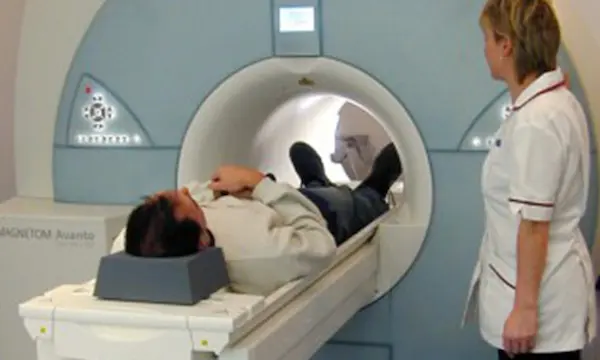
Magnetic resonance imaging (MRI) is an advanced medical imaging technology used to illustrate pathological changes in living tissues. Physically, it relies on magnetic fields and radio waves to create detailed images of various tissues and organs of the body. The MRI device is an effective tool that helps doctors see internal organs and tissues clearly and accurately without the need for surgical intervention.
Radiology also produces three-dimensional images of major blood vessels throughout the body, which contributes to the diagnosis and treatment of vascular diseases. This type of imaging can be used to detect a wide range of medical conditions, including thoracic diseases and diseases affecting the abdominal and pelvic area.
How does MRI work?
In the context of talking about what magnetic resonance imaging is, magnetic resonance imaging (MRI) technology works on the basis of magnetic fields and radio waves to generate detailed images of the body from the inside. During the examination, the person is placed inside a strong magnetic field that regulates the movement of protons in the hydrogen atoms present in the body.
Short radio waves are then sent to the body, causing the protons to vibrate and release radio signals that can be detected by the device. These signals are analyzed by a computer to form cross-sectional or three-dimensional images of organs and tissues.
This technology can be used to image different parts of the body, such as the brain, heart, spine, and joints. It is also used to image blood vessels and diagnose certain diseases such as clots. The examination usually takes about 20 to 30 minutes and is considered safe because it does not rely on ionizing radiation.
When does the doctor order an MRI?
The doctor requests an MRI in several cases to help him diagnose complex health problems. It is usually used when the symptoms are not clear or require precise details that cannot be obtained through other types of imaging, such as X-rays. The most important cases in which this examination is requested are the following:
- Imaging the organs inside the chest or abdomen, such as the heart, lungs, liver, spleen, pancreas, kidneys, and adrenal glands, to check for any diseases or abnormalities.
- Suspecting neurological problems such as chronic headaches, stroke, brain tumors, or nervous system infections, an MRI scan of the brain is requested.
- Severe or suspected back pain. The examination may include the entire back to evaluate the cervical or lumbar vertebrae as the source of the pain, especially if there are serious warning signs such as loss of control over urination or stool.
- Diagnosing joint injuries such as the knee, where an MRI scan is required if there is pain, weakness, or swelling around the joint to accurately determine the cause.
- Obtaining accurate images of blood vessels or soft tissues. A special dye is then used in some cases to improve the clarity of the images and clarify internal details such as tumors or tissue problems.
Learn about: The 11 most common causes of neuritis
What diseases does MRI detect?
In continuation of the question: What are magnetic resonance imaging? Magnetic resonance imaging is used to detect a wide range of diseases and health problems. It is considered an accurate diagnostic tool that helps in seeing tissues and internal organs clearly. Among the diseases that it can detect are the following:
- Tumors: whether cancerous or non-cancerous in the brain, spine, chest, abdomen, or any other part of the body.
- Strokes: MRI can detect changes that occur in the brain as a result of a lack of blood ischemia or bleeding.
- Multiple sclerosis: It is an autoimmune disease that affects the central nervous system and can be accurately diagnosed through this examination.
- Vascular diseases: such as cerebral aneurysm or any other disorder related to blood vessels.
- Brain and spinal cord infections: including bacterial, viral or immune infections.
- Traumatic injuries: especially related to the spine, joints, or soft tissues such as knee or shoulder injuries.
- Musculoskeletal diseases: such as vertebral deformities, herniated discs, or ligament and tendon injuries.
- Heart and skeletal diseases: such as heart muscle diseases, or problems with heart valves, as well as to examine the bones and joints.
- Liver and pancreas diseases: such as cirrhosis, obstruction of the bile ducts, or pancreatic diseases.
- Intestinal diseases: such as Crohn's disease and colitis.
Types of MRI
Magnetic resonance imaging includes several types, and each type is used for a specific diagnostic purpose depending on the medical need and the type of tissue or organs to be imaged. The most important types of magnetic resonance imaging are the following:
- Functional magnetic resonance imaging (fMRI): It is used to image brain activity by measuring blood flow in different areas of the brain, which helps understand neurological functions such as speech, movement, and cognition.
- Magnetic resonance angiography: Focuses on imaging blood vessels to detect blockages, aneurysms, or abnormalities in the arteries.
- Magnetic resonance venography: It is used to image the veins in order to detect clots or blockages in the veins, especially in the brain or legs.
- Cardiac MRI: It is used to evaluate the health of the heart, including the heart muscle, valves, and blood flow, and is effective in diagnosing various heart diseases.
- Breast MRI: It is used to examine the breast with high accuracy, especially in cases of suspected breast cancer or to follow up on high-risk cases.
- Enclosed MRI: This is the most commonly used traditional type and has high-quality images, but it may not be suitable for patients who suffer from claustrophobia.
- Open Resonance: Provides an open design suitable for patients who feel discomfort in a closed device, and can also be used with children or overweight patients.
- An MRI device for imaging extremities: It is used to image the hands, feet, knees, or shoulders only, and it is less common than other types.
- Multinuclei imaging: It differs from conventional imaging because it does not rely solely on hydrogen but can use the nuclei of other elements to provide additional information about tissue composition.
How to prepare for an MRI scan
To prepare for an MRI examination, it is recommended to follow the following steps:
- Tell your doctor your medical history: Especially if you have any metal devices implanted in the body, such as pacemakers, stents, or artificial joints, because magnetic fields may affect the work of these devices or cause problems.
- Removal of metal items: All jewelry, watches, glasses, and any other metal objects should be removed before entering the examination room, because the strong magnets in the machine can damage these objects or cause image interference.
- Wear appropriate clothing: You may be asked to wear a medical gown or you may wear your own clothing if it is loose and free of metal fasteners or ippers.
- Continue to take food and medications: In general, you can eat, drink, and take your medications as usual, unless your doctor gives you special instructions related to your condition.
- Avoid entering the room with electronic devices: Electronic devices such as cell phones and credit cards should be left outside the examination room to avoid damage due to the magnetic field.
- Lie quietly during the examination: You will be asked to lie on the device table, and you may use supports to keep your body stable while taking pictures in order to obtain clear and accurate images.
Step by step steps for performing x-rays
In the context of talking about what an MRI is, performing an MRI is a diagnostic process used to image different parts of the body with the aim of detecting health problems or injuries. Below we mention the most important steps of performing an MRI, step by step:
Initial preparation of the patient
- Doctor's consultation: Before performing the x-ray, the doctor may evaluate the patient's health condition and determine whether there is a need to fast or follow special instructions.
- Wear appropriate clothing: It is recommended to wear loose-fitting clothing free of metal elements, and the patient may be asked to wear a medical gown in some cases.
- Removal of metal objects: The patient should remove jewelry, watches, glasses, and any other metal objects to avoid interference with the images.
Place the patient in the appropriate position
- The patient is placed on the examination table, and he can be in a standing, sitting, or lying position depending on the area to be imaged.
- In the case of a CT or MRI scan, the machine may be inserted either head-first or feet-first depending on the part being examined
Take pictures
- Operating the device: The rays are directed to the target area, and images are captured using special cameras connected to the device.
- Stay still: The patient is asked to remain still while taking pictures to ensure the image is clear and free of blur.
- Number of pictures: Pictures can be taken from different angles according to medical need.
Dealing with special cases
- Sometimes a contrast fluid (dye) is used to improve the visibility of tissues or blood vessels. This fluid is injected into a vein and may require fasting for a few hours before the examination.
- For extremities such as the hands or feet, the examination may take between 20 to 60 minutes, with emphasis on preparation and fine-tuning.
The examination is completed
- After the images are completed, the patient is moved out of the device (if present), and can return to his daily activities normally, unless a sedative or contrast fluid is used that requires temporary monitoring.
Analyze the results
- The images are analyzed by a radiologist, and then the results are sent to the treating physician, who explains them to the patient and determines the next step in treatment.
Book your consultation now at مركز العلوم العصبیة At Al Mousa Specialist Hospital.
How long does an MRI take?
An MRI usually takes from 15 to 90 minutes, depending on the part to be imaged and the number of images required. The duration is often between 30 and 60 minutes for a standard examination such as the brain or spine. Some specialized examinations or those that require a contrast dye may extend up to 90 minutes or slightly longer. In addition, the appointment often requires additional time to change clothes and record data, so the total time becomes about an hour and a half.
Is an MRI painful?
MRI is considered a completely painless procedure, as it does not involve any surgical intervention or tools that enter the body, but rather relies on magnetic fields and radio waves. Some may feel uncomfortable when remaining still for a long time inside the tube of the device or because of the loud noise it emits. If the patient suffers from claustrophobia, a sedative can be provided to reduce stress during the examination.
What are the contraindications in MRI?
During the MRI scan, it is forbidden to bring or wear any external metal, such as jewelry, watches, cards, phones, or clothing with metal threads, to avoid attractive forces and internal dangers. It is also prohibited to have incompatible medical devices, such as pacemakers, insulin pumps, cochlear implants, or aneurysm clips. Internal prohibitions include any metal fragments, nails, or pins that have previously been implanted inside the body.
We have answered in detail the question of what is an MRI, and we confirm that MRI is one of the most important modern diagnostic methods that has contributed greatly to the accuracy of detecting internal diseases without any surgical intervention. It is a safe and effective technology that gives doctors clear and detailed images of the body’s organs that help them make accurate and rapid treatment decisions. With the development of devices and the use of more advanced techniques, resonance imaging has become an indispensable tool in various medical specialties.
المصادر:
Magnetic resonance imaging – msdmanuals
ما الذي يمكن توقعه عند فحص التصوير بالرنين المغناطيسي؟ – clevelandclinicabudhabi