
Of course, looking in the mirror and seeing acne scars makes many people feel frustrated, especially women, and despite the existence of many topical and laser treatments, some types of scars, especially deep ones that pull the skin down, may be difficult to treat. Here comes the role of the scar dissection technique, which is a minimally invasive cosmetic procedure that has proven effective in liberating these scars and restoring the freshness of the skin. Follow with us this article presented by Al Mousa Specialist Hospital. We will dive into the depths of this technique and explain to you how it works to stimulate
What is the scar cutting technique?
It is one of the cosmetic medical procedures, which is a minimally invasive technique aimed at treating certain types of sunken scars that appear on the skin, especially acne scars. It is also known as scar resurfacing or subcutaneous fibrous excision.
How is the process of cutting scars done?
The process of cutting scars is carried out in the dermatologist’s clinic at Al Mousa Specialist Hospital, and is carried out in organized steps to ensure patient safety and achieve the best results. The steps of the procedure include the following:
- Preparing and cleaning the skin, where the doctor begins by cleaning the area to be treated well to remove any dirt or cosmetics, which reduces the risk of inflammation.
- Local anesthesia, using a topical anesthetic cream on the area or injecting a local anesthetic directly under the skin;
- Needle selection, which is a special, fine needle, often with a sharp edge or cannula, that is specifically designed to perform scar resection.
- Make a very small opening and insert the tip of the needle through it onto the edge of the scar.
- Scar release, by moving the needle under the surface of the skin back and forth in a gentle but decisive motion to cut and release the fibrous fibers that pull the scar down, and the doctor can feel the interruption of these fibers during the procedure.
- Stimulation: This process creates a vacuum under the scar, which leads to the formation of a blood clot that prevents the tissue from attaching again, while at the same time stimulating the body to begin a natural healing process.
- The doctor applies pressure to the treated area for a few minutes after removing the needle to help stop any minor bleeding and avoid a large bruise.
- In some cases, auxiliary materials may be injected after cutting the scars, such as: filler injections, platelet-rich plasma, or autologous fat.
Advantages of treatment using the scar cutting method
Treatment with the scar sectioning technique has several advantages that make it a preferred option for treating certain types of scars, especially those that do not respond to superficial treatments such as chemical peeling or laser. The most prominent of these advantages include the following:
- Highly effective with deep and sunken scars, it works directly on the root cause of the scar by cutting the hardened fibers that attach it to the lower layers of skin, freeing it and allowing it to lift.
- Natural stimulation of collagen, because it stimulates the body to start a natural healing process, which leads to the production of new collagen in the treated area and contributes to filling the scar from the inside, improving the elasticity of the skin and giving it a fuller and smoother appearance in the long term.
- Permanent results as long as the skin is taken care of after treatment, because the treatment depends on removing fibrotic fibers and stimulating collagen regeneration.
- A minimally invasive and relatively safe procedure using a fine needle, it does not require actual surgery or large incisions.
- The possibility of combining with other cosmetic treatments to enhance the results, such as using filler or rich plasma injections immediately after the procedure to fill the void created and support the regeneration process, leading to better and faster results.
Learn about: Treating prominent scars Latest medical technology
The number of sessions the patient needs for treatment using scar sectioning
The number of sessions that a patient needs for treatment with the scar sectioning technique varies from one person to another, as determining the number of sessions depends on several basic factors determined by the dermatologist after the examination, which are:
- Severity and depth of scars.
- Type of scars.
- How well the body responds to treatment.
- Integrating treatment with other techniques.
In general, most patients need between 3 to 5 sessions to achieve satisfactory results, and in some simple cases, one to two sessions may be sufficient to achieve noticeable improvement in mild cases.
While more severe cases, which suffer from deep and extensive scars, require up to 6-8 sessions to achieve the best possible results.
Doctors usually advise leaving a time interval of 4 to 6 weeks between each session;
Book your consultation now at مركز الجلدية والتجميل At Al Mousa Specialist Hospital.
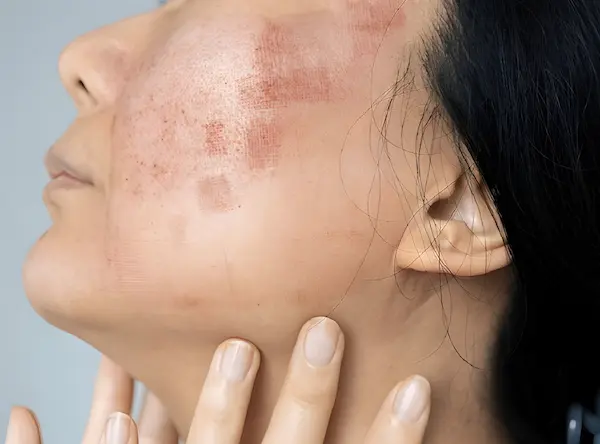
Side effects of treatment using the scar cutting technique
Like any medical procedure, treatment with the scar sectioning technique may be accompanied by some side effects, but most of these effects are temporary and disappear within a few days to weeks, and include:
- Bruising and swelling: This is a common side effect that occurs as a result of the rupture of small blood vessels under the skin during the release of scars. The bruising is mild or moderate and usually lasts from 7 to 14 days.
- Redness in the treated area, due to mild inflammation that occurs as part of the healing process. This redness usually disappears within a few days.
- ألم أو إحساس بالحساسية في المنطقة المعالجة بعد زوال تأثير التخدير الموضعي، ويمكن السيطرة على هذا الألم باستخدام مسكنات الألم التي لا تستلزم وصفة طبية، حسب توجيهات الطبيب.
- تكون عقيدات أو كتل تحت الجلد في المنطقة المعالجة، وهي عبارة عن جلطات دموية صغيرة تتكون كجزء من عملية الشفاء، وعادة ما تتحلل وتختفي من تلقاء نفسها خلال بضعة أسابيع.
- Post-inflammatory hyperpigmentation, especially in people with dark skin, is a rare occurrence resulting from an inflammatory reaction and can last for several months, but it usually disappears with proper skin care and avoiding sun exposure.
- Infection, although rare, can occur if the treated area is not kept clean. Therefore, it is necessary to follow the doctor's instructions regarding wound care after the procedure.
- Injury to nerves or large blood vessels, which is an extremely rare side effect and only occurs if the procedure is not performed by a specialist and sufficiently experienced doctor.
Learn about: Learn about the best ways to treat facial scars permanently
الاسئلة الشائعة:
Is cutting scars effective?
Yes, the scar sectioning technique is considered very effective, especially in treating certain types of scars, such as rolling scars and some types of box scars. Its effectiveness increases with repeated appropriate sessions and combination with complementary treatments, which is determined by the specialist doctor based on the condition of each patient, and its effectiveness can be summarized in the following points:
- Effectiveness with sunken scars.
- Collagen stimulation.
- Long lasting results.
- Possibility of combination with other treatments.
Does the face swell after cutting scars?
Yes, it is normal for the face to become swollen after a scar trimming procedure, as this procedure involves separating the scar tissue under the skin, causing a temporary inflammatory reaction that appears immediately after the session and lasts for 24 to 72 hours.
What is a scar cutting needle?
The scar cutting needle, or what is called the suction needle, is a precise medical tool used to treat sunken scars, such as acne or smallpox scars, by cutting the fibrous fibers that cause the skin to pull inward.
It is characterized as a thin, long needle similar to an injection needle, but with a sharp or special tip. Some are straight and others have a curved tip. Its size usually ranges from 18G to 22G depending on the depth of the scar, and it includes several types, including:
- Regular needle for small scars.
- Nucor needle, has a sharp cutting edge, making it more effective for deeper scars.
- Cannula, which is less intense and causes less bleeding, but may be less accurate.
Is it possible to perform scar removal surgery during pregnancy or breastfeeding?
Pregnant or breastfeeding women can undergo scarring surgery, as the scarring surgery does not affect the health condition of the mother or the fetus, but this is usually not recommended and doctors prefer to wait for the following reasons:
- Some types of anesthetics, even topical ones, used during the procedure may enter the bloodstream in small quantities, and it is best to avoid them during pregnancy unless absolutely necessary.
- Cutting causes an inflammatory reaction, and may increase unwanted stress during pregnancy.
- In the case of breastfeeding, some medications or drugs may be excreted in breast milk, so it is preferable to postpone unnecessary procedures.
In conclusion, the scar sectioning technique is a powerful and effective treatment option for people who suffer from deep scars, especially resulting from acne. Although the procedure may seem simple, its ability to free the scar from fibrotic tissue and stimulate collagen production gives the skin an opportunity for rejuvenation and noticeable improvement.
It is always necessary to consult a qualified dermatologist to determine whether this technique is suitable for your condition, and to ensure obtaining the best results safely. Do not hesitate to visit us to obtain advice and the optimal treatment for your condition. You can also contact us on our numbers listed on the website for more details, reservations, and inquiries.
Sources
Complications of Subcision for Acne Scarring: Experience From Clinical Practice and Review of the Literature – onlinelibrary
Is Subcision an Effective Treatment for Acne Scars? – healthline
