
One of the medical conditions that draws attention from the first moment in a child’s life is the problem of tongue tie because it relates to very delicate functions. Despite the simplicity of the structure of the tongue and surrounding tissues, this condition leaves a clear impact on the life of the affected child, which requires immediate medical attention and necessary action before complications occur. Follow this article with us until you learn about the problem of tongue tie, its symptoms, its causes, and the most important treatment methods.
What is tongue tied?
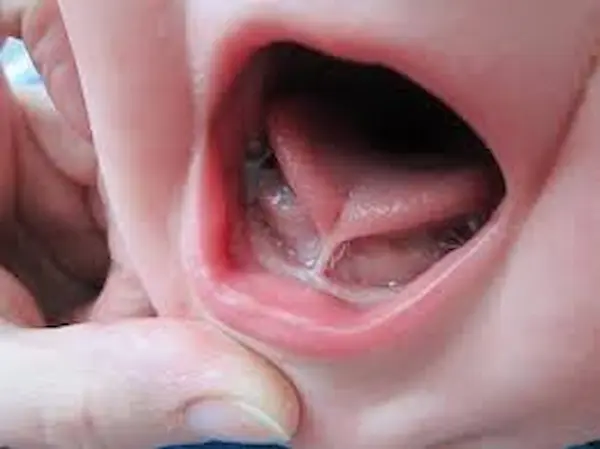
Tongue-tie (Ankyloglossia) is a congenital condition with which an infant or child is born, in which the thin tissue that connects the floor of the mouth to the tongue is thicker and shorter than normal. This condition, of course, reduces and limits the natural movement of the tongue, which affects many functions such as breastfeeding, swallowing, and speech, which requires medical follow-up to create an accurate treatment plan.
Causes of tongue tie
Below we learn about the 4 most important causes related to tongue tie, which help in diagnosing and treating the condition later:
1.Genetic factors
Some studies have proven that one of the most prominent causes that lead to this condition is the presence of a family history of the condition, which increases the possibility of it appearing in one of the children.
2. Incomplete development of the fetus
In the early stages of fetal formation, the tongue gradually separates from the floor of the mouth, so this step may not be completed in some fetuses, and part of the tongue remains attached to the lingual frenum without separation, which leads to the birth of a child with this condition.
3. Shortening of the lingual frenulum
The child may be born with a shorter and thicker lingual frenum than usual. The lingual frenulum, as we mentioned before, is the thin tissue that connects the tongue to the floor of the mouth, which reduces the flexibility of the tongue and its usual movements such as rising and extending outside the mouth.
4. Rare cases
Some rare cases of birth defects may carry a series of symptoms, including tongue tie, along with a group of other birth defects in the face and mouth. The reason is due to a defect in the growth of tissues inside the womb.
Symptoms of tongue tie in children and adults
Tongue-tie symptoms vary by age, so we'll detail them below for infants, older children, and adults:
1.Symptoms in infants
The most prominent symptoms that appear in infants are:
- Inability to latch on to the nipple, which makes the breastfeeding period short and intermittent.
- A distinctive crackling sound during feeding due to air entering the mouth.
- Colic and gas due to swallowing air during breastfeeding.
- Leakage and exit of breast milk from both sides of the mouth.
- Not feeling full and losing weight.
- Lack of sleep due to constant hunger.
2. Symptoms in older children
As for the symptoms of tongue tie in older children, they are as follows:
- Mouth breathing due to abnormal tongue position.
- Difficulty moving the tongue, taking it out of the mouth, or raising it up.
- Trouble eating and chewing food with frequent irritation.
- Difficulty in pronouncing some letters such as sīn, raa, dal, and taa.
- A problem with the growth of the jaw and the arrangement of the teeth due to the pressure of the tongue on the teeth.
- Accumulation of food debris on the teeth and inability to brush teeth normally.
3.Symptoms in adults
Symptoms of tongue tie in adults are as follows:
- Severe difficulty in pronunciation and stuttering in pronunciation, with great effort while speaking.
- Inability to perform some natural movements of the tongue, such as licking the lips or eating.
- Exposure to social problems. You find the affected person always isolated and not wanting to speak in front of others.
- Tartar accumulation on the teeth and persistent gum infections due to lack of tongue movement and failure to clean the mouth naturally.
- Severe sleep disorders due to snoring and sleep apnea as a result of incorrect tongue placement.
Learn about: Speech delay in children Causes, symptoms and treatment
Complications of tongue tie
Complications of tongue tie are divided into short-term problems in infants and children, and long-term problems in adults if treatment is neglected, and they include:
- Poor growth and weight loss due to inability to breastfeed normally.
- Defect in the development of the jaw and teeth, with gaps between the front teeth and a tendency to crooked teeth.
- Constant exposure to gum infections and tooth decay due to the difficulty of cleaning them.
- The child is exposed to speech disorders and delayed speech due to the inflexibility of the tongue.
- Poor social communication due to the child’s feeling of embarrassment and shyness.
- Long-term psychological impact due to the feeling of losing self-confidence.
- Difficulty performing daily activities such as eating and licking.
How to diagnose tongue tie
The condition of tongue-tie is diagnosed through several medical methods by a doctor specializing in ear, nose and throat, and these methods include the following:
- الفحص السريري:
The doctor examines the mouth and tongue, and in the event of an injury, he notices that the tissue ligament is shortened and finds it tight under the tongue. In the case of a severe injury, the doctor may ask to remove the tongue and raise it up, then move it right and left. - Infant screening:
The doctor asks about breastfeeding and its quality, and asks about the clicking sound, while monitoring the child’s weight to ensure that he is receiving adequate nutrition. - Hazelbaker test:
It is an accurate medical measure that evaluates the shape and function of the tongue through specific movements and points. It also helps determine whether the tongue only needs follow-up or therapeutic intervention. - Speech and speech assessment in adults:
The doctor evaluates the pronunciation of some letters, and measures the level of pronunciation and speech development with children of similar ages.
Methods of treating tongue tie
After examining and diagnosing the condition, the doctor begins to develop a treatment plan appropriate to the age and condition of the injured person In simple cases or there is no obvious functional obstacle, the doctor chooses non-surgical treatment, which includes the following:
- Support breastfeeding by adjusting breastfeeding position with nipple clamping techniques.
- Motivational exercises to strengthen tongue movement by a physical therapist specializing in musculo-speech therapy.
- Speech therapy for children and adults through specialized and approved speech sessions to improve speech and speech without surgery.
- Psychological support sessions for patients, especially adults, to adapt to the situation until it is completely treated through communication sessions, which helps reduce stress and improve the social and psychological condition of the affected person.
Al-Mousa Specialist Hospital in Al-Ahsa has the largest treatment centers in the Kingdom, which include a center for treating speech and speech disorders in children and adults, and a Rafah Center for Psychotherapy, which provides behavioral psychotherapy sessions to support patients throughout the treatment period. These centers are supervised by an elite group of the best doctors and specialists with experience and competence.
Book your consultation now at Children's rehabilitation center At Al Mousa Specialist Hospital.
Does tongue tie require surgery?
Yes, sometimes a tongue tie requires surgery, especially if there is a functional obstacle that leads to a problem with breastfeeding, speech, or gum problems. Surgery is the second method of treatment, and its types vary according to age and severity of the condition, and include the following:
1. Minor surgical procedure for infants and young children
The simple surgical procedure for infants only includes a simple cut of the sublingual ligament to facilitate movement. The procedure for infants and young children is performed with sharp medical scissors under local anesthesia. It is a simple procedure and recovery from it is very fast and has no complications if the doctor adheres to safety standards during the procedure.
2.The most complex surgical procedure for adults
The surgical procedure for adults involves correcting and rearranging the tissues. Frenuloplasty includes a larger cut of the ligament while redirecting the tissue to increase the length of the tongue. This procedure is used in the case of a thick or wide ligament, or if the surgical clipping procedure fails. The operation is performed under full anesthesia to fully control the condition and avoid complications.
Frequently asked questions
Below we answer the most important questions we receive from our followers related to tongue tie and how to treat it:
What are the signs of tongue tie?
One of the most important signs of tongue tie is the inability to raise or move the tongue normally, a crack appears at the tip, and in infants some strange sounds are made and difficulty is encountered during breastfeeding.
How long does a tongue tie procedure take?
Tongue tie surgery is a simple surgical procedure that is performed quickly. It only takes half an hour, and the child can recover quickly after adhering to some instructions.
How do I know if it is tongue-tied?
Tongue-tie can be identified by the inability to stick out and move the tongue easily, and the presence of a split in the ways of the tongue, in addition to accurate medical diagnosis through otolaryngologists at Al-Mousa Specialist Hospital.
Does tongue tie affect speech?
Yes, a tied tongue affects pronunciation, especially if it is severe, because it reduces the movement of the tongue, so some letters are affected during pronunciation, such as the letter Ra, Ta, and L.
Book an appointment immediately with the specialist doctors at Al-Mousa Specialist Hospital in Al-Ahsa to begin treating the problem of tongue-tie before it affects various vital functions. The earlier the treatment is, the better and faster the results will be. Therefore, we provide you with integrated medical care that begins with an accurate diagnosis of the condition, followed by determining the appropriate time to perform the operation for your child. Do not hesitate and seek treatment.
Sources..
Tongue-Tie (Ankyloglossia) – clevelandclinic
Tongue Tie (Ankyloglossia) – kidshealth
