
A physical therapist plays an essential role in improving the quality of life of patients, through their motor and functional rehabilitation after injuries, surgeries, or chronic diseases.
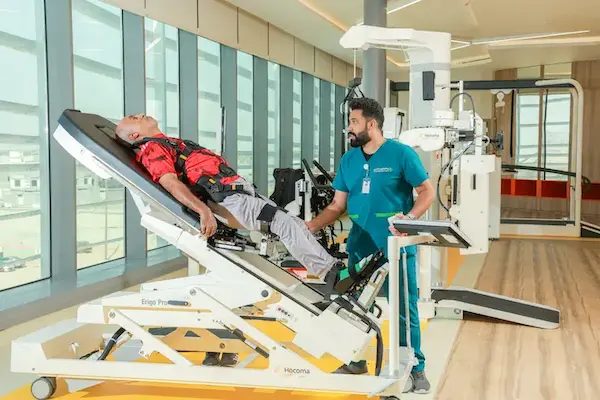
In this context, Al Mousa Specialist Hospital provides integrated physical therapy services under the supervision of an elite group of specialists and using the latest international technologies.
Who is a physical therapist?
He is a health expert who specializes in evaluating, diagnosing, and treating movement and functional problems that affect the body, whether as a result of injury, illness, or disability.
- Therapeutic exercises.
- Specialized devices.
- Massage and manual therapy techniques.
- Electrical or thermal treatment methods.
Its primary goal is to enable the patient to return to his daily life with the greatest possible independence and mobility.
Cases treated by physical therapists
First: bone and joint problems
The physical therapist has a major role in treating problems of the musculoskeletal system, which include:
-
Back and neck pain:
- It treats the causes of pain resulting from incorrect sitting, muscle strain, or herniated disc.
- It uses techniques such as stretching, manual therapy, and muscle strengthening to support the spine.
-
Joint osteoarthritis (such as knee or thigh osteoarthritis):
- It helps the patient to strengthen the muscles surrounding the joint to reduce pressure on it.
- Uses devices and tools to help reduce pain and improve flexibility.
-
Fractures after healing:
- After removing the cast, it works to restore movement and strength in the affected joint or organ.
- Prevents stiffness and muscle weakness resulting from prolonged immobilization.
-
Spinal injuries:
- Such as a herniated disc or spinal canal stenosis.
- It focuses on reducing pressure on the nerves and improving spinal flexibility.
Second: Sports injuries
Athletes often suffer injuries that require specialized physical therapy, such as:
-
Ligament sprain (such as ankle or knee):
- It helps relieve inflammation and pain, then strengthens the surrounding muscles to avoid recurrence of the injury.
-
Muscle tendon injuries:
- Such as shoulder tendonitis or Achilles tendonitis.
- Treatment includes progressive exercises and rehabilitation techniques.
-
Rehabilitation after sports surgeries:
- Such as cruciate ligament surgery or tendon rupture repair.
- A precise treatment program to restore normal fitness and function.
ثالثًا: أمراض الجهاز العصبي
The physical therapist provides vital support to neurological patients, and the most prominent cases include:
-
Stroke (stroke):
- It works to restore movement, balance, and daily functions to the patient.
- It depends on retraining the brain to adapt to the lost functions.
-
Hemiplegia or total paralysis:
- Whether it is caused by a brain or spinal cord injury.
- Treatment aims to reduce spasms and improve limb control.
-
Multiple sclerosis:
- Creates a customized program to improve balance, muscle coordination, and muscle strength.
-
Cerebral palsy in children:
- Helps the child improve muscle coordination, standing, and walking.
- Uses devices such as splints, walkers, or specialized exercises.
-
Inflammation of the seventh nerve:
- Uses facial exercises to improve movement and muscle coordination.
Learn about: Home physical therapy sessions: Techniques used and preparation methods
Fourth: Respiratory problems
Physical therapy has an effective role in improving breathing functions through:
-
Removal of secretions from the lung:
- Using special breathing exercises or suction devices in some cases.
-
Improve breathing efficiency:
- In diseases such as asthma, pulmonary fibrosis, or after surgical operations.
-
Rehabilitation of Corona patients:
- After recovering from the virus, to improve breathing, strengthen the body, and restore the ability to move.
Fifth: Heart and circulatory diseases
The physical therapist works with heart patients within rehabilitation programs, such as:
-
After open heart surgery:
- Special exercises to gradually improve physical ability without stress.
-
Patients with heart failure or weak heart muscle:
- Aerobic exercises calculated to improve cardiac efficiency and muscle perfusion.
Sixth: Post-operative and post-operative cases
After surgery, the patient may lose mobility or experience pain and stiffness.
-
Muscle strengthening after the operation:
- To prevent muscle atrophy or functional weakness.
-
Improve joint flexibility:
- Using exercises and therapeutic methods such as ultrasound or electrotherapy.
-
Facilitating the return to normal life:
- Such as climbing stairs, sitting, or walking without pain.
Seventh: Children’s problems (pediatric physical therapy)
Pediatric physical therapy is very important in:
-
Cases of motor delay:
- Such as delayed sitting, crawling, or walking compared to their peers.
-
Balance or walking problems:
- Such as walking on tiptoes, or unsteady walking.
-
Developmental disabilities:
- Such as cerebral palsy, muscular dystrophy, or congenital spinal problems.
Eighth: Physical therapy for the elderly
Physical therapy helps older people with:
-
Fall prevention:
- By strengthening leg muscles and improving balance.
-
Treatment of general muscle weakness:
- To improve mobility and independence.
-
Reducing chronic pain:
- Such as back or joint pain resulting from aging.
Ninth: Water therapy (hydrotherapy)
In some cases, water is used as a therapeutic method:
- Reduces pressure on joints.
- Allows exercises to be performed without pain.
- Very suitable for patients who suffer from obesity or severe muscle weakness.
Book your consultation now at Physical therapy At Al Mousa Specialist Hospital.
The difference between a physical therapist and a manual therapist
Many people confuse a physical therapist with a manual therapist. Some people think that they perform the same role, while in fact they differ in scientific training, nature of work, scope of intervention, and professional basis.
Physiotherapist
He is a medically qualified specialist, with a university degree in physical therapy, who evaluates, diagnoses and treats movement, muscular and neurological problems.
It uses a comprehensive treatment plan that combines therapeutic exercises, manual therapy, the use of modern devices and techniques, in addition to rehabilitation after operations or injuries.
It treats neuromuscular and joint conditions and post-surgical rehabilitation, with the goal being to restore movement, strengthen the body, and improve balance and function.
Manual therapist
He is a person who specializes in manual therapy techniques that target muscles and joints through manual movement, straightening, and compression.
His background may be medical education, such as a physical therapist with additional training, short professional courses in massage or arthroplasty, while his goal of treatment is to reduce pain or relieve muscle spasm.
When do you need to visit a physical therapist?
Many do not realize when it is necessary to visit a physical therapy center, and postpone treatment until the problem worsens.
- The pain persists for more than two weeks
Even if it is minor, persistent pain in the back, neck or joints for a long time means that the body is not healing normally and needs specialist reduction.
- The pain is affecting your daily activities
When you start avoiding movement, have difficulty climbing stairs, or sit for long periods due to pain, this is a clear signal that you need movement therapy intervention.
- You take painkillers regularly to relieve pain
Constant reliance on painkillers to get through the pain is not a solution, but rather a temporary cover-up for the problem.
- You feel weakness, numbness, or tingling in your extremities
These symptoms indicate nerve compression or spinal dysfunction, and require careful evaluation and therapeutic exercises under the supervision of a specialist.
- You notice stiffness in your joints when you wake up or after rest
Morning stiffness or after prolonged sitting is a sign of a defect in joint or muscle movement, and physical therapy helps restore flexibility.
- Your movement becomes limited or unbalanced
When there are signs that the body needs rehabilitation and muscle balance, such as frequent falls, hesitation when walking, or difficulty standing steady.
- You have an old injury that you haven't fully recovered from
Some injuries require rehabilitation even after apparent healing, especially if you feel weakness in the affected limb or are afraid to use it.
- You experience pain that occurs repeatedly with the same activity
Such as shoulder pain when raising the hand, or knee pain when running, recurrence indicates the presence of a mechanical or functional defect that does not improve without specialist intervention.
- Change in your movement or posture
Such as excessive bending, a tendency to walk, or a deviation in the shoulders.
- Coming out of surgery or long treatment
Whether orthopedic, neurological, or even a cesarean section, rehabilitation is essential to regain strength and function safely and quickly.
The importance of physical therapists in rehabilitation
Rehabilitation is not just restoring the ability to move, but rather an integrated journey towards restoring quality of life after injury, illness or surgery.
-
Restoration of motor functions
After injuries or operations (such as fractures or strokes), the specialist works to restore the ability to walk, raise the arm, use the hand, or perform daily activities.
-
Reduce pain and improve quality of life
Manual therapy, stretching exercises, and electrical devices are used to relieve pain without constant use of analgesics, which improves the patient's comfort and quality of life.
-
Prevent long-term complications
Such as joint stiffness, muscle weakness, or loss of balance, which may occur due to prolonged rest or immobility after injury or surgery.
-
Improve balance and stability
It is very important, especially for the elderly or patients after strokes, to prevent falls and recurrence of injuries.
-
Promote independence
One of the most important goals of rehabilitation is to enable the patient to return to practicing his daily life independently, such as climbing stairs, getting dressed, practicing daily life, or returning to work.
-
Post-operative rehabilitation
After surgeries such as joint replacement or spine surgeries, the specialist develops a step-by-step program to restore movement and function and avoid improper loading or post-operative complications.
-
Comprehensive care for neurological conditions
Such as stroke, hemiplegia, and cerebral palsy in children, where physical therapy works to train muscles and reactivate nerve connections to gradually improve movement.
- Respiratory and cardiac rehabilitation
In some cases, the specialist helps improve respiratory capacity and cardiovascular fitness during Special exercises, especially after chronic diseases or major operations.
Learn about: Water physical therapy To improve mobility and relieve pain naturally
How do you choose a physical therapist suitable for your condition?
Choosing a physical therapist is an important step in your recovery, especially if you suffer from an injury, chronic pain, or need rehabilitation after an operation.
- Choose according to your case specialty
Not all cases are treated the same way.
- Orthopedic problems require a musculoskeletal rehabilitation specialist.
- Strokes and nerve injuries require a neurological rehabilitation specialist.
- Pediatric cases require a pediatric physical therapist.
- Verify your educational qualifications and experience
Choose a physical therapist with an accredited certificate, preferably one who has advanced courses or extensive experience in your case.
- Review patient reviews and other people's experiences
Look for reviews of previous clients on the Internet and ask trusted people about the specialist.
- Try the first session
Go for the first session, and pay attention to:
- Does the specialist listen well?
- Does he explain the treatment plan clearly?
- Does he give you enough time and care about the details of your case?
- Make sure the place is ready
The place should be comfortable, clean, and provide the right tools.
- Notice the progress of your condition
If there is no improvement after a number of sessions, or you feel neglected, you have the right to seek a second opinion.
Frequently asked questions
How many physical therapy sessions do I need?
The number of physical therapy sessions varies from one case to another, but in general simple cases require approximately 4 to 6 sessions, while moderate injuries or after minor surgical operations may require 8 to 12 sessions.
Can the exercises provided by the specialist be performed at home?
Yes, physical therapy exercises can be performed at home if the specialist recommends them and explains them well.
Does the physiotherapist provide advice on prevention?
Yes, physical therapists provide important advice to prevent injuries and recurring pain, such as correcting body posture, strengthening and flexibility exercises, and healthy lifestyle choices.
In conclusion, the physical therapist is an essential partner in the journey of recovery and prevention, not only through treatment sessions, but also through sound guidance and advice based on scientific and practical experience.
