
Seborrheic dermatitis is a common skin condition. It affects areas of the skin rich in sebaceous glands, such as the scalp and face. Follow this article with us as we aim to provide a comprehensive guide on how to treat seborrheic skin inflammation effectively by reviewing the medical treatments at Al Mousa Specialist Hospital and some available home remedies, in addition to tips for dealing with this condition.
What is seborrheic dermatitis
It is a type of chronic dermatitis. It is common and is known as seborrheic eczema or dandruff, because it mainly affects the scalp and other oily areas of the body, such as the face, ears, upper chest, and skin folds.
It is worth noting that seborrheic dermatitis is not a contagious disease and is not associated with poor personal hygiene, and although it may be a chronic condition, its symptoms can be effectively controlled using appropriate treatments.
Causes of seborrheic dermatitis
The exact cause of seborrheic eczema is still unknown, but it is believed to result from a complex interaction between several factors. The most important causes and factors contributing to the appearance of this skin condition include the following:
- The Malassezia fungus is a type of fungus that lives on the surface of the skin of most people naturally without causing any problems. The condition of seborrheic inflammation of the skin appears as a result of the skin of some infected people reacting to this fungus or to its excessive growth, and the secretion of substances that irritate the skin, leading to inflammation and peeling.
- Increased secretion of sebum. The increased production of sebum and body oils provides a rich environment for the Malassezia fungus to grow. The chemical composition of oils and fats may be different in people with seborrheic dermatitis, which contributes to inflammation.
- Genetic factors. Some people have a genetic predisposition to developing seborrheic dermatitis, and there may be a greater risk of developing it if a family member has a history of it.
- Stress and psychological pressure, as a result of their effect on the immune system and hormones in the body.
- Hormonal changes, such as those that occur during puberty or pregnancy, may affect the increased production of body fat.
- Weakened immune system, such as in patients with AIDS or those taking immunosuppressive medications, where the immune system is less able to control the growth of the Malassezia fungus and the inflammatory response.
- Certain medical conditions increase the risk of seborrheic dermatitis, such as Parkinson's disease and some neurological disorders, which are related to changes in body sebum production or nervous system function.
- Taking some medications as a side effect.
- Cold, dry weather during the winter or in dry weather conditions, as a result of skin irritation and reduced moisture, which may increase peeling and inflammation.
Read also: Tips for preventing stasis dermatitis
Symptoms of seborrheic dermatitis
Symptoms of seborrheic eczema vary in severity as well as location from person to person, but generally include the following:
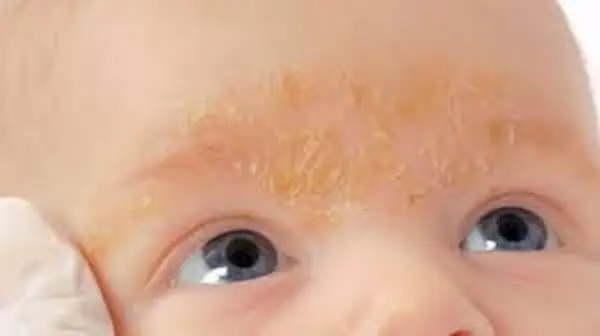
- Dandruff: It is a common sign of seborrheic inflammation of the skin. It appears in the form of white or yellow greasy crusts on the scalp. They may be light or heavy and stick to the hair or fall on the shoulders.
- Redness of the skin in the affected fatty areas.
- Skin peeling: Thin layers of skin fall out in the form of crusts. These crusts may be dry or oily.
- A feeling of itching in the affected skin, and the itching may be mild to severe.
- The appearance of greasy spots on the skin with an oily or greasy texture.
- Temporary hair loss, in cases of severe infection.
- Inflammation and peeling of the edges of the eyelids.
- Redness, moisture, and peeling in skin folds such as the armpits, thighs, and under the breasts, and in some cases, there may be an unpleasant odor.
- Signs of redness and peeling appear in the areas of the sebaceous glands, such as the nose and its folds, ears, chin, forehead, upper chest and back.
- In infants, cradle cap appears as thick, yellow or brown scales on the scalp, but is usually not itchy and goes away on its own within a few months.
Methods of diagnosing seborrheic dermatitis
Seborrheic dermatitis is usually diagnosed at Al Mousa Specialist Hospital based on the clinical examination and medical history of the patient. There are no specific laboratory tests to definitively confirm the diagnosis, but the doctor may resort to some procedures to rule out other skin conditions or to better evaluate the condition.
The main methods for diagnosing seborrheic dermatitis include:
- Clinical examination and observation of symptoms, where the doctor carefully examines the skin and scalp to notice the characteristic symptoms of seborrheic dermatitis, such as crusts.
- Ask about medical history, the history of symptoms, their frequency, and factors that may increase or alleviate them, in addition to family history of skin diseases.
- Excluding other conditions, as the doctor is often able to distinguish between seborrheic dermatitis and other skin conditions with similar symptoms, such as psoriasis, eczema, and fungal skin infections through the shape and location of the scales.
- Skin biopsy: Your doctor takes a small sample of affected skin and examines it under a microscope to help rule out other skin conditions, such as certain types of psoriasis or fungal skin infections.
Book your consultation now at مركز الجلدية والتجميل At Al Mousa Specialist Hospital.
How to treat seborrheic dermatitis
Treatment of seborrheic eczema at Al Mousa Specialist Hospital aims to alleviate symptoms and control the condition to prevent its aggravation. Since seborrheic dermatitis is a chronic condition, treatment is often continuous and includes a set of strategies.
Various treatment methods for seborrheic dermatitis include:
Topical treatments
- Medical shampoo, which is the first choice for treating seborrheic dermatitis of the scalp, as medical shampoos contain effective ingredients that help reduce fungi, inflammation and flaking, zinc pyrithione is anti-fungal and anti-bacterial, selenium sulfide is anti-fungal and reduces the speed of skin cell growth, salicylic acid, which helps in exfoliating scales, and coal tar, which helps reduce scales, inflammation and itching.
- Topical corticosteroids, on affected areas other than the scalp, to quickly reduce inflammation, redness, and itching, and should be used under a doctor's supervision to avoid side effects such as skin thinning and discoloration.
- Topical antifungals, such as ketoconazole or ciclopirox cream.
- Topical calcineurin inhibitors, such as tacrolimus and pimecrolimus, are considered alternatives to topical corticosteroids to reduce their risk, especially for long-term use and in sensitive areas such as the face.
Oral treatments
- Oral antifungals, your doctor may prescribe in cases that are severe or resistant to topical treatments.
- Oral corticosteroids: Doctors rarely resort to them due to their potential side effects, and they are reserved for very severe cases and for a short period.
Phototherapy
In some severe cases, your doctor may recommend light therapy, such as ultraviolet light therapy, to help reduce inflammation.
Home skin care and lifestyle
- Wash affected areas gently, use gentle, unscented cleansers and avoid vigorous scrubbing.
- Moisturize the skin regularly and use light, non-greasy moisturizers to help soothe the skin and reduce flaking.
- Avoid skin irritants such as some soaps or cosmetics that contain perfumes or harsh chemicals.
- Manage stress and practice relaxation techniques such as yoga or meditation.
- Follow a healthy, balanced diet rich in fruits and vegetables to support overall skin health.
- Adherence to treatment and the doctor’s instructions, and regular follow-up to evaluate the response to treatment and modify it if necessary.
- Patience and perseverance in following the treatment plan, because seborrheic dermatitis is a chronic condition and may require continuous management.
Learn about: Diagnosis of skin diseases The most prominent causes of injury
Frequently asked questions
What is the difference between psoriasis and seborrheic dermatitis?
Psoriasis and seborrheic dermatitis have in common that they are both chronic inflammatory skin conditions that cause red, scaly patches. However, they clearly differ in appearance, location, causes, and treatment. The main differences include:
Psoriasis:
- Scales and red spots, in the form of thick, raised, well-defined plaques with silvery-white, dry, powdery scales in the case of psoriasis, while seborrheic inflammation of the skin is characterized by red and inflamed skin with yellowish oily scales, and the scales are thinner and more oily than the scales of psoriasis.
- Where it affects Psoriasis usually affects the elbows, knees, scalp, lower back, nails and joints, often extending beyond the hairline of the scalp, while seborrheic dermatitis mainly affects areas with a high concentration of sebaceous glands, such as the scalp, face, eyebrows, sides of the nose, ears, chest, skin folds in the armpits, thighs and under the breasts.
- The reason is, psoriasis is an autoimmune disease in which the immune system mistakenly attacks healthy skin cells, causing them to multiply too quickly. There is a strong genetic component, while the exact cause of seborrheic dermatitis is not understood but is thought to be the result of an inflammatory reaction to the Malassezia fungus that naturally lives on the skin and an overproduction in the skin's natural oils.
- Itching can be present in psoriasis but is less severe than seborrheic dermatitis, which is characterized by severe itching, especially on the scalp.
- The skin around the affected area is drier in psoriasis than in seborrheic dermatitis, in which the skin tends to be oily.
What is the best shampoo for seborrheic dermatitis?
It is difficult to determine one shampoo that is best for all cases of seborrheic dermatitis due to individual differences between patients.
However, the most effective shampoos generally contain specific antifungal and anti-inflammatory ingredients to target the underlying causes of the condition. Key ingredients to look for include:
- Ketoconazole, a powerful antifungal medication that helps control Malassezia fungus.
- Selenium sulfide is an effective antifungal agent that helps slow down the production of skin cells.
- Zinc pyrithione, an antifungal and antibacterial ingredient found in many over-the-counter dandruff shampoos, is generally considered milder than ketoconazole or selenium sulfide.
- Salicylic acid, an effective agent in treating scalp flakes, helps break them down and remove them.
- Coal tar helps reduce peeling, itching and inflammation.
- Ciclopirox Olamine, an antifungal and anti-inflammatory that can be as effective as ketoconazole and may be less drying for some.
What ointment is suitable for dermatitis?
To determine the appropriate ointment for dermatitis, it is necessary to know the type of dermatitis you suffer from. Each case has what is appropriate for it, but in general, the main types of ointments used in treating dermatitis include the following:
- Topical corticosteroids, to reduce inflammation and itching, but must be used under the supervision of a doctor to avoid side effects.
- Topical calcineurin inhibitors are good alternatives to corticosteroids, especially in chronic cases and for long-term use and in sensitive areas.
- Moisturizers are necessary to maintain skin moisture and reduce dryness and cracking. It is preferable to choose the thickness of the moisturizer based on the condition of the skin and it must be free of perfumes and irritating substances.
- Topical antifungals, such as ketoconazole, ciclopirox olamine to control fungi such as seborrheic dermatitis.
You should be careful not to use any topical ointment without consulting a doctor, especially if the symptoms are severe or do not improve with home treatments. The dermatologist will accurately diagnose your condition and provide safe and effective treatment recommendations.
In conclusion, we have reviewed in this article a group of effective methods for treating seborrheic dermatitis and controlling its annoying symptoms. However, some cases may require specialized medical attention to ensure accurate diagnosis and optimal treatment.
Al Mousa Specialist Hospital is keen to provide the latest technologies and therapeutic solutions in the field of skin diseases, including seborrheic dermatitis. Do not hesitate to visit the hospital to obtain a comprehensive consultation and treatment plan that meets your individual needs.
You can contact us on our numbers listed on the website for more details, reservations and inquiries.
Sources and references
Seborrhoeic dermatitis – dermnetnz
Seborrheic dermatitis – aad