
Colon cancer is one of the most common types of cancer and appears as a result of abnormal growth of cells in the large intestine. The disease often begins with unclear symptoms in its early stages, which makes early diagnosis extremely important. Risk factors include age, family history of infection, and unhealthy eating habits.
What is colon cancer?
Colon cancer is an abnormal growth of cells in the large intestine or rectum that leads to the formation of tumors that may be benign at first and then turn malignant. Cancer arises as a result of genetic changes that affect the life cycle of cells. It can develop slowly over years before obvious symptoms appear, which makes periodic follow-up necessary. Genetic factors and an unhealthy lifestyle increase the risk of infection.
Causes of colon cancer
Colon cancer is one of the common diseases that can be prevented or detected early by knowing the causes and influencing factors, which helps reduce risks and improve quality of life. Which are represented in the following points:
- Having a family history of colon cancer or the presence of specific genetic mutations that increase the incidence.
- An unhealthy diet rich in fats and red meat and low in fiber affects his health.
- Obesity and weight gain, which is associated with an increased risk of many types of cancer, including colon.
- Lack of physical activity, which leads to slow bowel movements and increases the chances of abnormal cell accumulation.
- Smoking and alcohol use are known factors that affect the health of the digestive system and increase the possibility of infection.
- Chronic intestinal inflammation, such as Crohn's disease and ulcerative colitis, increases the risk of developing colon cancer.
- Increasing age, as the probability of infection increases after the age of fifty in most people.
- Chronic colon-related diseases such as polyps or adenomatous polyps may turn into cancerous tumors.
- Environmental factors such as exposure to certain chemicals or pollutants may play a role in increasing the risk.

Symptoms of colon cancer
Early recognition of colon cancer symptoms is an essential step for early detection and effective treatment, as careful observation and regular medical follow-up help reduce complications. These symptoms are as follows:
- Changes in bowel movement such as diarrhea, persistent constipation, or a feeling of not emptying completely.
- The presence of blood in the stool, whether bright or dark red, may indicate internal bleeding.
- Persistent or recurring abdominal pain and cramps, especially with flatulence or gas.
- Unexplained weight loss without a change in diet or exercise.
- Constant exhaustion and fatigue resulting from chronic blood loss or general body weakness.
- A change in stool size or shape, such as becoming thinner or intermittent, may be a sign of intestinal narrowing.
- Repeated nausea or vomiting, especially in cases of partial or complete colon obstruction.
- Anemia resulting from internal bleeding, which may appear as paleness or general weakness.
- Non-specific and persistent symptoms such as loss of appetite or persistent digestive discomfort.
Discover with us .. معامل تحاليل الاورام: أحدث التقنيات المستخدمة ودورها في التشخيص المبكر للسرطان
How to diagnose colorectal cancer
The diagnosis of colorectal cancer through Al Mousa Health Group depends on a series of accurate examinations that help determine the presence, size, and location of the tumor accurately. Early diagnosis also provides better treatment opportunities, as follows:
الفحص السريري والتاريخ الطبي
We review the patient's medical history, including previous symptoms and family chronic diseases, and conduct a careful physical examination to detect any abnormal signs in the abdomen or rectum.
اختبارات الدم
Blood tests, including a complete blood count and liver function tests, may be ordered, and the doctor may also use specific tumor markers such as CEA to provide additional information about the possible presence of cancer.
Colonoscopy
Our center performs colonoscopy using a flexible tube equipped with a camera to view the entire lining of the colon and rectum. This procedure also allows samples of any suspicious areas to be taken for careful histological examination.
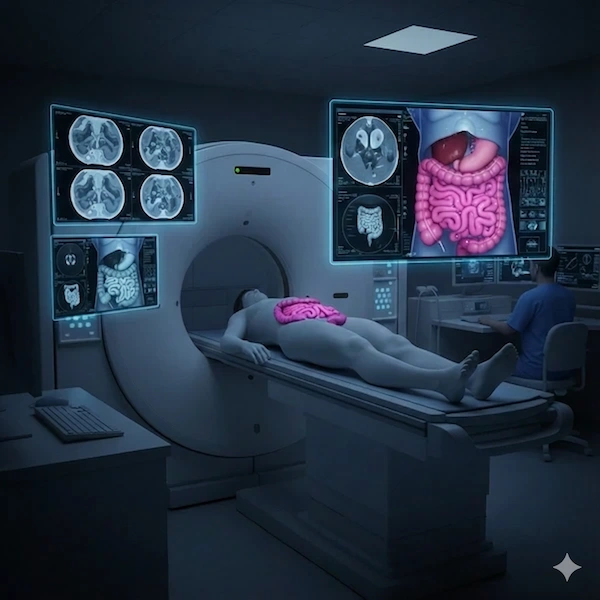
CT or MRI scan
The doctor may resort to CT or MRI imaging of the abdomen and pelvis to determine the extent of the tumor's spread. These images also help in planning surgical or radiation treatment when needed.
Stool tests
A stool occult blood test or genetic tests can be used to detect cancer cells or genetic changes in the colon. These tests are also considered an aid for early detection, especially in people at risk.
Genetic testing and genetic counseling
In some cases, it is recommended to conduct a genetic test to determine the presence of genetic mutations that increase the possibility of cancer. This information also helps in developing an accurate follow-up plan for the patient and his family.
Get to know .. Together towards cancer prevention in accordance with modern medical recommendations
The difference between colon cancer symptoms in men and women
Colon cancer symptoms differ between men and women due to differences in hormonal, anatomical and lifestyle factors, which makes individual awareness and regular medical follow-up essential. The difference between them is as follows:
- Recurrence of constipation or diarrhea is often more noticeable in men than in women.
- Unexplained weight loss appears faster in women due to hormonal differences and bowel size.
- The presence of blood in the stool is more noticeable in men while women may be less recognizable due to other conditions.
- Abdominal pain and cramps in women are linked to other problems in the reproductive system, which makes it difficult to distinguish them from colon symptoms.
- Fatigue and general fatigue appear more severely in women as a result of chronic anemia resulting from internal bleeding.
- Changes in stool size or shape appear more clearly in men and are an important indicator for monitoring the colon.
- Abdominal bloating or swelling may be similar in both sexes, but it sometimes appears in women after hormonal changes such as pregnancy.
- Nausea and vomiting often appear in women with partial colon obstruction, while in men it is less common.
- Non-specific symptoms such as loss of appetite or discomfort are common, but their severity and pattern differ between the sexes.
- Speed of diagnosis and follow-up, as women tend to see a doctor sooner due to symptoms intertwined with the reproductive system, while men may delay diagnosis.

Stages of colon cancer
The stages of colon cancer help doctors evaluate the progress of the disease and determine the most appropriate treatment plan for each case. These stages also represent a reference for anticipating results and chances of recovery, and are as follows:
Stage 0
Cancer cells at this stage are limited to the colonic mucosa, and are very limited without any spread to the deeper layers or lymph nodes, which makes early intervention very effective and increases the possibility of complete recovery without additional treatments.
Stage 1
The cancer remains confined within the colon wall and has not reached the nearby lymph nodes. This stage also provides a great opportunity for simple surgical treatment that completely removes the tumor with careful follow-up to prevent any possible relapse.
Stage 2
The cancer begins to spread to areas further inside the colon wall without reaching nearby lymph nodes. This stage is divided into three types to determine the extent of spread: IIA, when the tumor extends into the inner wall, IIB, when it reaches the outer layer, and IIC, when it spreads to one or more neighboring organs.
Stage 3
The cancer has spread to nearby lymph nodes and spreads deeper into the colon wall. Stage IIIA involves growth in layers I and II with nearby nodes, while IIIB and IIIC represent greater spread to more nodes and deeper levels.
Stage 4
At this stage, the cancer reaches distant organs such as the liver, lungs, or bones, and requires focused therapeutic interventions, including surgery, chemotherapy, or radiation, with continuous follow-up to control the disease and improve the patient’s quality of life.
Read also .. Learn about the best beneficial foods for cancer patients
كيفية الوقاية من سرطان القولون
Preventing colon cancer is an essential step to maintaining the health of the digestive system and reducing the risk of developing this serious disease This can be achieved by following a set of medical advice provided by Al Mousa Health Group::
- Follow a healthy, balanced diet rich in fiber and vegetables to facilitate bowel movement and reduce the accumulation of abnormal cells.
- Avoid fatty foods and red meat, which increase the likelihood of developing colon tumors over time.
- Regular physical activity to stimulate bowel movements and maintaining a healthy weight reduces the risk.
- Quit smoking and limit alcohol because they have a negative impact on colon health and increase the chances of developing cancer.
- Periodic examinations for early detection, such as colonoscopy and laboratory tests to identify any early changes in the intestines.
- Regular medical follow-up with a gastroenterologist to evaluate the health condition and take appropriate preventive measures.
- Awareness of early colon symptoms and immediate action when any signs appear, such as changes in bowel movement or blood in the stool.
- Stay away from psychological stress and daily stress because chronic stress indirectly affects the health of the digestive system.
- Strengthening general immunity through adequate sleep, drinking water regularly, and taking the vitamins and minerals necessary for the body.
Frequently asked questions
Who is most at risk of colon cancer?
People over the age of 50 and those with a family history of colon or bowel cancer are most at risk, and some unhealthy eating habits and lack of physical activity also increase the possibility of infection.
How does early detection help treat colon cancer?
Early detection can identify tumors before they spread and greatly increase the chances of successful treatment. It also allows medical intervention before serious complications occur, such as intestinal obstruction or the spread of cancer cells to other areas.
What tests are recommended to detect colon cancer?
Tests include intestinal endoscopy, stool examination to detect occult blood, and imaging tests such as: CT scanIt is also recommended to conduct these tests periodically for people who are most at risk.
in conclusion Colon cancer is a preventable disease, and early detection increases the chances of successful treatment Al Mousa Health Group We provide you with accurate screening programs and advanced tests to continuously monitor your colon health, so do not wait any longer and contact us now to protect your health with confidence and reassurance.