Benign Bone Cancer: Diagnosis and Care with Almousa Health
Pass it on
Reviewed by: Oncologist Ahmed Mohamed Al-Wabari
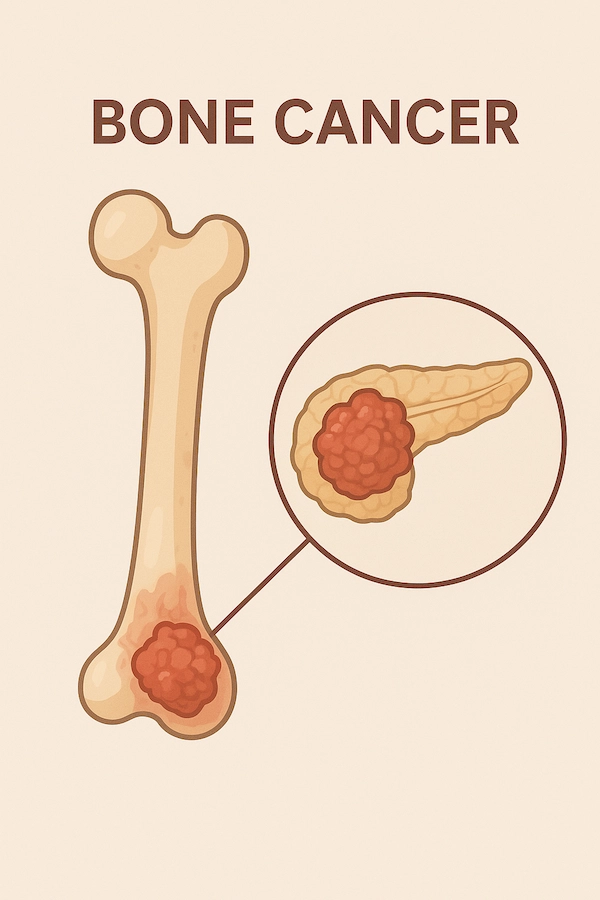
Caring for bone health is no less important than caring for any other part of the body, as bones are the mainstay of movement and stability, and although hearing the word “tumor” raises concern, benign bone cancer is not considered a malignant tumor, but rather a condition that can be completely controlled with early diagnosis and correct treatment.
In this article, we will learn about the nature of this tumor, its most important symptoms, methods of diagnosis and treatment, and how we provide integrated care that combines medical expertise and psychological support for the patient on his recovery journey.
What is benign bone cancer?
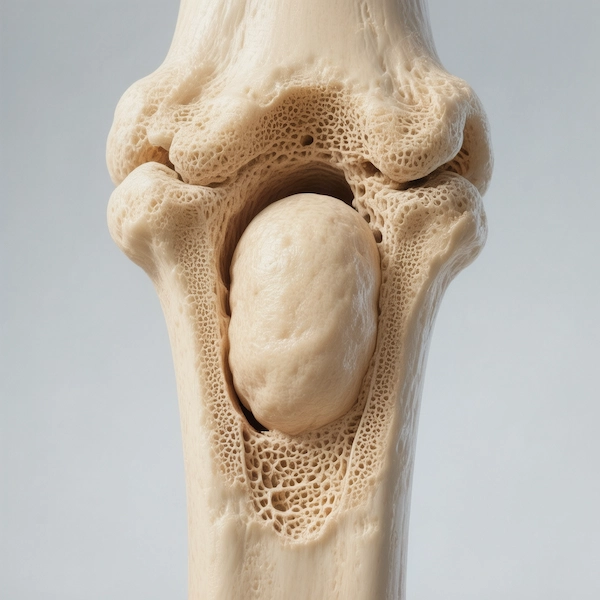
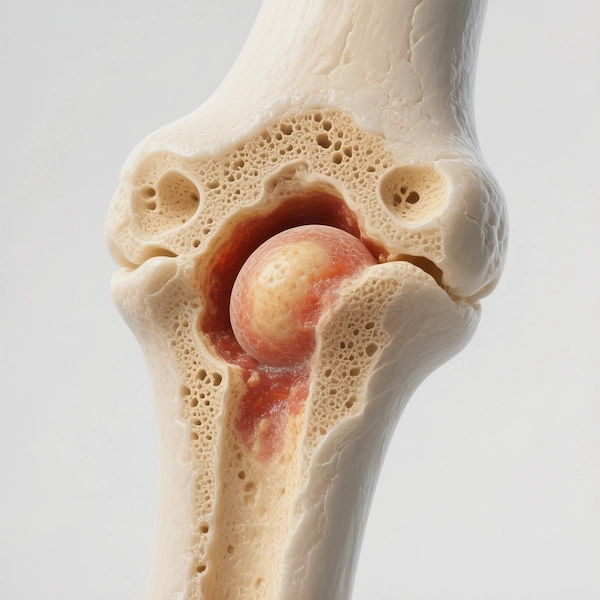
Benign bone cancer is an abnormal growth of cells within bones, but it does not spread to nearby tissues or organs. It most often appears in long bones such as the bones of the arms and legs or in the spine and pelvis.
This type differs from malignant tumors in its slow behavior and inability to spread, but some types may cause pressure on the surrounding tissue or bone deformities if not treated in time.
Doctors note that these tumors affect all ages, but they are more common in young people and adolescents due to rapid bone growth during that stage.
Generated by artificial intelligence
Types of benign bone cancer
There are several types of benign tumors that affect the bones, and each type differs in its nature and location within the body. Among the most prominent are:
All of these examinations are performed within a safe and integrated medical environment, under the supervision of doctors specialized in orthopedic surgery and oncology to ensure the accuracy of the results and the speed of developing an appropriate treatment plan.
Can benign bone cancer turn into malignant?
Mostly, benign tumors remain stable and not life-threatening, but some rare types, such as giant tumors, may turn into malignant tumors if not treated properly, so continuous monitoring with the specialized medical team is crucial.
Frequently asked questions about benign bone cancer
What is the difference between benign and malignant bone cancer?
Benign disease does not spread to other parts of the body, while malignant disease may spread to nearby tissues or distant organs.
Does benign bone cancer always require surgical treatment?
Not necessarily. Some cases require regular medical monitoring if they do not cause symptoms.
What are the most prominent symptoms of benign bone cancer?
Local pain, minor swelling, or recurrent fracture of weak bones.
Is it possible to completely cure benign bone cancer?
Yes, in most cases it is possible to recover completely after removing the tumor or following it up without complications.
What is our role in treating these cases?
We provide accurate diagnosis and integrated treatment that combines surgery, physical therapy and psychological support to achieve the best possible outcome for the patient.
Generated by artificial intelligence
Conclusion
Dealing with benign bone cancer requires a combination of precise medical expertise and integrated human care. In our center, the role of doctors is not limited to diagnosis and treatment only, but also extends to continuous follow-up and full support for the patient until complete recovery. Through advanced diagnostic techniques, operating rooms equipped with the latest systems, and precise rehabilitation treatment, we seek to provide a comprehensive treatment model that gives every patient the opportunity to recover safely and with complete stability.
If you notice any unusual symptoms in your bones or joints, do not hesitate to book your medical consultation at Almoosa HealthTo begin your treatment journey confidently and safely with a team of experts that always puts your health first.
X-Ray: It is used to determine the location, size, and general shape of the tumor within the bone.
Surgical intervention: If the tumor is causing pain, bone weakness, or the possibility of a fracture, your doctor may recommend surgical removal. The goal of surgery is to remove the tumor while keeping the bone as healthy as possible. In some cases, scaffolds or bone grafts are used to rebuild bone after removal.
The doctor examines the affected area and asks questions about the duration of the pain or the presence of previous swelling.
It is used to determine the location, size, and general shape of the tumor within the bone.
It provides precise details about the tissue surrounding the bone to see the extent of the tumor's effect.
It is used in some cases to clarify the relationship between the tumor and the internal bone structure.
This is the crucial step to confirm the diagnosis, as a small sample of the tumor is taken and examined under a microscope.
In many cases, a benign tumor does not require immediate intervention, but is monitored periodically through x-rays and regular examinations to ensure that it does not increase in size or affect the joint or bone.
If the tumor is causing pain, bone weakness, or the possibility of a fracture, your doctor may recommend surgical removal. The goal of surgery is to remove the tumor while keeping the bone as healthy as possible. In some cases, scaffolds or bone grafts are used to rebuild bone after removal.
Physical therapy is an essential step after tumor removal, as it helps restore movement, flexibility, and strengthen the muscles surrounding the bone.
Even after successful treatment, the condition must be monitored regularly to ensure that the tumor does not return or new symptoms appear.
Keep exploring
There’s more to the story
More on this topic, plus recent stories from our library.