At a time when awareness of breast cancer is increasing, breast sarcoma remains a rare condition that many overlook, despite its seriousness and difference from common types.
What is breast sarcoma?
It is a rare type of malignant tumor that originates in the connective tissues (such as muscle, fat, or blood vessels) within the breast, rather than in the milk ducts or lobes as in common types of breast cancer.They account for less than 1% of breast cancers, and they often grow rapidly, are aggressive, and require early intervention. There are many types of sarcoma, and they differ according to the type of cells from which they arise. Of the main types:
- Angiosarcoma: It is the most common type and arises from blood or lymphatic vessels in the breast.
- Fibrosarcoma: It arises from fibrous tissue inside the breast. It is characterized by rapid growth and may spread to nearby tissues if not treated early.
- Liposarcoma: It grows from fat cells within breast tissue.
- Rhabdomyosarcoma: Extremely rare, it arises from abnormal skeletal muscle cells within the breast, usually seen in younger age groups.
- Osteosarcoma: A very rare condition in which bone-like tissue forms inside the tumor.
- Mixed sarcoma: It includes species that cannot be classified neatly into one species.
Symptoms of breast sarcoma
Although rare, the symptoms of sarcoma may sometimes resemble some other breast tumors, but they are characterized by their rapid appearance or growth. Include:
Hard lump in the breast
A hard mass is one of the first signs noticed in most cases of sarcoma. These are often blocks:
- Painless.
- Clearly palpable under the skin.
- It can be distinguished from normal breast tissue.
- Sometimes with irregular edges.
- Does not move easily when touched.
- Rapid mass growth
One of the most noticeable features of breast sarcoma is the rapidity of tumor progression. This is the mass:
- They grow within a few weeks.
- Their size changes visibly, which is cause for concern.
- Sometimes, they become externally visible or cause a bulge in part of the breast.
- Change in the shape or size of the breast
As a result of rapid mass growth, It may happen:
- Asymmetry between the breasts.
- Stretching or tightening on one side of the breast due to pressure from the tumor on surrounding tissue.
- A general change in appearance, which may appear as a bulge or change in the contours of the breast, and is noticeable when looking or wearing clothes.
- Tightness or swelling of the skin over the tumor
As breast sarcoma grows larger, it may affect the skin over it. Which leads to:
- Tightness or hardening of the skin in the affected area.
- The appearance of redness or abnormal shine on the surface of the skin.
- Mild swelling or change in texture, sometimes the skin is tight or wrinkled.
These changes indicate that the tumor has begun to extend toward the superficial layers.
No nipple discharge
Sarcoma is often not accompanied by any bloody or clear discharge from the nipple, and there is no pain in the nipple or a change in its shape, except in the very late stages.
Therefore, the absence of secretions does not negate the presence of a tumor, which may make early detection more difficult without a clinical or radiological examination.
Learn about: A comprehensive guide to the difference between sarcoma and carcinoma

Causes of breast sarcoma
So far, there are no precise and direct causes that lead to it, but research indicates the presence of potential risk factors that may contribute to its development. These factors include:
- Previous radiation therapy to the breast: One of the most well-known factors is that women who have previously received radiation therapy for breast cancer (or chest area) have an increased likelihood of developing sarcoma years later. This condition usually occurs 5 to 10 years after radiation therapy, and is known as “radiation-associated sarcoma.”
- Genetic predisposition or genetic mutations: Some rare genetic mutations may increase the risk of infection, such as:Li-Fraumeni SyndromeNewnan syndrome or neurofibromatosis syndrome andThese syndromes affect genes responsible for regulating cell division and preventing tumors.
- Exposure to carcinogenic chemicals: Such as some industrial materials or chemical drugs that affect the DNA of cells.
- Weak immune system: In rare cases, there may be a relationship between weak immunity and rare types of tumors.
- the age: It can affect women at any age, but is most common in middle age (40-60 years).
Unlike common types of breast cancer, sarcoma is not related to hormonal factors or usual lifestyle.
Book your consultation now at Oncology center At Almoosa Specialist Hospital.
The difference between breast sarcoma and breast cancer
The difference between sarcoma and other types of breast cancer lies in several points: And it is:
- Presence: Sarcoma is very rare (accounting for less than 1% of breast cancers), Conventional breast cancer is very common among women around the world, affecting about 12.5% of women
- Place of origin: Sarcoma arises from connective tissue (such as muscle or blood vessels within the breast), While traditional cancer arises from the cells of the ducts or lobes responsible for secreting milk.
- Reasons:Breast sarcoma is often associated with previous radiation exposure or rare genetic mutations. Traditional cancer is related to hormonal factors, genetics, and lifestyle.
- Response to hormones: Sarcoma is not affected by female hormones. Some types of conventional breast cancer depend on hormones to grow and are treated with hormone therapy.
- Spread pattern: Breast sarcoma grows rapidly and may spread through the blood to other organs. Traditional breast cancer most often spreads through the lymphatic system.
- Diagnostic methods: Sarcoma is difficult to diagnose with a mammogram alone. Conventional cancer is often detected through routine mammograms and clinical examination.
- Expectations and recovery rates: The outlook for sarcoma depends on the type of tumor, how quickly it is discovered, and where it spreads. While the outlook for conventional cancer is better the earlier it is detected, with effective treatment protocols.
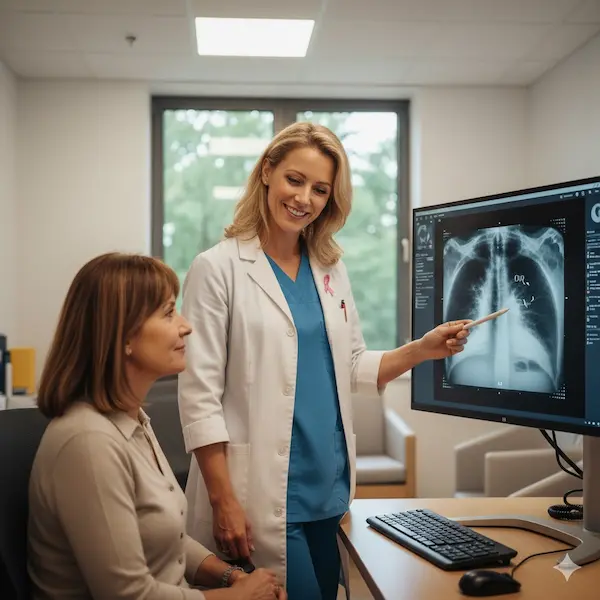
Methods of diagnosing breast sarcoma
Diagnosing sarcoma requires high accuracy because it is rare and sometimes resembles benign tumors or other types of cancer. It is one of the most important diagnostic methods:
- Clinical examination
- The doctor begins by evaluating the lump in the breast in terms of size, texture, and movement.
- The mass is often firm and grows rapidly, raising suspicion of an atypical tumor.
- Medical imaging
- Mammogram: It is used to detect any lumps or changes in breast tissue, but may not be enough on its own to diagnose sarcoma.
- Ultrasound: It helps distinguish a solid mass from a cyst.
- Magnetic resonance imaging (MRI): It is used to determine the extent of the tumor's spread in and around the breast tissue with high accuracy.
- Biopsy
- And it is The most important step for diagnosisA sample of tumor tissue is taken for analysis under a microscope.
- The examination determines the type of cells and whether they are sarcoma or another type of tumor.
- Histological and immunohistochemical analysis
- It is used to determine the specific type of sarcoma, such as (angosarcoma or liposarcoma).
- It is also useful in distinguishing sarcoma from conventional breast cancers.
- Additional radiological examinations
- Such as computed tomography (CT) scan or PET scan to determine whether the tumor has spread to other places in the body.
Learn about: Lung sarcoma treatment | طرق التشخيص وخيارات العلاج
How to treat breast sarcoma
Sarcoma treatment differs from traditional breast cancer treatment and depends on the type of sarcoma, its size, and the extent of its spread. It is one of the basic treatment methods:
- Surgery (surgical resection): The first and primary treatment option for most types of sarcoma, the goal is to completely remove the tumor with safe margins, that is, for the tissue around the tumor to be free of cancer cells. In some cases, an entire mastectomy may be required.
- Radiotherapy: It is used after surgery to reduce the risk of the tumor coming back, especially if the tumor is large or the surgical margins are not clearIt is rarely used as monotherapy.
- Chemotherapy: It may be used in certain situations, such as a tumor that is very large or rapidly growing The spread of the tumor to other places in the body (metastasis).Its benefit varies depending on the type of sarcoma.
- Targeted or immunotherapy: It is not currently a major treatment for sarcoma, but for some rare types, targeted or experimental drugs may be tried in advanced centers andIt is only used in very advanced cases or when other options have failed.
- Close periodic follow-up: After completing treatment, the patient needs periodic radiology examinations and clinical examination for early detection of any possible recurrence of the tumor.
FAQs
Where does sarcoma cancer come from?
Sarcomas arise from connective tissue in the breast such as blood vessels, muscle, fat or fibrous tissue.
What is the most dangerous type of sarcoma?
The most dangerous type is angiosarcoma, because it grows quickly, spreads early, and is difficult to treat, especially if it results from previous radiation therapy.
Does sarcoma come back again after treatment?
Yes, sarcoma may come back after treatment, especially if it is an aggressive type such as angiosarcoma, or not completely removed with safe margins.
Conclusion
Although rare, breast sarcoma is a condition that requires awareness and careful diagnosis, as it is significantly different from traditional breast cancer.