
Have you ever felt pain that makes you avoid walking or taking off your favorite shoes in search of temporary relief?
In this context, during this article we will take you on a comprehensive journey to learn about the causes of the appearance of corns, their symptoms, and methods of treatment and prevention to restore comfort while walking.
Definition of corn
A callus is a thick, circular or cone-shaped skin patch that often forms on the upper or side parts of the toes or between them. The skin works to form this layer as a defense mechanism against constant friction or pressure. Over time, the accumulation of hardened skin turns into a source of severe pain when standing or wearing shoes, as the center of the callus tends to grow deep into the sensitive tissue.
Types of corns
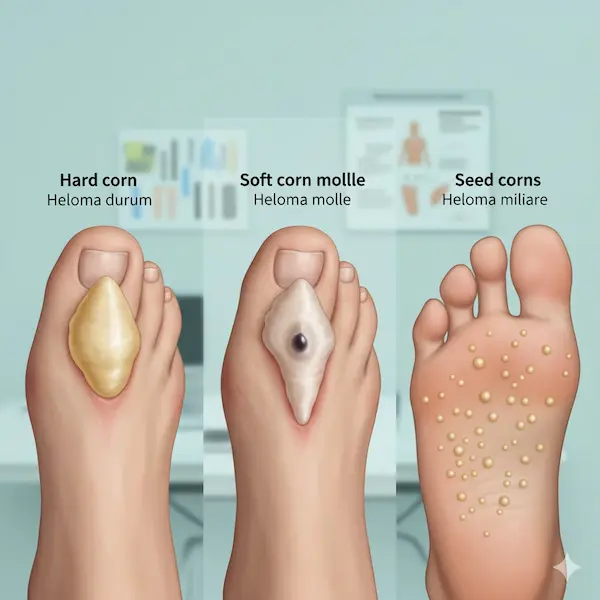
Types of corns vary depending on where they appear and the nature of the affected tissue. The type of corn often determines the severity of the pain and the appropriate treatment method. The basic types include:
- Steel screwIt is the most common type. It is a small, thick area of skin with a hard center. It usually forms above the toe joints due to the friction of the bone against the shoe.
- soft screw, It is characterized by its light color and soft or rubbery texture, and usually appears between the fingers due to constant moisture and repeated friction.
- Seed Corn, It consists of a group of small calluses that appear on the sole of the foot, especially in the areas that bear the body’s weight, and may cause pain when walking or standing for long periods.
تعرف أيضًا على: 8 effective ways to quickly treat dry and itchy skin
What are the causes of corns?
Calluses are basically formed as a defense mechanism that the skin resorts to to protect itself from constant pressure or intense friction. The following is an explanation of the most important reasons behind this problem:
1.Shoes and design problems
- Tight shoes cause pressure on the toes and harden the skin.
- High-heeled shoes shift the body's center of gravity toward the front of the foot, increasing pressure on it and leading to corns.
- Shoes without socks cause friction between the skin and the shoe and lead to skin irritation.
- Anatomical and biological factors
- Structural deformities in the foot, such as hammer toes or bony spurs, cause constant friction with the shoe and increase pressure on certain areas.
- Not distributing weight evenly on the feet increases pressure on certain areas and causes calluses to form.
3. Lifestyle and frequent stress
- Standing for long periods without rest exposes the foot to constant pressure, and this pressure causes, over time, thick layers of skin to form.
- Practicing sports that involve running or movement increases foot friction, increasing the chances of developing corns or ulcers.
4. Skin condition and moisture
In the absence of hydration, the skin loses its elasticity and becomes more susceptible to tearing and cracking upon friction. Over time, this leads to the accumulation of dead cells and the formation of thick, hard layers.
What are the common symptoms of corns?
Symptoms usually appear gradually, starting with a painless condition in the form of a thick layer, and as pressure continues, the signs develop and become more apparent. The most important things to note are:
- Changes in skin features, with the appearance of a hard, circular bump that differs from the surrounding skin, with roughness, severe dryness, and a yellow or light brown color.
- There is a sharp pain under the skin that increases by pressure on the affected area, with excessive sensitivity to touch.
- The skin surrounding the hard bump may appear flaky, with a tight, waxy texture due to the buildup of dead skin cells.
- The affected person experiences an unpleasant sensation that resembles a small object inside the shoe while walking. As the condition worsens, closed shoes make movement difficult and the discomfort increases.
The difference between corns, calluses, and fisheyes
| the condition | Medical term | The main reason | Shape and texture | Intensity of pain | Most important notes |
| corn | Corn | It results from repeated friction or pressure on a specific area of skin. | A small, solid cone-shaped bump that points inward. | Painful when put direct pressure on it. | It is not contagious and often appears on or between the fingers. |
| callus | Callus | It appears as a result of constant pressure or friction over a large area of skin. | Thick, rough, yellowish area, larger and less severe. | It is usually painless or causes only mild pain. | A natural response to protect the skin from friction, and is not contagious. |
| Fish eye | Plantar Wart | Caused by infection with the human papillomavirus (HPV). | A small skin bump containing tiny black dots (clotted blood vessels). | Painful, especially when walking or standing for long periods. | A contagious condition transmitted through direct contact or contaminated surfaces |
How long does it take to treat corns?
The recovery period varies depending on the type of treatment and the patient's condition. Initially, simple cases achieve improvement within 2 to 4 weeks after removal and pressure relief. Cases that require a medical procedure (cleaning/trimming) require several weeks for the skin to heal, while cases that require surgical intervention for structural problems may extend the recovery period to 6 or 8 weeks under medical supervision.
Preparing for the toenail removal procedure
The medical preparation stage is a first and decisive step for the success of treating corns. The specialist doctor focuses on carefully assessing the condition and understanding the underlying causes of the formation of corns. The goal is to ensure the safety of the procedure and develop an integrated treatment plan suitable for the patient’s needs. To ensure complete patient readiness, carefully implement the following steps:
First: accurate medical diagnosis
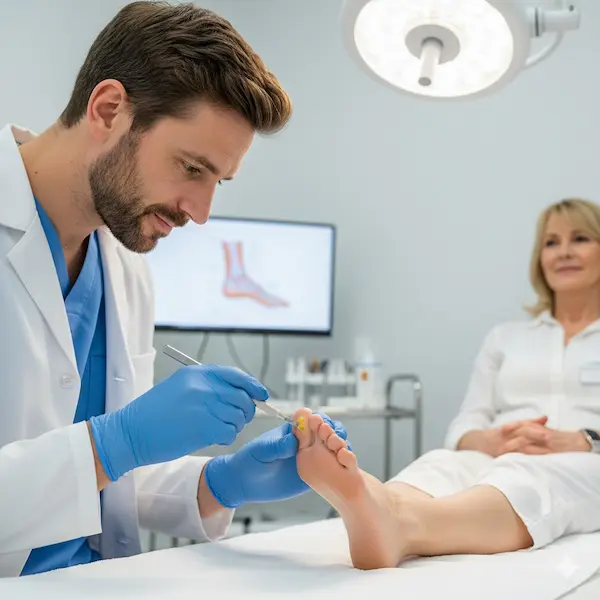
The doctor performs a comprehensive examination of the foot to determine the exact nature and location of the corn, while ruling out similar conditions such as warts. This evaluation determines whether the condition requires surgical intervention or can be treated non-surgically.
Second: Medical imaging and structural evaluation
After diagnosis, the doctor moves to a more accurate stage, which is X-ray imaging, to evaluate the structure of the foot and detect any bone deformities behind the nail.
Third: Review the health record and prepare for surgery
Before the procedure, the doctor reviews the patient's health history and takes into account chronic diseases and medications. Smokers are advised to temporarily stop to improve tissue healing, and all procedures are explained to ensure psychological and physical preparedness.
Fourth: Preparation before the operation
The doctor provides the patient with instructions on foot hygiene and care before surgery, explaining the signs that require medical review, and confirms the patient's readiness for the operation to ensure a safe recovery and stable results.
اقرأ أيضًا: Diagnosis of skin diseases and the most prominent causes of infection
How to treat corns?
A large group of people suffer from corns as a result of constant pressure or friction in specific areas of the foot, and from here comes the most common question, What is the treatment for cod nails?م؟
Treatment requires careful assessment to relieve pain, address the root cause, and prevent recurrence, and is provided by our medical team at Al Moosa Health through a comprehensive treatment plan using the latest medical methods.
Next, we move on to the stages of corns treatment and the medical methods used:
First: pharmaceutical treatments
Pharmaceutical treatments represent the first step in treating most cases of corns. Among the most important drug treatments used within this framework, the following can be mentioned:
- Salicylic acid is initially used to dissolve and soften hardened skin. It is available in various forms, including patches, solutions, and ointments, and the doctor chooses the most appropriate one according to the severity of the corn and the patient’s condition.
- Urea is one of the effective topical treatments for corns, as it moisturizes the skin, breaks up thick layers, and helps soften dry skin and relieve roughness in areas of the foot that are exposed to pressure.
- Ammonium lactate, an effective moisturizer that maintains the elasticity of the skin and reduces the accumulation of excess keratin, which causes roughness and hardening of the skin over time.
Second: removing the corn
When drug treatments do not achieve the desired results, the doctor moves to the stage of removing the screw manually or surgically, depending on the nature of the condition and its response to previous treatment. At this stage, the specialist does the following:
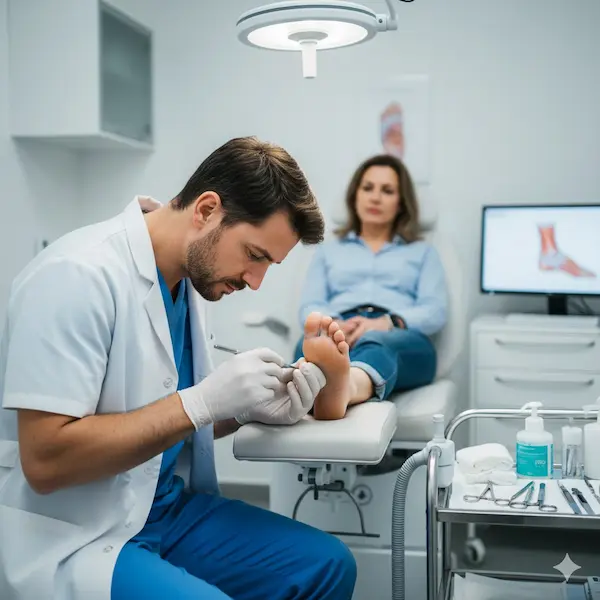
- Trim or clean the nail using fine medical instruments to relieve pressure on the skin and improve patient comfort.
- In some cases, especially if the nail is under or around the nail, it may be necessary to remove a small portion of the nail to access the nail and treat it effectively.
It is worth noting that all of these procedures To treat corns It is performed within a safe medical system and under the supervision of foot specialists to ensure the best results and reduce the risk of infection or complications.
Third: specialized surgery for corns
In chronic cases or those accompanied by deformity of the foot bones, surgical treatment may be resorted to as a final solution after exhausting other methods. Specialized surgeries for corns include:
- Surgical removal of the nail, removing the hard tissue formed with the surrounding damaged tissue to restore skin elasticity.
- Correction of bone deformitiesTreating pressure-causing conditions such as hammertoe or bone spurs.
- Decompression surgery, adjusting the position of the bone to reduce future friction and prevent the problem from recurring.
Fourth: Treating corns on the soles of the feet
Corns on the soles of the feet differ from other types and require special treatment to avoid irritation and infection, including antifungals and removal of excess layers, while directing the patient to keep the foot clean and dry to prevent recurrence.
After the process of removing toenails
After the process of removing corns, the recovery phase goes through several basic steps that ensure a safe and quick recovery, The patient is advised to follow the following instructions:
- Rest and elevate the foot for two days to reduce swelling and pressure on the surgical site.
- Use pain relievers as directed by your doctor to reduce discomfort after the procedure.
- Light walking after a week while avoiding excessive pressure on the foot for another three weeks.
- Wear surgical sandals for protection and to reduce swelling during the recovery period.
- Keep the wound clean and dry until the stitches are removed after about two weeks.
- Adhere to comfortable shoes and foot care to avoid the recurrence of corns in the future.
Why Al Mousa Health?
Our services are not limited to treating corns, but rather aim to restore comfort to the feet. Therefore, the medical team provides comprehensive care based on accuracy in diagnosis and human attention. They also rely on the latest technologies that focus on treating the root causes of the problem rather than treating only the symptoms to ensure an effective treatment that suits every patient.
Moreover, we pay great attention to comprehensive follow-up of the patient from the moment of the first evaluation until the completion of recovery and putting in place prevention steps after recovery. With this continuous care, we maintain the results for a longer period and ensure lasting comfort for the patient.
اكتشف المزيد عن: Skin tags: causes of their appearance, methods of treating and getting rid of them
Conclusion
Finally, with medical advancement, treating corns has become simple and effective through a treatment plan and continuous follow-up, which helps in getting rid of pain and restoring normal movement.
Get ready for your next step
Start your journey to foot comfort with confidence — learn more about our services, consult our expert doctors, and let the team... Health Moussa He accompanies you with experience and care towards a more comfortable and balanced life.
Frequently asked questions
When does corns become severe?
Its risk increases with the presence of bone deformities such as bone spurs or hammer toe, as well as in patients with Diabetes Or those who suffer from problems with blood flow to the feet.
When should you visit a doctor to treat corns?
Corns are often harmless, but they can cause problems if they become infected, especially among people with diabetes, and a patient may need surgery to remove corns when the corns grow excessively.
Will corns disappear without treatment?
Corns can go away on their own in some cases, but this may not happen or be delayed in people with weakened immunity or diabetes.
Are there risks for corns?
Risks may include pain and irritation under the skin, as well as severe inflammation in advanced cases of corns.
