
The spring months begin, and with it mothers’ feelings of fear and anxiety increase about the spread of chickenpox cases, especially among children in schools. Smallpox is one of the widespread and common diseases among children and adults as well, because of its distinctive symptoms and signs, which we learn about in detail in this article along with how to diagnose and treat the disease, and tips for preventing infection.
What is chickenpox?
Chickenpox is a viral infection or contagious viral disease caused by the varicella zoster virus. It usually affects children and sometimes adults and adults, and appears in the form of a skin rash with other symptoms that we will mention in detail later.
Chickenpox is a common disease in childhood. It persists in the body for a temporary period and then disappears completely. However, it is cautioned to be in contact with children or adults throughout the period of the disease so that they do not become infected. It must be known that there is a vaccine specifically for that virus to prevent infection.
What are the causes and risk factors for chickenpox?
One of the most important causes of chickenpox is a virus called the Varicella Zoster Virus. This virus is easily transmitted from one person to another by either inhaling aerosolized droplets from the mouth or nose of the infected person, or through direct contact with the blisters or personal tools of the infected person.As for the most important risk factors for infection, they are not receiving the chickenpox vaccine, and those who suffer from weak immunity, either due to malnutrition or chronic diseases.
What are the symptoms of chickenpox?
The symptoms of chickenpox are distinctive and easy to recognize, especially the shape of the rash, which are as follows:
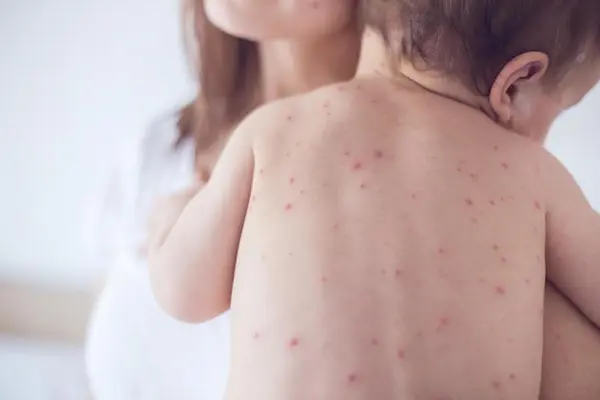
- Skin rash: It is characterized by the appearance of small red spots, which often begin on the face and abdomen, then turn into blisters filled with a clear liquid. Over time, these blisters burst and dry after treatment.
- Fever: or a temperature higher than 38 degrees Celsius, which is the first sign that appears in the child, even about two days before the rash.
- Severe itching: Blisters cause severe itching, which increases as the blisters develop, and is one of the most annoying symptoms.
- Signs in the mouth and throat: In some cases, blisters may appear inside the mouth and throat as well, causing pain during swallowing along with bad breath.
- Anorexia: The patient, especially young children, usually suffers from an unwillingness to eat or loss of appetite, which causes weight loss during the illness.
- Headache and muscle pain: Sometimes at the beginning of the infection, the patient complains of headache and severe pain in the body’s muscles, which causes him fatigue, general weakness, and lack of activity.
Diagnosis of chickenpox
Chickenpox is usually diagnosed through a clinical examination. The doctor examines the rash and asks about the symptoms accompanying it, as we mentioned before, in addition to asking the child: Has he been in contact with anyone infected with chickenpox?
Chickenpox treatment
Viral infections are known to remain in the body for a certain period and then gradually disappear. Therefore, what is meant by treating chickenpox is that the doctor develops a treatment plan that controls the symptoms of the infection until the patient’s condition stabilizes without complications, which includes:
- Treating fever and body aches: The doctor uses analgesics such as paracetamol to reduce fever and relieve headache and body aches. Aspirin should be avoided in children because it leads to serious complications.
- Relieve itching and skin irritation: The doctor recommends using soothing creams such as calamine to soothe and treat the rash. You should avoid rubbing or scratching the blisters so as not to leave traces later.
- Antivirals: They are not used in all cases, but only in immunocompromised patients or adults. The doctor usually prescribes them two days after the rash appears, such as acyclovir.
- Antihistamines: These are among the most important medications that the doctor prescribes to reduce itching and skin sensitivity, such as Loratadine or Claritin.
- Care for pimples: It is absolutely prohibited to pop pimples or touch them frequently. It is best to cover the affected area with loose cotton clothing to prevent skin irritation.
- Healthy nutrition: Attention must be paid to feeding the patient a healthy and sound diet with complete rest, while relying on foods that help raise immunity.
مضاعفات الجدري المائي
Some adults or those with weak immune systems may develop chickenpox complications, which include:
- Secondary bacterial infection due to scratching the blisters, which cause them to become like boils and ulcers.
- Viral pneumonia, which is one of the most serious complications that causes shortness of breath and coughing.
- Problems with the nervous system, such as inflammation of the cerebellum, which leads to difficulty in movement and loss of balance.
- In some rare cases, encephalitis occurs, and its most important symptoms include severe headaches and convulsions.
- In the case of pregnancy, the infection may affect the fetus, and infection near the time of birth may cause congenital chickenpox.
- Years after infection with smallpox, the patient may develop shingles as a result of the activity of the virus lurking in the nerves.
يمكنك قراءة Diagnosis of skin diseases and the most prominent causes of infection
How to prevent chickenpox?
Doctors at Al Mousa Specialist Hospital recommend following some instructions to prevent chickenpox, the most important of which are:
- Avoid contact with infected people, especially when the rash is active.
- Vaccination is one of the most important methods of prevention and is given in two doses, the first at the age of 18 months and the second between 4 to 6 years.
- Taking care of personal hygiene, such as washing hands regularly and making sure not to share personal tools with others.
- Work to strengthen the immune system through healthy nutrition, good sleep, and exercise that strengthens the immune system.
Book your consultation now at مركز الجلدية والتجميل At Al-Mousa Specialist Hospital
متى يجب زيارة الطبيب؟
There are some abnormal symptoms and signs that require an immediate visit to the doctor, the most important of which are:
- High temperature for more than 4 days, even when taking an antipyretic.
- If the child has difficulty breathing or has a persistent cough.
- Severe head pain with neck stiffness.
- Continuous vomiting and signs of dehydration.
- Severe redness and swelling around the blisters.
- Pus coming out of pimples.
- Loss of consciousness.
Chickenpox is a very common viral infection and there is no cause for concern. You can contact pediatricians at Al Mousa Specialist Hospital and learn more about methods of treating smallpox so that the period passes safely, in addition to the vaccine necessary to reduce the rate of infection and relieve symptoms. The vaccine is given to children in the hospital under full medical supervision.
Frequently asked questions
We answer the most common questions we receive from our followers about chickenpox and recovery from it:
How long does chickenpox take to heal?
The recovery period from chickenpox ranges from about 15 days from the appearance of the rash, and the virus goes through multiple stages, as we mentioned, until complete recovery.
Does bathing help chickenpox?
It is possible to shower while suffering from chickenpox, but by following some instructions, such as using lukewarm water, gently drying the skin without rubbing, and sterilizing the towel after drying. It is preferable to use calamine lotion after showering.
How do I get rid of chickenpox quickly?
There is no treatment that can enable you to get rid of smallpox quickly, but the incubation period for the virus lasts about 21 days and then the effects disappear completely. All you have to do is follow the doctor’s instructions until the disease disappears.
Sources and references
Chickenpox – nhs