
The common cold in infants is a cold or what is sometimes called a cold, and it is a very common case of rhinopharyngitis or viral upper respiratory tract infection in children. This acute disease is considered the most common among young children and is the most important reason that prompts parents to visit the pediatrician, since it is an infectious disease caused by a wide range of viruses. It is common for some children to have more than five bouts of colds or colds during one winter, which may lead parents to believe that their child is suffering from a chronic disease.
Symptoms and causes of colds in infants
Colds occur as a result of a viral or bacterial infection that affects the nose, throat, and sinuses. These microorganisms spread very easily as children constantly touch things that may be contaminated with germs, such as their nose, eyes, and mouth. Here, infants get a large number of colds because their immune system has not yet fully developed to confront the approximately 200 types of viruses that cause these infections.
Children's behavior of putting toys or other objects in their mouths, as well as touching other children while playing, are factors that contribute to the spread of infection. Cold viruses can remain active on surfaces for several hours. If a child touches something carrying these viruses and then touches his mouth, eyes, or nose, the infection may be transmitted to him easily. In addition, the infection may be transmitted from parents to the child during feeding or changing diapers.
In addition, some cold viruses also spread through the air when an infected child coughs or sneezes, and small droplets carrying germs resulting from a dry cough or sneeze reach the nose or mouth of another child. Below, we will discuss in detail the causes and symptoms of the common cold.
Symptoms of a cold in infants
There are many signs and symptoms that indicate a cold in infants, the most important of which are the following:
- Burning and pain in the pharynx: This is often the first sign of the onset of a cold.
- Runny nose, stuffy nose, sneezing, and coughing: It is normal for nasal secretions in a runny nose to turn from being clear and clear to yellow or green in color, and small amounts of blood may sometimes be observed.
- Headache and a slight increase in the child's temperature.
- Some fatigue, muscle pain, and lack of appetite.
Causes of colds in infants
The common cold in infants is primarily a viral disease, and the most common causes of infection include:
- Infection with rhinoviruses: These viruses spread everywhere, including the air and all surfaces that we touch. There are more than a hundred different types of this virus, in addition to many other viruses that cause the common cold in infants.
- Exposure to dry air: Dry air can contribute to irritation of the mucous membranes, making them more susceptible to infection.
- Smoking: Smoking, whether direct or passive smoking, weakens the immunity of the nasal mucosa. Exposure of a child with a cold to cigarette smoke may lead to an exacerbation and development of the disease, and may cause additional complications such as bronchitis and pneumonia in some cases.
Learn about: The effect of milk allergy in infants How do you deal with it?
What is the treatment for colds in infants?
Colds in infants do not require specific drug treatment, and the symptoms usually improve on their own after a few days. It is important to emphasize that the child is not given antibiotics to treat the cold in infants, because colds, as we mentioned previously, occur as a result of a viral infection and not a bacterial one. However, in some cases children may develop complications resulting from a bacterial infection, such as middle ear infection or pneumonia. In these cases, the doctor may prescribe the appropriate antibiotic for the child to treat the cold and the accompanying cough.
It should be strongly emphasized not to give the child any cough or cold medicines, as they are prohibited for children under the age of six and may cause serious side effects in infants. However, the child’s symptoms can be alleviated using some safe treatments that include:
- Analgesics and antipyretics: The child can be given paracetamol (acetaminophen) to reduce fever and relieve pain. However, a doctor must be consulted to determine the appropriate dose according to the age and weight of the child. The child should not be given any medications that contain aspirin, as it may increase the risk of developing a rare and serious disease called Reye’s syndrome.
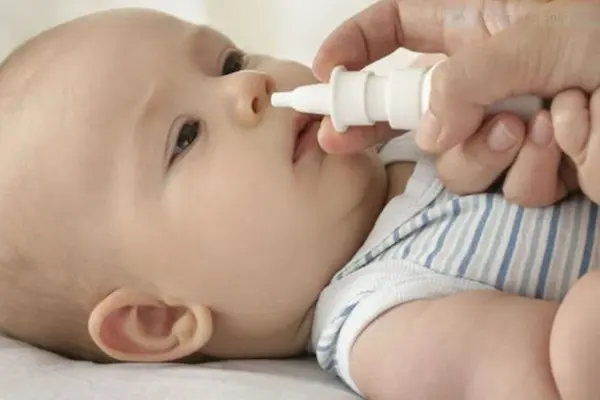
- Saline solution: The saline solution available in pharmacies can be used to clean the baby’s nose, relieve congestion, and get rid of the blockage. A few drops of the nasal solution are placed, then a mucus suction device is used to get rid of the mucus and clean the nose, allowing the baby to breathe more freely. It is recommended to use the saline solution about 15 minutes before feeding to drain the mucus, which helps the baby to feed and breathe at the same time.
Treatment of the common cold in infants depends mainly on rest and home remedies, which include:
- Providing an abundant amount of fluids: If the child’s age allows for this, it is recommended to provide water and home-prepared fruit juices. However, if his age does not permit, breastfeeding or artificial feeding is sufficient. Fluids help moisturize the nose and mouth, prevent dehydration, and reduce the viscosity of the mucus, which helps in its drainage.
- Steam bath: Steam helps eliminate nasal congestion, loosen the viscosity of mucus, drain it, and open the airway. However, the infant should not be directly exposed to hot steam. Instead, the bathtub can be filled with hot water, the bathroom door closed to trap the steam, then sitting with the child for a period not exceeding 15 minutes. Giving the child a warm bath may also help relieve symptoms and relieve pain.
- Use a little Vaseline: Applying a little medical Vaseline around the nostrils helps prevent skin redness and irritation as a result of a constant runny nose.
When should you seek help from a doctor when infants have a cold?
The doctor will not try to determine which virus is causing the infant's cold
Which infected the child, but a pharyngeal swab may be performed to rule out the bacterial cause of the disease. A doctor must also be consulted in the following cases:
- If the child does not improve within three days and the temperature continues to rise, to rule out sinusitis, which may sometimes accompany a cold.
- If the child does not improve within a week despite the absence of fever, to rule out allergic rhinitis.
- If the child develops a cough accompanied by difficulty breathing and wheezing.
- If the child has a persistent cough accompanied by a lot of sputum or phlegm.
- If the child feels sleepy and has an excessive tendency to sleep.
- If the amount of feedings for the infant decreases significantly.
- When the temperature reaches more than 39 degrees Celsius, especially in young infants.
- When pain appears in the chest or upper abdomen.
- The appearance of enlarged lymph nodes in the neck area.
- When pain appears in the ears, for fear of middle ear infection.
Book your consultation now at Pediatric Center At Almoosa Specialist Hospital.
Tips for mothers to relieve cold symptoms
When your child has a cold accompanied by annoying symptoms, helping him feel better becomes your top priority. Below we mention four effective methods that can contribute to alleviating his suffering, which are as follows:
- Inhaling steam when showering: It is preferable to avoid using a bowl of hot water directly, as the steam rising from it may burn the lining of the nose, and hot water can easily spill out, causing burns. Instead, you can sit with the child in a bathroom filled with steam generated from a hot water shower.
- Using saline drops (nasal drops filled with salt water) or nasal sprays: These are followed by a mucus suction device for infants to facilitate breathing by removing mucous secretions.
- Ensure that the child drinks plenty of fluids and gets enough sleep: These factors are essential for supporting the immune system and relieving symptoms.
- Serving soup: Some research has shown the effectiveness of soup in relieving infants' colds and nasal cavities, in addition to being a good source of fluids and nutrients.
FAQs
When is a cold dangerous for an infant?
A child can catch a cold at any age or at any time of the year. In general, colds in newborns are not considered serious in themselves, but they may escalate into more serious conditions such as pneumonia or diphtheria, so a doctor must be contacted immediately if a child under two or three months old has a cold, especially if he has a fever.
What is the best sleeping position for an infant with a cold?
If the child has a stuffy nose, it may be helpful to place him to sleep on his side with constant monitoring. For older children, it is recommended to support the head with a slightly higher pillow to facilitate breathing and drainage of mucus.
How do I clear a baby's nose from a cold?
To help clear an infant's nose that is blocked by a cold, you can do the following:
- The child is placed on his back comfortably.
- Place two or three drops of saline solution in each nostril.
- Gently turn the baby onto his stomach to help the mucus drain from his nose. The baby may sneeze to expel the mucus and saline solution.
- Pass a clean piece of tissue along the outside of the nostril to remove any excess solution or mucus.
Does olive oil relieve colds?
Yes, olive oil contains anti-inflammatory properties and antioxidants that may contribute to reducing inflammation and soothing inflamed tissue in the sinuses. To use olive oil to help treat sinusitis or relieve cold symptoms, you can put a few drops of warm oil on a clean piece of cotton and apply it gently to the affected nose from the outside. It is preferable that the drops be warm to increase the effectiveness of the treatment, but extreme caution must be taken to ensure that they do not get hot in a way that may cause burns.
In conclusion, we emphasize that although the common cold in infants is a common condition, it is not always a serious condition. However, a specialist doctor must be consulted within Almoosa Health Hospital, one of the best hospitals in the Kingdom of Saudi Arabia, as soon as symptoms appear in the child, in order to examine him carefully and diagnose whether the symptoms indicate just a cold or another health problem that requires greater attention. Adherence to the doctor’s instructions will help the child recover quickly and avoid any complications. It must also be reiterated not to give any cold medicine to children without consultation.
Sources:
Children and Colds – webmd
Coughs and colds in children – healthdirect
