
Despite the innocence that we see in children’s features, their depths may hide a silent psychological struggle that is not easily noticed, as the child’s inner world is not as simple as some imagine, and psychological pain is not limited to adults only. Recently, depressive disorders in children have begun to appear as one of the most dangerous psychological challenges due to their ability to silently creep into a child’s life and change his behavior and feelings without those around him noticing.
From this standpoint, this article aims to educate parents about the signs of depression in children, while noting the role of our team in providing integrated psychological care that helps the child regain his psychological stability and feel safe.
What is the concept of depressive disorders in children?
Depression in children is not just a passing state of sadness. Rather, it is a psychological disorder that gradually affects the child’s feelings and communication with his daily surroundings. Although some traumatic situations may generate natural and temporary sadness, the persistence of this feeling and its transformation into isolation behavior or loss of desire for usual activities is an indicator that requires serious attention and specialized evaluation.
To realize that this condition is not an individual exception, medical observations indicate that about 3% of children show symptoms associated with depression, while the percentage rises to approximately 9% in adolescents, which indicates that the matter is more widespread than it seems at first.
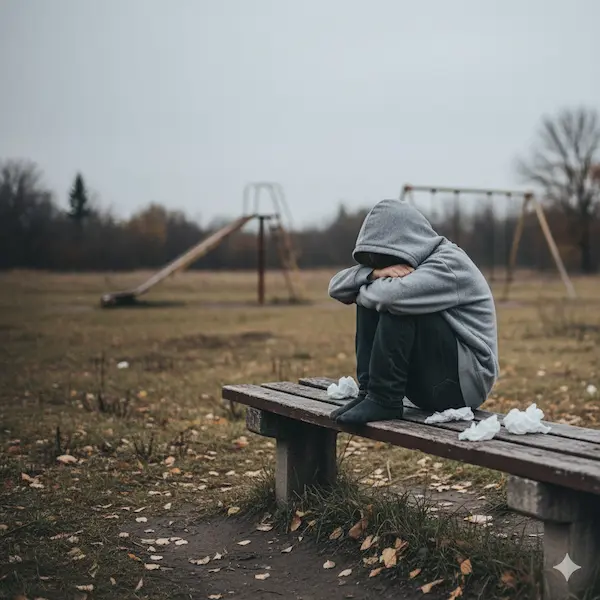
Depression in children, its causes and treatment
A child may experience normal moments of sadness as a result of emotional situations, and this is part of a healthy emotional response, but when the duration of sadness lasts for a long time, or begins to affect daily activity, academic achievement, as well as relationships with others, this may indicate real depression that requires specialized psychological care.
Below we get closer to depressive disorders in children and how they can be noticed and dealt with early.
اقرأ ايضاً: ما هي اضطرابات ما بعد الصدمة عند الأطفال وكيفية التخلص منها؟
Causes of depression in children
The causes of depression in children are not entirely clear, but they often result from a complex interaction between genetic, environmental, and psychological factors. The most important of these factors include:
- Genetic factors, especially when there is a family history of mood disorders.
- Exposure to traumatic events.
- Physical disorders and hormonal changes may also contribute to affecting brain chemistry.
- The surrounding environment, especially cases of family tension or exposure to bullying at school, may increase the likelihood of psychological symptoms appearing.
- Low self-esteem is a strongly influential factor, as it makes the child more sensitive and more likely to be affected by psychological disorders.
Types of depression in children
Types of depressive disorders in children vary in terms of their severity, duration, and symptoms, and each type may display different behaviors that require specialized evaluation. Below are the most important of these types:
1. Major Depressive Disorder
In this type, the child suffers from a state of continuous psychological depression, where sadness dominates the child’s behavior for long periods, and he may notice a disturbance in sleep and appetite, and with time his studies and social relationships are affected.
2. Persistent depression (Dysthymia)
This type is described as a long-term depressive disorder whose symptoms are both stable and moderate. The child often appears less energetic, gets tired quickly, has a pessimistic outlook, and prefers to isolate himself from others.
3Disruptive Mood Dysregulation Disorder - DMDD.
This disorder usually affects children between 6 and 10 years of age, and manifests itself in severe and recurrent outbursts of anger that are not proportional to the situation causing them. Even during calm periods, the child remains in a state of constant agitation and rapid arousal.
4. Seasonal Affective Disorder
This type is associated with the change of seasons, especially in winter when exposure to sunlight decreases, and this leads to a disturbance in the brain chemistry responsible for mood. During this period, parents may notice an increase in drowsiness and a decline in activity, with a clear decrease in the child’s desire for social interaction.
5. Bipolar Disorder
It is a relatively complex disorder, as the child goes through periods of deep depression followed by bouts of hyperactivity or reckless behavior, which requires careful medical supervision because dealing with it differs from other types of depression.
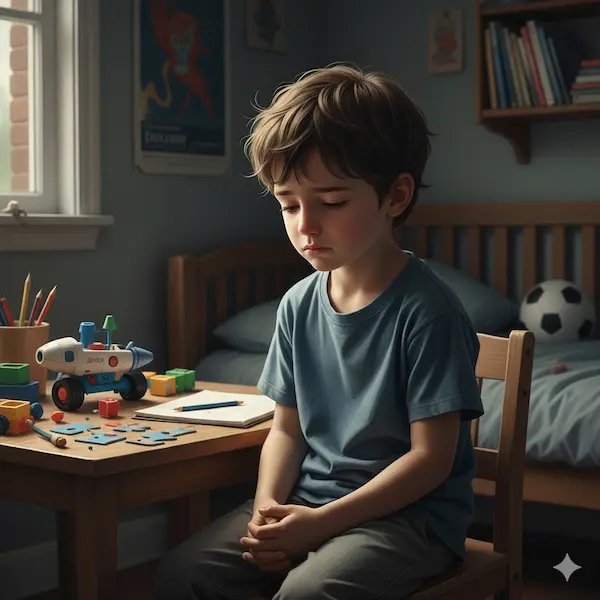
Symptoms of depression in children
Symptoms of depressive disorders in children appear gradually and on more than one level, and their severity may vary from one child to another depending on age and personality type, andTo make it easier to notice, we explain each category separately:
What are the symptoms of psychological depression in children?
Psychological and behavioral symptoms are the most common, and are often noticed by parents or teachers in the child’s daily behavior. ومن أهمها:
- The child appears sad or frowning for long periods of time and may have frequent bouts of crying or anger for no apparent reason.
- The child feels constantly tired and finds it difficult to exert the usual effort in studying or playing.
- The child loses interest in activities he previously enjoyed and tends to become withdrawn or apathetic.
- The child begins to criticize himself or use negative statements.
- Loss of appetite and little sleep or overeating and sleeping excessively.
- The child may complain of a headache, stomach or muscle pain without a clear organic cause.
- In advanced cases, thoughts of death or suicide.
What are the symptoms of psychotic depression?
In some rare cases, depressive disorders in children may develop into psychotic depression, a more complex form that is accompanied by cognitive disarray. It is one of its most important symptoms:
- Auditory or visual hallucinations by hearing voices or seeing things that do not exist.
- Delusional thoughts or false beliefs.
- Aggressive or out of control behavior in some situations.
Physical symptoms of depression in children
In addition to psychological changes, some children show clear physical signs that may be the first thing that draws the attention of parents. ومن أهمها:
- A clear change in weight, whether increased or decreased, without a clear medical reason.
- Sleep disturbances It appears in the form of persistent insomnia or a desire to sleep for longer periods than usual.
- Difficulty concentrating and thinking.
- Slowness in speech or movement.
- Recurring headaches and stomach pain without a clear medical cause.
اقرأ ايضاً: كيفية علاج اضطرابات القلق عند الأطفال و5 نصائح للوالدين
How to deal... when a child has depression
Dealing with a depressed child requires understanding, patience, and containment more than blaming or punishment, because family support represents the first step in the path of recovery. لذلك، ينصح الأهل بمراعاة ما يلي:
- Regular dialogue with the child and sharing his feelings without judgment.
- Involve him in fun activities and new experiences that make him feel accomplished without pressure or comparison.
- Cooperating with the school and teachers to closely monitor his educational and social status.
When should you worry and seek help?
When symptoms of depressive disorders continue in children for more than two weeks, with a clear impact on the child’s behavior, social interaction, or academic progress, specialized psychological evaluation becomes a necessary step to deal with the condition early and prevent its development into a more complex picture.
In this context, the Psychiatry Department within Al Mousa Specialist Hospital is keen to provide comprehensive evaluations by experts in the child’s mental health aimed at early diagnosis and developing an appropriate treatment plan that suits the needs of the child and the family.
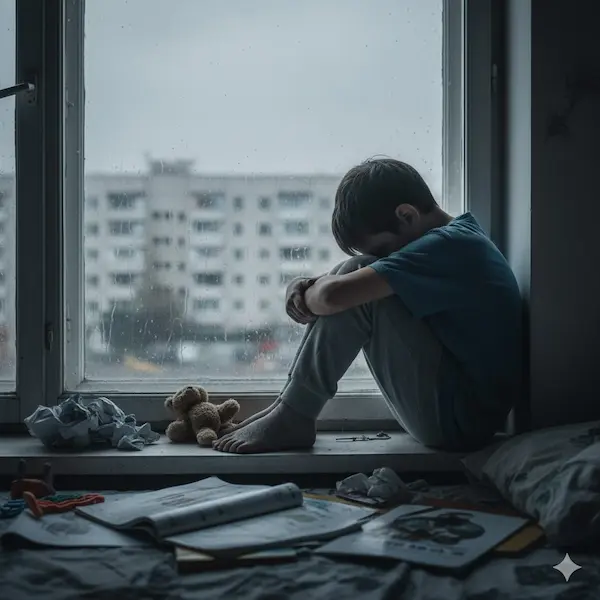
How are the causes of depression dealt with within Al Mousa Specialist Hospital?
Within the framework of the specialized child psychiatry system, the medical team deals with depressive disorders through comprehensive assessment sessions supervised by consultants specialized in mental health and behavioral therapy for children. These sessions aim to understand the condition from its roots. By analyzing the following aspects:
- Psychological and behavioral factors.
- Social and environmental aspects.
- Biological and neurological factors.
The approved treatment protocol within the hospital
Treatment of depression is based on a multifaceted approach, which includes in-depth medical evaluation and psychotherapy with its various paths to ensure gradual and sustainable improvement.Now, the most important treatment steps can be summarized as follows:
Psychotherapy (dialogue therapy)
Psychotherapy is one of the essential aspects of the treatment plan, as it is provided through specialized treatment paths aimed at supporting the child’s emotional balance and improving the way he interacts with those around him. Include:
- العلاج السلوكي المعرفي CBT, which helps the child realize his negative thoughts and understand their impact on his behavior and feelings, then direct him towards more balanced and stable ways of thinking.
- family oriented therapy, This type of treatment aims to involve parents in the treatment plan by creating a supportive home atmosphere and training them on practical methods for properly dealing with the child’s behavior.
- Interactive group sessions, It takes place within a safe therapeutic space under the supervision of specialists, and the child participates with children who are going through similar experiences. This helps him feel that he is not alone and increases his social communication.
2. Drug treatment (when necessary and under specialist supervision)
In cases of depressive disorders in children that require pharmacological intervention, the medical team prescribes medications designed to suit the age, with careful periodic follow-up to ensure safe therapeutic response and avoid any unwanted side effects.
3. Educational coordination and school support
Within the comprehensive support plan, communication is made with the school to provide a flexible educational environment that takes into account the child’s psychological state, while directing the educational staff to relieve academic pressure when needed to ensure the child’s stability and not expose him to further stress.
4. Early intervention and preventive support
Work is also being done to raise family and teachers’ awareness of the signs of depression and mood disorders, in addition to training the child in coping skills such as controlling anxiety and using relaxation and conscious breathing techniques to support his psychological stability.
5. Therapeutic follow-up and continuous psychological rehabilitation
The child is followed up through periodic sessions to monitor improvement, and is trained in life skills andtrust Self-treatment, and integrating it into customized interactive workshops, with the involvement of the family to ensure stabilization of the condition and increase the chances of sustainable recovery.
اقرأ ايضاً: Sleep disorder in children
Dear reader, depressive disorders in children do not mean the end of psychological stability, but they are a sign that deserves attention and early treatment. Therefore, the more symptoms are understood in a timely manner, the clearer the path towards recovery becomes, and the easier and more effective supporting the child becomes.
Book an initial evaluation for your child and start your recovery journey with Al Mousa Specialist Hospital With confidence
Frequently asked questions
When will my child feel better after treatment?
The response rate to treatment varies from one child to another, but improvement usually begins gradually during the first weeks of starting the treatment plan. With regular follow-up, the symptoms begin to stabilize and the child becomes more able to adapt and express his feelings calmly.
What is a depression test for children?
Specialists use a psychological scale designed for children to early detect symptoms of depression. It is inspired by diagnostic tools approved for adults, but in a format that suits the child’s age. This assessment helps paint a clear picture of the condition and monitor improvement over time.
What are the most dangerous types of depression?
Cases accompanied by severe social withdrawal, loss of the desire to live, or the appearance of recurring negative thoughts about oneself or the future are among the most serious forms of depression and require careful treatment follow-up.
At what age is major depressive disorder diagnosed?
Signs can be noticed from an early age, but confirmed diagnosis often begins between the ages of 6 and 17 years, noting that severe cases may appear before the age of 14 years and require early specialist intervention.
