
Uterine prolapse is considered a health condition that affects some women as a result of weak pelvic muscles and ligaments, which leads to the uterus prolapse towards the vagina to varying degrees. Although it is not noticeable in the early stages, its development affects the quality of life. In the following lines with Al-Mousa Specialist Hospital, we explain the causes of uterine prolapse, its symptoms, and the methods of prevention and treatment available for each stage.
What is uterine prolapse?
The prolapse of the uterus is known medically as uterine prolapse or prolapse. It is a condition that occurs in the case of weakness or stretching of the muscular belt and ligaments supporting the uterus, which leads to its descent from its natural place inside the pelvis down toward the vagina, and it may sometimes reach outside the vaginal opening in severe cases. This often occurs as a result of weakness of the pelvic muscles due to various factors, including:
- Repeated or difficult pregnancy and childbirth.
- Aging and menopause.
- السمنة.
- Lift heavy weights frequently.
- Chronic constipation or chronic cough.
What are the causes of uterine prolapse?
There are many reasons that lead to uterine prolapse, and they are mostly related to weakness of the pelvic muscles and ligaments that support the uterus and hold it in place. The most prominent of these reasons are the following:
- Pregnancy and childbirth, especially if they were close together or included births of large babies, which contribute to the weakness of the pelvic muscles and ligaments.
- As we age, especially after menopause, the production of estrogen, which works to maintain the strength of the pelvic tissues, decreases
- Weakness of the pelvic muscles due to lack of exercise or failure to strengthen these muscles with certain exercises.
- Constantly lifting heavy objects, which puts pressure on the pelvic muscles and in turn increases the chances of prolapse.
- Excess weight puts constant pressure on the pelvic muscles.
- Chronic constipation due to repeated straining when defecating and thus weakening the supporting muscles.
- Chronic cough or persistent cough, such as in cases of asthma or smokers, which leads to repeated pressure on the pelvis.
Read also: What is it? Causes of uterine bleeding ؟ الاعراض وطرق العلاج
What are the symptoms of uterine prolapse?
Symptoms of uterine prolapse vary depending on the degree of prolapse. They may be mild or severe, and the most prominent symptoms are as follows:
- A feeling of heaviness or pressure in the pelvic area, especially after standing or after exerting effort.
- The appearance of a foreign body or mass at the vaginal opening, and a woman can notice this herself during examination or when showering.
- Feeling pain in the lower back or pelvic area.
- Difficulty or discomfort during intercourse.
- Having problems with urination, such as the feeling of not emptying the bladder completely or feeling urinary incontinence.
- Disturbances in defecation, such as constipation or a feeling of obstruction.
- Abnormal vaginal discharge or vaginal irritation.
- Symptoms increase when standing or lifting heavy objects, and they decrease when lying down.
Book your consultation now at مركز صحة المرأة At Al Mousa Specialist Hospital.
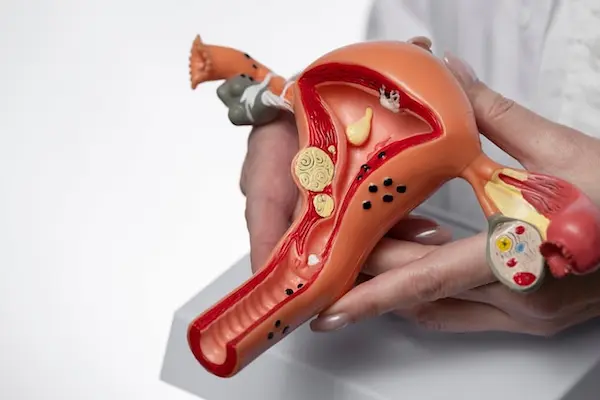
What are the stages of uterine prolapse?
The stages of uterine prolapse are divided into 4 degrees, based on the extent of the uterus prolapse inside or outside the vagina, and they come as follows:
- The first stage is the mild stage, in which the cervix descends to the upper part of the vagina without appearing outside the vaginal opening, and in most cases there are no clear symptoms.
- The second stage is the intermediate stage, in which the cervix descends to reach the vaginal opening, and a little of it may appear when applying pressure or when standing for a long time.
- The third stage is the advanced stage, in which the cervix and lower part of the uterus clearly protrude outside the vaginal opening, and the symptoms are clear and disturbing.
- The fourth stage, which is the stage of complete or complete prolapse, in which the uterus emerges almost completely from the vaginal opening, which is known as a prolapsed uterus, is a condition that requires urgent medical intervention.
It should be noted that each stage varies in severity and its impact on the woman’s life, and treatment is determined based on the stage and the symptoms that accompany it.
Find out: what it is Symptoms of uterine ulcer؟ وكيف يمكن علاجها؟
What is the treatment for uterine prolapse?
Treatment of uterine prolapse depends on the degree of prolapse and the severity of symptoms and varies between non-surgical and surgical treatments. The most prominent options are as follows:
Non-surgical treatment
It includes the following:
- Kegel exercises, which strengthen the pelvic muscles on a daily basis, can help in cases of mild prolapse.
- Using a vaginal pessary, through a rubber or plastic device placed in the vagina to support the uterus and prevent it from prolapse.
- Lifestyle modification, such as reducing weight, treating constipation, and avoiding lifting heavy objects, all work to reduce pressure on the pelvis.
- Hormonal treatment for post-menopausal women. In some cases, topical estrogen is prescribed to strengthen the vaginal tissue.
العلاج الجراحي
This is done through either of the following two methods:
- Reconstructive surgery, in which the uterus is returned to its natural place, and the pelvic muscles and ligaments are strengthened.
- Hysterectomy, used in severe or recurrent cases, especially if there is no intention of becoming pregnant in the future.
Frequently asked questions
What is the difference between vaginal prolapse and uterine prolapse?
The difference between vaginal prolapse and uterine prolapse lies in the organ that is exposed to the uterus prolapse. Uterine prolapse means the uterus sliding from its natural place into the vagina, due to weakness of the muscles and pelvic ligaments, and in severe cases it may reach the outside of the vaginal opening, but vaginal prolapse, or what is known as vaginal wall prolapse, refers to prolapse of the vaginal wall itself, whether the front wall, which leads to the protrusion of the bladder, or the back wall, which leads to the protrusion of the rectum, and it often occurs after hysterectomy, and both cases share some symptoms, such as feeling a lump in the vagina.
How is the uterus returned to its place?
The uterus is returned to its place according to the level of the home and the patient's condition. Options also vary between non-surgical treatments and surgical treatments. In mild cases, pelvic muscle exercises such as Kegel exercises can be used, or the installation of a support device known as a vaginal pessary, which is placed in the vagina to support the uterus and prevent its prolapse. In advanced cases or when none of these methods work, it is important to recommend surgery to return the uterus to its position, such as fixing the uterus with ligaments or sometimes removing it if it is not possible to preserve it.
Is uterine prolapse normal?
Uterine prolapse is not a normal thing, but it is considered a pathological condition that occurs in the case of weakness of the muscles and ligaments supporting the uterus, which leads to its prolapse towards the vagina or protrusion outside it partially or completely. Although it is common among women, especially after repeated natural childbirth or with advancing age and a decrease in the estrogen hormone, it requires medical intervention to avoid its complications such as difficulty urinating or feeling discomfort while sitting or having intercourse.
If you find yourself suffering from any of the symptoms of uterine prolapse, you should not delay in booking an appointment at Al Mousa Specialist Hospital to undergo a diagnosis by our doctors with sufficient experience to be able to determine the appropriate treatment for you according to your condition.
المصادر:
Uterine prolapse – mayoclinic
Uterine Prolapse – hopkinsmedicine