
If you've suffered a severe injury or have chronic pain, your doctor may recommend an electrical physical therapy procedure.
This procedure uses a gentle, painless current to help you regain your health and return to your life with full energy and vitality.
So if you want to know more details about this procedure, and whether it is useful, or not, follow this article with me.
What is electrophysiotherapy?
Electrotherapy is a branch of physical therapy, which is a non-surgical treatment approach that aims to apply electrical currents to the affected area of the body, in order to accelerate healing, reduce swelling, and pain.
Electrotherapy is used to treat the following conditions
- الألم.
- Neuromuscular dysfunction.
- Joint movement.
- Tissue repair.
- Diabetic nerve pain.
- الصداع النصفي.
- Stimulate bone growth.
- الوذمة.
- Muscle spasm.
- Improve blood circulation.
- Preventing muscle atrophy resulting from loss of activity.
- Wound healing.
- As a means of delivering drugs into the body's tissues.
- Prevention of venous thrombosis after surgeries.
Types of electrophysiotherapy
There are many types of devices used to perform physical therapy with electricity, and these devices contain mechanisms and different forms of electrical current, in order to provide distinctive results and therapeutic benefits.
-
Transcutaneous electrical nerve stimulation
The most common type of electrotherapy is a non-surgical treatment technique that aims to stimulate sensory nerves through a mild electrical current, which activates specific natural pain-relieving mechanisms.
The frequency, intensity, and duration of electrical stimulation can be controlled;
Although it is not a cure, it can be a great therapeutic supplement to help control the following
- Symptoms of arthritis.
- Pelvic pain.
- Fibromyalgia.
- Acute sports injuries.
There are two types of frequencies used in this type, including:
- High frequency (90 to 130 Hz)
Here, the device stimulates non-pain-causing nerve fibers to send signals to the brain, in order to block other nerve signals that carry pain.
- Low frequency (2 to 5 Hz)
In this case, the system stimulates endorphins, a natural pain-relieving hormone.
-
Electrical muscle stimulation
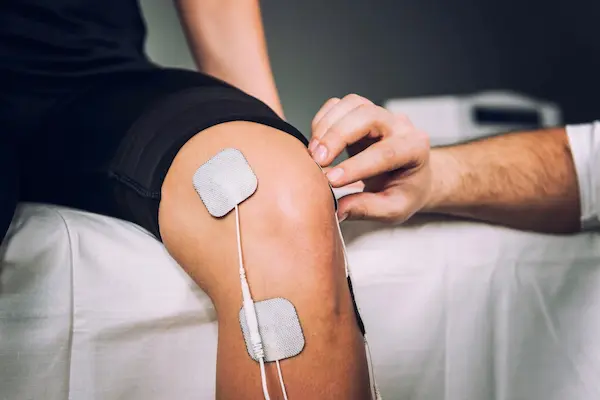
It is a second form of device used to perform electrical physical therapy, and it contributes to stimulating muscle contraction, using electrical pulses to strengthen weak muscles, reduce swelling, relieve pain, and help wounds heal.
This device generates pulses that pass through electrodes located above the middle of the muscle that needs stimulation, and these pulses simulate the action potential issued by the central nervous system, which leads to muscle contraction.
Electrical muscle stimulation is used in the following
- Pain relief.
- Prompting the muscles to contract and gradually restore their strength.
- after السكتة الدماغيةThis is to preserve the shoulder muscles, improve their function, and reduce pain.
- Urinary incontinence treatment;
- After surgery.
- Multiple sclerosis.
- Cerebral palsy, in order to reduce spasticity and maintain muscle strength for as long as possible.
Learn about: Pelvic Physical Therapy I to restore your muscle strength
-
Electrophysiotherapy using interferential current
It is a deeper form of transcutaneous electrical stimulation therapy, where interferential current applies two different frequencies that interfere with each other;
- Reduce swelling.
- تخفيف الألم.
- Muscle stimulation.
- تعزيز الشفاء.
- Improve blood circulation.
- Relieve muscle spasm.
- Promote tissue healing.
-
Cranial electrical stimulation
This type offers a unique approach, specifically used to treat brain disorders, through indirect stimulation of tissue near the hypothalamus.
-
Functional electrical stimulation
Your doctor may advise you of this type when you are undergoing electrical physical therapy, and it is mainly used to increase motor ability and stimulate the nerves that supply the muscles affected by paralysis.
- Multiple sclerosis.
- stroke.
- Head injuries.
- Spinal cord injuries.
-
Microcurrent electrotherapy
This type uses small, low-frequency electrical currents to reduce inflammation, promote healing, and relieve pain.
- Postoperative pain.
- هشاشة العظام.
- الصداع.
- Sports injuries.
-
Shock wave therapy
It is a non-surgical medical treatment that uses high-energy sound waves to promote healing and relieve pain in the musculoskeletal system, such as plantar fasciitis or tendonitis.
-
Ultrasound therapy
It is a type of electrotherapy, and it uses high-frequency sound waves.
Book your consultation now at Physical therapy At Al Mousa Specialist Hospital.
How to treat electrolyte naturally
Performing electrical physical therapy is an effective and safe option for treating a wide range of conditions and diseases.
Electrical current helps soft tissues improve blood flow, stimulate muscles, strengthen them and improve their function.
- الوذمة.
- Muscle weakness.
- Carpal tunnel syndrome.
- Shoulder injuries.
- Poor blood circulation.
- Plantar fasciitis.
Electrical signals help block or slow the transmission of nerve signals from affected areas of the body to the brain.
- Migraines.
- Nerve pain.
- arthritis.
- Neck pain and stiffness.
- Back pain.
- Fibromyalgia.
Contraindications for the use of electrotherapy
Although performing electrical physical therapy is safe and effective for treating many medical conditions, it is not appropriate for everyone.
- Pregnancy (especially if the affected area is in the abdomen or lower back).
- Patients who use pacemakers or other implanted electrical devices.
- Certain types of cancer.
- People with epilepsy.
- Areas of poor sensation.
- Open wounds.
- Cracked or irritated skin areas.
- Avoid using electrotherapy near the eyes, heart, throat, or other sensitive areas of the body.
- If you have heart disease, or any serious medical condition.
- Areas with active blood clots, or inflammation of the veins.
Read also: Aquatic physical therapy to improve mobility and relieve pain naturally
Number of electrotherapy sessions
If you need electrical physical therapy, your physical therapist will determine the number of sessions you may need according to the following
- The severity of your condition.
- Your response to treatment.
- Type of electrotherapy used.
It is recommended to use ultrasound electrotherapy for a period ranging from 5 to 15 minutes, at a rate of one or two sessions per day, or two to three times per week.
The duration of electrical muscle stimulation ranges from 30 to 60 minutes, with an average of only one to two sessions per week.
Is electrolyte therapy useful?
Yes, performing electrical physical therapy provides many benefits, including:
- Reducing the sensation of pain.
- Stimulate blood circulation.
- Improve tissue healing.
- Prevent muscle atrophy by stimulating muscle contraction.
- Reducing inflammation.
- Accelerate the healing process.
- Stimulate nerve functions and reduce pain.
- Improve range of motion and flexibility.
- Reducing the need for medications or surgery.
- Relax muscle spasms and reduce tension.
Frequently asked questions about electrophysiotherapy
If your doctor advises you to undergo electrophysiotherapy, many questions may come to your mind, including:
هل جلسات العلاج الطبيعي بالكهرباء لها أضرار؟
Electrotherapy is very safe compared to other pain management methods, such as medications, which may cause side effects and may lead to addiction.
What do electricity sessions do in physical therapy?
Electrotherapy sessions help with the following
- Maintain and increase range of motion.
- Muscle rehabilitation.
- Preventing muscle atrophy resulting from disuse.
- Promotes tissue repair and regeneration.
- Increase local blood circulation.
- تخفيف الألم.
Is electrical physical therapy painful?
Performing electrical physical therapy is not painful, but some patients may feel a slight tingling or muscle spasm.
Conclusion
In conclusion, I now realize, dear reader, what is the procedure for electrophysiotherapy?
Therefore, if your doctor advises you to undergo this procedure, you must go to Al Mousa Specialist Hospital immediately, so that the best doctors can help you evaluate your condition and determine the type of electrical treatment that suits your condition and helps you relieve pain in a safe and effective way.
Sources
Electrotherapy – physio
The Types of Electrotherapy and How They Are Different – rehabmart
