
Do you know what the silent thief is?
What is glaucoma in the eye?
Glaucoma is a medical condition that affects the optic nerve due to high internal eye pressure. This pressure results in damage to the nerve that transmits images from the eye to the brain. It develops gradually without clear signs until it affects the side vision of the eye, and then develops further to cause complete loss of vision if treatment is neglected.
It is called glaucoma because there are some changes that occur in the pupil of the eye as the condition develops. You must first understand the method of draining the watery eye fluid. What is meant here is not tears, but a transparent liquid that forms behind the iris, then moves to the front of the eye and is drained from a channel in the corner of the eye. In the event of a blockage or narrowing of that channel, the fluid accumulates, causing an increase in eye pressure.
Types of blue water
There are 4 different types of glaucoma in the eye that differ in terms of their nature and causes, and include the following:
1. Open-angle glaucoma in the eye
Open-angle glaucoma is the most common type, and it develops very slowly due to damage to the optic nerve. Here, the angle of fluid drainage in the eye is open and there is no blockage, but it does not work well.
2. Angle closed glaucoma
Angle-closure glaucoma is the least common and occurs due to a sudden blockage of the drainage angle. It is an emergency condition that requires immediate treatment and urgent intervention as a result of a sudden increase in eye pressure.
3. Secondary glaucoma
Secondary glaucoma is the result of other causes not related to high eye pressure. It is considered a complication of other chronic diseases, or the result of using medications without consulting a doctor, and other reasons that we will learn about later.
4. Congenital glaucoma
Congenital glaucoma is a rare condition that affects infants at birth, or in the first years of life, as a result of a congenital defect in the system responsible for draining fluids from the eye.
What are the symptoms of glaucoma in the eye?
Usually, symptoms of glaucoma do not appear in the eye from the beginning, and they are classified according to the type of glaucoma as follows:
1.Symptoms of open-angle glaucoma
The most important symptoms of open-angle glaucoma are:
- Narrow field of vision.
- Gradual loss of side vision.
- There is no pain or redness in the eye.
- Blurred or blurry vision at night.
2.Symptoms of angle-closure glaucoma
As for the symptoms of closed-angle glaucoma, they include:
- Severe eye pain.
- Obvious redness in the eye.
- Nausea and vomiting accompany the pain.
- The affected person sees halos around the light.
- Severe headache around the eye.
- Blurred vision that occurs suddenly.
- If treatment is neglected, the affected person may lose his sight completely.
3.Signs of congenital glaucoma
Signs of jaundice appearCongenital coma from birth, or during the first months and years of the child’s life, and includes:
- حساسية تجاه الضوء.
- Pale or opaque cornea.
- Excessive tears for no reason.
- The eye increases abnormally in size.
- Repeated eye rubbing while the child continues to cry.
4. Symptoms of secondary glaucoma
Symptoms of secondary glaucoma include:
- Pain and pressure on the eye.
- Obvious redness in the eye.
- Blurred vision is annoying for the affected person.
- Symptoms increase with infections in the body or after taking a certain medication.
تعرف علي خدمات طب العيون لرؤية واضحة وعيون سليمة
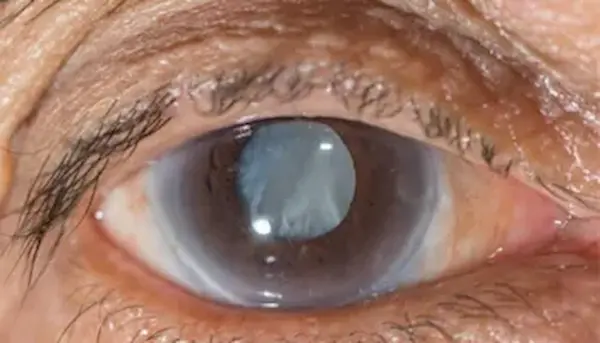
Is glaucoma dangerous?
Yes, glaucoma in the eye is dangerous, especially if immediate treatment is neglected, because it leads to permanent damage to the optic nerve, and it develops silently without visible symptoms, and here lies its danger because the patient only discovers it by chance, so doctors at the Al-Mousa Specialist Eye Center advise the necessity of periodic eye examination, especially for those with chronic diseases.
Causes and risk factors for glaucoma
There are many causes and risk factors for glaucoma, including the following:
- the age:
Age is one of the risk factors for developing glaucoma, and the probability increases after the age of 40, and as age increases, the incidence becomes more likely. - عوامل وراثية:
Genetic factors play a fundamental role in the incidence, as there are many cases of glaucoma if there is a history of the disease in first-degree relatives. - High intraocular pressure: High intraocular pressure (IOP) is the most common cause of water injury, and it occurs due to the accumulation of fluid inside the eye, as a result of a defect in the drainage of fluid from a certain corner of the eye.
- Gender and race:
Some studies have indicated that people of African and Asian ethnicity are more susceptible to developing glaucoma, and that it is more likely to occur in men than in women. - الأمراض المزمنة:
Having some chronic diseases, such as diabetes or high blood pressure, may affect the small blood vessels, including the vessels inside the eye, and increase the risk of glaucoma. - Severe nearsightedness or farsightedness:
Visual defects such as severe nearsightedness or farsightedness make a person more likely to develop angle-closure glaucoma due to narrowing of the eye. - Previous eye injury:
Previous eye injury or surgery may damage the fluid drainage system, causing high eye pressure. - Long-term use of cortisone:
Taking cortisone medications for long periods without consulting a doctor, including eye drops, affects eye pressure over time, causing injury. - Problem with drainage of eye fluids:
This is the condition that we talked about in congenital glaucoma in children, and it is generally a rare condition in which there is a problem with the eye fluid drainage system.
You can also find out: سعر عملية تصحيح النظر في السعودية
Methods of diagnosing glaucoma
When you notice any blurred vision or vision-related problem, you must immediately go to specialist doctors and begin methods for diagnosing glaucoma, such as:
- Medical history: The doctor takes a complete medical history for the injured person and his first-degree relatives, and asks about any chronic diseases he suffers from, such as high blood pressure or diabetes.
- Measuring eye pressure: The doctor measures eye pressure through a precise device that gives an indication if the pressure is high, which increases the possibility of glaucoma.
- Ophthalmoscopy: The optic nerve at the bottom of the eye is examined using a specific device. If the shape of the nerve changes, this means there is damage.
- Measuring corneal thickness: There is a simple ultrasound device that helps measure corneal thickness, which contributes to knowing and measuring blood pressure.
- Peripheral vision test: Or Perimetry test, which means measuring the side vision of the eye, which indicates glaucoma in the event of loss of side vision.
- Gonioscopy: This is a very useful examination to determine the type of glaucoma in the eye, whether open or closed.
- Optic nerve imaging: Doctors use modern techniques to image the optic nerve and determine which part is damaged, which is useful and accurate for early detection of glaucoma.
Methods of treating glaucoma in the eye
After making the diagnosis and knowing the causes that led to glaucoma, doctors begin to develop a treatment plan among the methods of treating glaucoma in the eye, which are:
1.العلاج بالأدوية
The first treatment option is medications that help reduce eye pressure and prevent fluid accumulation inside them, including:
- Eye drops: They are the first line of defense, and include many types such as beta-blocker drops to reduce the production of eye fluid, carbonic anhydrase inhibitors to also reduce fluid secretion, and alpha-stimulating drops to improve fluid drainage from the eye.
- Oral medications: In some cases, the doctor prescribes oral tablets that help temporarily relieve eye pressure, and help with drops such as acetazolamide.
2.Laser treatment
Laser therapy is an advanced non-surgical procedure that aims to improve eye fluid drainage to reduce eye pressure through precise laser beams. Types of lasers include:
- To treat angle-closure glaucoma: It is preferable to use an Iridotomy laser and make a small opening in the iris, to allow eye fluid to pass from the back to the front, which prevents fluid accumulation.
- To treat open-angle glaucoma: Trabeculoplasty is preferred and laser beams are directed at the drainage network to improve its function, which immediately reduces eye pressure.
- Selective Laser SLT: It affects the pigment cells in the eye fluid drainage channels. Doctors may use it in some cases without causing any harm to the surrounding tissue.
3.Surgical intervention
In some cases, the doctor may have to intervene surgically to save the patient when all other solutions fail to control eye pressure. The most prominent surgical interventions are:
- The process of opening a new channel to drain eye fluid is called Trabeculectomy.
- Glaucoma drainage.
الاسئلة الشائعة:
Below we answer the most frequently asked questions about glaucoma and how dangerous it is:
Which is more dangerous, white or blue water?
Glaucoma is more dangerous than cataract because, over time, it may cause severe damage to the optic nerve. It also requires long-term follow-up, unlike cataract, which can be treated with a simple operation.
Is there a final treatment for glaucoma in the eye?
Glaucoma in the eye can be controlled and reduced with many therapeutic methods that help reduce eye pressure. To find out the appropriate treatment for your condition, contact immediately and start early examination with the Eye Center at Al-Mousa Specialist Hospital in Al-Ahsa.
Start an early examination immediately so that you do not have glaucoma without knowing it. There is an integrated medical team waiting for you inside the eye clinics at Al Mousa Specialist Hospital, fully prepared to provide an integrated medical service to protect you from the complications of glaucoma and treat it quickly.
Glaucoma – clevelandclinic
Understanding Glaucoma: Symptoms, Causes, Diagnosis, Treatment – aao
