
The heart is not just a muscle that pumps blood to the body. Rather, it is an electrical device that operates with a normal electrical rhythm. When heart palpitations occur, this indicates a problem in this system. Therefore, we must know how the heart rhythm works to explain the causes of unusual heart palpitations, and this is what the specialists at Al Mousa Specialist Hospital offer to you to raise awareness and encourage early detection and provide care to those who need it.
How does electrical cardiac pacing work?
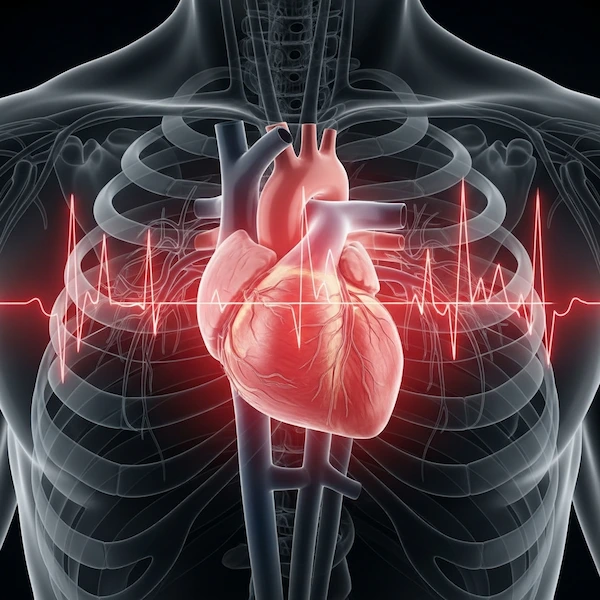
It is known that the heart contains upper chambers (atria) and lower chambers (ventricles), and in the right atrium there are cells that send an electrical pulse to contract the atria and push blood into the ventricles. When the pulse reaches the area between the atrium and the ventricle, the responsible cells delay the pulse for a short time;
After that, the impulse travels through a small passage connecting the atrium and the ventricle, known as the bundle of His. After passing, it travels in two directions, one to the right and the other to the left, to reach what is known as “Purkinje fibers.” Here the ventricles contract strongly to push the blood, as the right ventricle pushes it to the lungs, while the left ventricle pushes it to the whole body.
From here it becomes clear that there is an autonomous electrical system that controls the work of the heart and regulates it precisely. Therefore, many problems may occur in the function and performance of the heart if any defect occurs in this electrical rhythm.
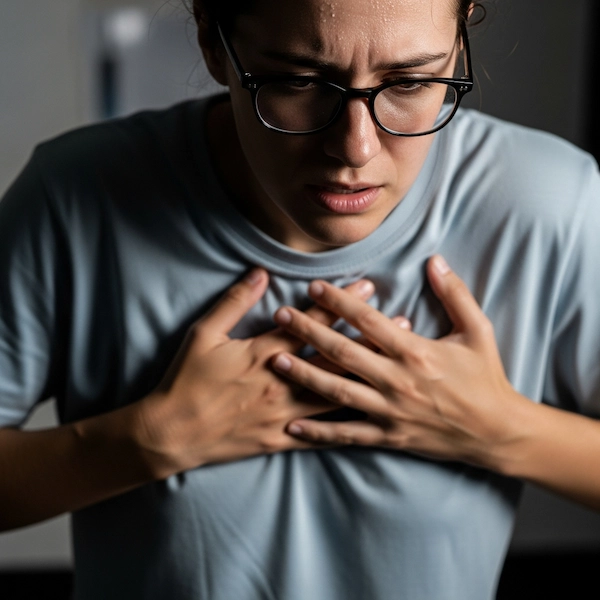
What is palpitation?
Heart palpitations are the feeling that the heartbeat has become faster, stronger, or irregular. It sometimes occurs due to an electrical disturbance, which may occur for many reasons. The patient then describes his feeling that his heart is beating so hard that he may feel pain in his chest, neck, or throat. He may also complain that his heart has skipped a beat or is jumping suddenly.
Causes and risk factors for palpitations and tachycardia
From the above, we have made clear that the causes of an accelerated heartbeat are related to its electrical arrhythmia, but what are the direct causes of heart palpitations? ما يلي:
- Experiencing psychological stress for a period or a panic attack.
- Consuming caffeine in large quantities or on a regular basis is harmful.
- Taking medications or nutritional supplements that cause abnormalities in the electrical conduction of the heart.
- Going through a period of changes in hormones or in the way the body works, such as pregnancy.
- The presence of disturbances in the electrolytes in the body;
- Having problems with thyroid function.
- Some cases of anemia or fever.
- Valve and heart muscle diseases.
Who is affected by heart palpitations?
Although heart palpitations can happen to anyone, certain groups are more susceptible than others. These categories include: ما يلي:
- Ladies;
- People with changes in the way the thyroid gland works.
- People with a medical history of electrical heart rhythm problems, cardiomyopathy, etc.
- Who live a stressful life, take stimulants, smoke, or the like.
- Young people who engage in intense exercise or change their lifestyle frequently.
Read about : إMoussa Health Pain Circuit
Symptoms of heart palpitations
General symptoms of palpitations and rapid heartbeat include feeling a difference in the way the heart beats, where the person feels that the heart is racing or fluttering, and the heartbeat can also be felt in the throat or neck. This happens for only a few seconds and may last for minutes, but it does not exceed two or three minutes at most.
In many cases, there is no specific cause for palpitations, and it is not serious. The electrical transmission may only be isolated, and this is generally harmless.
When is heart palpitations dangerous?
Not all cases of heart palpitations and convulsions are serious. In most cases, palpitations occur and are merely a symptom that does not indicate a disease, when it is not accompanied by any other symptoms, but it becomes serious if symptoms appear that require a visit to the doctor. Just like in cases التالية:
- If the palpitations last for several long minutes or are frequent over short periods.
- If other symptoms occur, such as chest pain, fainting, dizziness, or feeling short of breath.
- If the person with palpitations has a previous history of heart disease or has any risk factors.
In these cases, you must undergo an examination, taking care to record the times when palpitations occur, and what you were doing or feeling at that time, in addition to mentioning the medications you are taking and the period during which the palpitations continued.
Read also: Symptoms of cardiac arrest: Is life possible after cardiac arrest?؟
Complications of heart palpitations
Heart palpitations usually do not cause harm, but if it is linked to a disorder in the heart’s function or in its electrical system, it is necessary to treat it. Neglecting it may lead to complications التالية:
- Exposure to frequent fainting, which may cause other injuries.
- The possibility of a stroke due to the formation of clots in the atrium and then moving to the brain.
- Heart failure due to its weak ability to pump blood efficiently.
- Cardiac arrest may occur in some cases, if there is a significant disturbance in the heart rhythm.
Diagnosis of heart palpitations
When you visit a doctor and start describing symptoms, the examination is done using specialized devices to ensure that the heart is working efficiently, the most important of which is: ما يلي:
- Electrocardiogram (ECG): It is a device that records the electrical activity of the heart to determine whether a disorder exists or not.
- Holter test: It is also a device for measuring heart activity, but it is installed to read the work of the heart throughout 24 to 48 hours, to measure the pulse during activity or rest, and even during sleep.
- Echocardiogram: It is an ultrasound examination to see the heart, how it works, and its valves, and to identify any abnormalities.
- A device for recording the occurrence of infrequent symptoms: It is used to monitor the heart's performance for a longer period, so that infrequent symptoms can be recorded through it.
Can heart palpitations be treated?
Several measures can be taken to treat heart palpitations and convulsions, It includes ما يلي:
- Changing lifestyle, getting rid of stress and anxiety and their causes, and staying away from smoking, energy drinks, etc.
- Do not take any medications except after consulting a doctor, especially those that may affect the functioning of the heart.
- Pay attention to drinking a sufficient amount of water, while making sure to eat foods that contain the minerals and nutrients that the body needs.
- ممارسة الرياضة Regularly without violence or stress.
If the attacks are frequent though, you should see a doctor to determine the cause and treat it.
Frequently asked questions about palpitations and tachycardia
What is the treatment for heart palpitations, dizziness, tremors, and a feeling of death?
If you feel heart palpitations accompanied by dizziness and tremors, this requires an immediate visit to the doctor to determine the underlying cause of this problem.
What are the ways to treat anxiety and heart palpitations?
You must avoid the causes of anxiety and stress and change your lifestyle, because anxiety causes heart palpitations and tremors and may cause other health problems.
How can I be sure that my heart is healthy?
This is done through periodic examinations that prove this, and following a healthy lifestyle helps you keep the heart working efficiently.
ختامًا Heart palpitations may be a symptom of a serious problem, so if it occurs frequently with you, you should immediately visit us in Al Mousa Specialist Hospital To conduct diagnosis and examination with a specialized team of doctors, using the latest devices and technologies.
Learn about: Cardiovascular clinics at Al Mousa Hospital