
Do you suffer from hemorrhoids and are bothered by the constant pain that disturbs your life?
Understand hemorrhoids to know the causes and types
The problem of hemorrhoids is a common problem. It is not just a passing pain, but rather a medical condition that we must highlight as part of our journey to restore comfort and health, because it requires an understanding of its anatomical basis to ensure access to real, comfortable treatment for it.
What are hemorrhoids?
They are swollen venous sinuses of enlarged veins located in the anal area at the end of the lower descending rectum. With time and frequent pressure on them, they lose their elasticity and elasticity and expand beyond their size. Therefore, it is necessary to understand their types, how they arise, and the factors of their appearance in order to stand on the right path to recovery and long-term prevention.
Types of hemorrhoids
They are divided into two basic types, which are differentiated based on their anatomical location in the anal canal. As will become clear below:
Internal hemorrhoids
This type is found in the upper part of the anal canal (estate opening), and it is invisible and you cannot see it because it extends inward.
Symptoms:
- Continuous bleeding from the anus during defecation without pain because there are few sensory receptors in the inner area of the lower colon.
- Complications of this internal stage when it progresses comes out of the anus and is called prolapse.
Read also: Eliminate external hemorrhoids permanently
External hemorrhoids
It's built under the skin around the anus, so you can see and touch it.
الأعراض:
- This type is more painful and annoying for its owner.
- Feeling itchy.
- Swelling at the site with severe pain.
- A blood clot occurs, which is called thrombosis and requires urgent medical intervention.
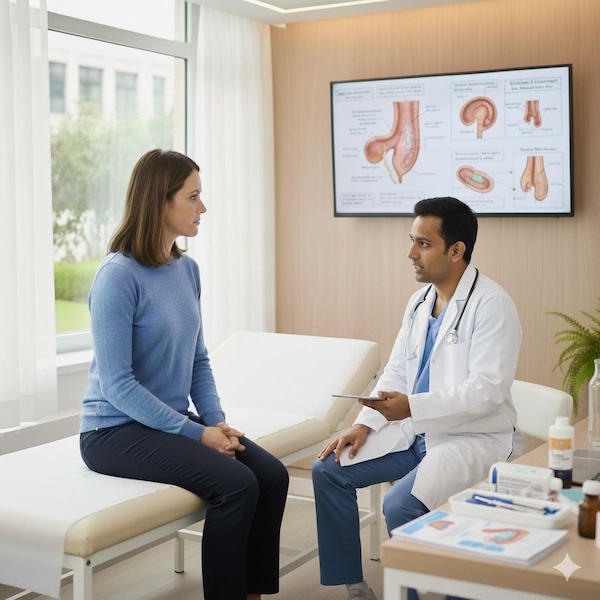
Causes of hemorrhoids and risk factors
In essence, it is a physiological response to a mechanism of chronic mechanical pressure on the veins in the anal and rectal area. Swelling and prolapse occur due to this constant pressure, and thus the surrounding tissues weaken. The problem is exacerbated by the combination of a number of risk factors, such as:
- Chronic and recurrent constipation, which requires strong pressure to push solid stool masses out, which hinders the return of blood to the heart again, causing enlargement and congestion of the veins in the anus.
- Excess weight (obesity) increases the general pressure inside the abdomen, affecting the anus.
- Sitting for a long time on the toilet increases the gravity on the anal area, which doubles the pressure on the prostate and causes blood stagnation in it and the expansion of the veins.
- The diet lacks fiber, which softens the stool and helps push it out, and is therefore a risk factor that makes the stool hard and leads to certain disease.
- Genetic factors: Genetic predisposition makes the vessel walls very weak.
- Aging reduces the elasticity of blood vessels, making them susceptible to swelling and prolapse.
Hemorrhoids symptoms and warning signs
Symptoms vary based on their development, the stage of the disease, and their types (internal and external), with all of them agreeing on the occurrence of pain and discomfort in the anus and rectum area. But the most important thing is to differentiate between normal symptoms and warning signs that require immediate medical intervention:
- Painless anal bleeding is the most common internal type.
- The external type is accompanied by a strong feeling of itching and irritation in the area surrounding the anus.
- Severe pain in the prostate area and surrounding tissues, which increases when blood clots in the external type in particular.
- The presence of a tissue mass that hangs from the inside during stool and rises in place automatically after completion, or sometimes needs to be lifted by hand. This is a symptom specific to internal hemorrhoids.
- Feeling painful lumps of tissue around the anus from the outside. You can touch them with your hand in the case of an external hemorrhoid. They are permanent in their place and do not disappear like the internal type.
Read also: What are the symptoms of hemorrhoids during pregnancy and methods of prevention?
Treating hemorrhoids with first aid and temporarily relieving pain at home
When your pain becomes severe and the annoying itching increases, you will eagerly search for immediate relief with temporary solutions to provide relief, even if temporarily, from it. Although these solutions are not considered a radical treatment for hemorrhoids, they relieve pain and reduce congestion and inflammation until you book an appointment and consult a doctor. The temporary solutions are:
- Using warm baths is an effective natural treatment.
- Use topical ointments and creams.
- A healthy diet includes plenty of fiber and hydration by drinking large amounts of water to increase the elasticity of the rectum.
- Apply ice to the affected area to relieve pain.
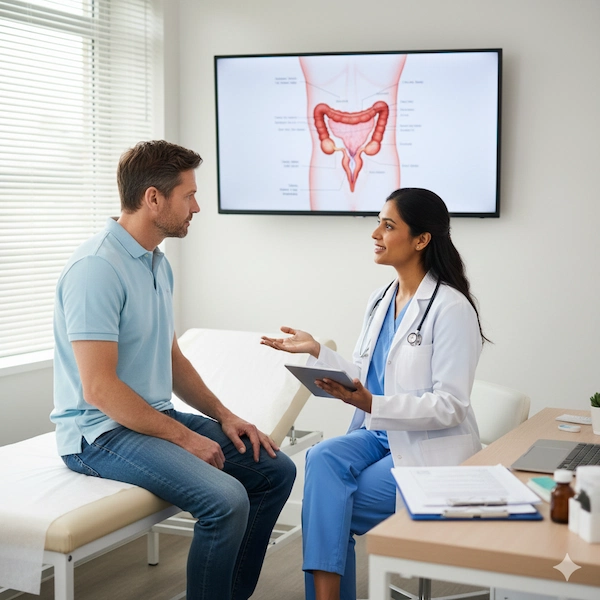
Specialized treatment for hemorrhoids: Al Mousa Health Group’s medically advanced solutions
Dealing with hemorrhoids of all types requires modern, advanced medical solutions, unlike traditional conventional treatments, and this is what the group is fully aware of. Therefore, it offers you an integrated set of diagnostic procedures specifically designed to suit the degree of hemorrhoid and the patient’s condition to achieve faster recovery and less pain.
The group focuses on minimally invasive techniques, including treatments and techniques, مثل:
THD technology connects the hemorrhoid arteries via Doppler
This technology is considered one of the most prominent solutions available at the center for curative treatment of all stages of the disease up to the late third degree. It is characterized by the following:
- It does not involve surgery or cutting with a scalpel any tissue in the affected area because it relies on ultrasound waves called - Doppler - to determine the location of the arteries that feed the hemorrhoid.
- Ligating the arteries so that the blood supplying them is cut off and the tissue dies automatically is a very effective and painless technique, which brings great and quick relief to the patient.
- Treatment with it does not require a long time for the patient to recover in only a day or two and return to his normal life in a normal way.
Read also: A treatment that eliminates hemorrhoids permanently using the latest medical technologies
Other treatment options for full recovery are available at the center
- Using rubber bands to bind internal hemorrhoids in both their first and second stages until they end and break off and fall out after they atrophy due to lack of nourishing blood supply.
- Reducing the hemorrhoid through laser and infrared coagulation, where the vessels feeding the internal hemorrhoid are cauterized or photocoagulated.
- Resorting to traditional surgical operations is done only in the advanced and very complex stages of the disease (stage four), for which previous techniques are not useful.
Don't let pain control your life!
The key to prevention is simple steps so that it does not return again
If you suffer from hemorrhoids, but they are in their first stage, either mildly or not, and you are afraid of contracting the disease You must follow the following prevention steps to prevent infection or to ensure that it is eliminated in its early stages and that it does not return to you again:
- The role of fiber in preventing constipation, as you should eat large amounts of fruits rich in fiber and leafy vegetables rich in laxative fluids.
- Resort to a healthy lifestyle by exercising and avoiding sitting for long periods so as not to sag due to gravity.
Frequently asked questions about hemorrhoids
Can hemorrhoids turn into cancer?
No, it has nothing to do with it, but the symptoms are similar to rectal bleeding, so analysis and early detection are required to be reassured.
How long does it take for hemorrhoids to disappear after treatment?
The recovery time depends on the treatment method. Ligation takes about 7 or 10 days, the THD technique takes from two weeks to a month of complete recovery, and surgery takes from 3 to 6 weeks.
Is it safe to use laxatives to treat constipation and hemorrhoids?
Yes, because it moistens the stool and increases water in it, which reduces swollen veins due to constipation.
What foods should be avoided when infected?
White bread - pastries - dairy products - caffeine - spicy foods.
خاتمة
Hemorrhoids are not the end of the road, but you can overcome them and recover from them after knowing the causes, symptoms, and warning signs, with support Al Mousa Health Group To benefit from radical solutions and specialized intervention, where you find experts capable of ending your suffering, so do not let fear and embarrassment destroy the quality of your life.
Your health deserves the best, and our group is here to support you at every step. Let’s make the brave decision now, and contact us to book your consultation.
