
Have you heard of hiatal hernia before?
This medical condition is very common, especially with age.
So if you would like to know more information about the causes of hiatal hernia, its symptoms, and methods of treatment, follow this article with me.
What is a hiatal hernia?
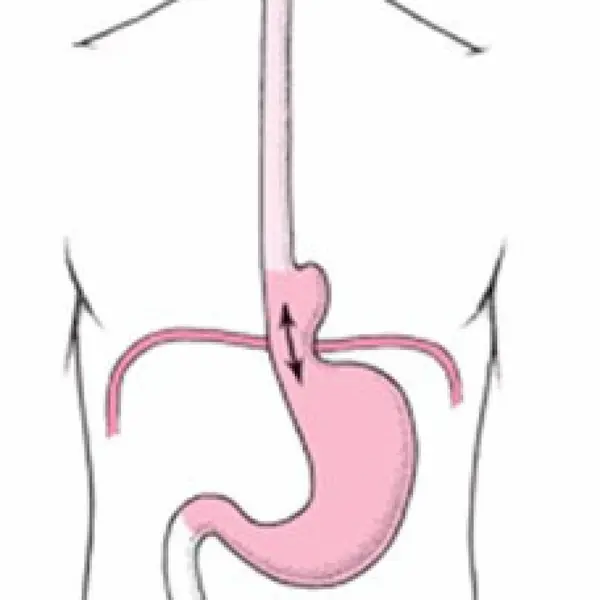
A hiatal hernia is a medical condition that occurs when the upper part of the stomach pushes into the chest through a pre-existing weak point in the diaphragm (a large muscle that separates the abdominal and thoracic cavities), which is the point where the esophagus passes to connect to the stomach.
Stress and tension may cause the opening to widen over time, and this condition usually develops slowly over many years.
Types of hiatal hernia
Doctors classify hiatal hernia into four types, which include the following
-
The first type
It is known as a sliding hiatal hernia, and it is the most common type, accounting for 95% of all cases.
-
The second type
Known as a prolapsed hiatal hernia, it occurs when the upper part of the stomach pushes up next to the esophagus, forming a bulge next to it.
-
The third type
It is a combination of the first two types, in which part of the esophagus connected to the stomach pushes up, in addition to part of the stomach next to it.
-
Type IV
It is a rare type, and results from the stomach pushing up with another abdominal organ, such as the pancreas, or the spleen, through the dilated opening of the diaphragm.
Types II through IV are known as paraesophageal hiatal hernias.
Common causes of hiatal hernia
This medical condition is caused by a weakness in the tissue that separates the abdominal cavity from the thoracic, often the point where the esophagus passes to connect to the stomach, but sometimes it can be caused by additional pressure in the abdominal cavity, which causes the diaphragm to erode over time.
Factors that may cause abdominal pressure and contribute to this condition include the following
- Injury.
- Birth defects.
- Surgery.
- Chronic coughing or sneezing.
- Chronic constipation when defecating.
- السمنة.
- Doing strenuous exercise or lifting weights.
- Birth with an abnormally wide diaphragmatic opening.
- Repeated vomiting.
- Changes in the diaphragm with age.
- الحمل.
Learn about: The most common diseases of the digestive system?
Symptoms of hiatal hernia that should not be ignored
Symptoms may not be noticeable in most cases of sliding hiatal hernias, unlike other types of hernias. Some people may experience the following:
- A painful burning feeling in the chest (heartburn) often after eating.
- Reflux of small amounts of food or bitter-tasting liquids (esophageal reflux).
- رائحة الفم الكريهة.
- Feeling bloated.
- Sore throat and hoarseness, due to acid irritation.
- Feeling nauseous, due to stomach pressure.
- Difficulty swallowing.
- Stomach upset.
- vomiting.
- التعب.
- Shortness of breath. This happens when a hernia puts pressure on your lungs.
When these symptoms persist for a long time, stomach acids may accumulate, causing gastroesophageal reflux, or damage to the lining of the esophagus.
You should seek emergency help if you feel any of the following symptoms, because they may be a sign of a strangulated hernia or obstruction.
- Severe pain in the chest or abdomen.
- Persistent stomach upset.
- Inability to defecate or pass gas.
Also learn about Heartburn.
The difference between hiatal hernia and esophageal reflux
If you are wondering about the difference between a hiatal hernia and esophageal reflux disease, the answer to your question lies in the following table:
| Hiatal hernia | ارتجاع المريء |
| The protrusion of the gastrointestinal junction and the upper parts of the stomach towards the diaphragm. | It is a condition in which acidic stomach contents move into the esophagus. |
| It may be a cause of gastroesophageal reflux. | It is not a cause of hiatal hernia. |
| May cause shortness of breath. | There is no association between it and symptoms, such as shortness of breath. |
| It causes vomiting, intestinal bleeding, and black stools. | A person with this medical condition does not suffer from vomiting or gastrointestinal bleeding. |
| Noticeable pain in the chest or abdomen. | Chest pain is a common symptom of esophageal reflux. |
| It is a birth defect. | It is a medical problem with the valve between the esophagus and the stomach. |
How is a hiatal hernia diagnosed?
Your doctor will conduct a physical examination to diagnose a hiatal hernia.
He will also advise you to consult a pulmonologist to rule out chest and lung diseases.
- pH monitoring
This is to ensure the presence of stomach acid in the esophagus.
- Upper gastrointestinal endoscopy
The doctor inserts a flexible tube equipped with a light and a small camera through the throat to see what is inside the esophagus and stomach.
- Chest X-ray
This procedure uses radiation;
- Esophageal imaging
This procedure is a type of video x-ray of the esophagus in action, to capture a live video of the inside of the esophagus when you swallow.
- Esophageal manometry
This procedure uses a catheter (thin, flexible tube) through the nose and into the stomach to measure whether the esophagus is working properly and to measure muscle pressure.
Book your consultation now at Digestive Diseases Center At Al Mousa Specialist Hospital.
Available treatment options: between medications and surgery
Your doctor may determine the appropriate treatment for hiatal hernia based on many factors, such as:
- صحتك العامة.
- Your anatomy.
- The extent and location of the hernia.
Treatment options include the following
pharmaceutical
Your doctor may advise you on some medications to treat the symptoms of hiatal hernia, including:
- Antacids
These medications treat symptoms, but they do not repair any damage caused by acid in the esophagus.
- H2 receptor blockers
These medications contribute to reducing the amount of acid produced by the body, which leads to long-term symptom relief.
- Proton pump inhibitors
Impedes acid production in the body.
- Prokinetics medication
This medication is used to strengthen the lower esophageal sphincter, which is the muscle that prevents stomach acid from refluxing into the esophagus.
Surgery
Your doctor may advise you to undergo hiatal hernia surgery if you suffer from any of the following conditions
- Symptoms or complications that medications cannot prevent.
- If medications cause side effects that affect your health.
- If the hernia is large and poses a risk of complications in the future.
Surgery includes the following steps that help repair hernia and reflux
- Pull the upper part of the stomach and the lower part of the esophagus to the bottom of the diaphragm.
- Narrowing of the opening of the diaphragm;
- Narrowing the connection between the stomach and esophagus.
تغيير نمط الحياة
Some people may experience mild symptoms of hiatal hernia, so these symptoms can be controlled by lifestyle changes, in addition to taking medications.
Steps to change lifestyle include the following
- Do not eat at least four hours before bed.
- Eat moderate or small amounts of food.
- Reduce intake of fatty, acidic foods, and drinks containing caffeine.
- Lose weight and maintain a healthy weight.
- Sleeping in a slightly elevated position.
- Quit smoking.
Also learn about Treatment of severe acidity And reflux permanently.
Frequently asked questions about hiatal hernia
If you have a hiatal hernia, you may have many questions in mind, such as:
Is hiatal hernia cured?
لا يمكن أن يشفى الفتق الحجابي من تلقاء نفسه، ولكن من الممكن أن تسيطر على أعراضه عن طريق تغيير نمط حياتك، وتناول الأدوية.
When should a hiatal hernia operation be performed?
The doctor may recommend surgery in the following cases
- If the hernia causes symptoms or complications that medications cannot prevent.
- The medications cause side effects that affect your health.
- The hernia was large and could lead to serious complications in the future.
Can you live with a hiatal hernia?
Yes, it is possible to live with a hiatal hernia, especially if its symptoms are mild.
Can a hiatal hernia cause death?
Yes, a hiatal hernia may lead to death, especially if it is not treated and its symptoms worsen.
Conclusion
In conclusion, I now realize, dear reader, what is a hiatal hernia?
Therefore, if you suffer from a hiatal hernia, you must go to Al Mousa Specialist Hospital immediately, so that the most skilled doctors can help you evaluate your condition and determine the appropriate treatment.
Sources
Hiatal hernia – aurorahealthcare
Hiatal Hernia – clevelandclinic
