Meningitis is one of the serious and emergency medical conditions that requires rapid intervention. Despite advances in diagnosis and treatment, this infection that affects the membranes surrounding the brain and spinal cord is still capable of causing devastating complications that may threaten the patient’s life or affect the quality of his life in the long term. Therefore, understanding the inherent risks of meningitis is extremely important. Follow with us in this article from Almoosa Specialist Hospital. We will delve into exploring the most prominent complications of meningitis and how they can affect the various body systems. Most importantly, we will shed light on strategies
What is meningitis?
It is a condition of inflammation of the three protective membranes called the meninges that surround the brain and spinal cord, as a result of several types of infections, the most dangerous of which is bacterial infection. Meningitis is also known as meningitis.
Causes of meningitis
The primary cause of meningitis is infection, and the cause may be other than infection in some rare cases. The causes of meningitis are divided into main categories based on the causative factor, which are as follows:
- Bacterial infection (bacterial meningitis)
It is the most dangerous and life-threatening, and requires immediate medical intervention. The common bacteria that cause meningitis include:
- Meningococcus.
- Streptococcus pneumoniae is a common cause of bacterial meningitis in infants, young children, and adults.
- Listeria monocytogenes often affects older adults, pregnant women, and people with weakened immune systems.
- Group B Streptococcus, which is transmitted from the mother to the fetus during birth.
1. Viral infection (viral meningitis)
It is the common type of meningitis. It is less dangerous than bacterial fever, and improves spontaneously in most cases. The causative viruses include the following:
- Enteroviruses, a common cause of viral meningitis.
- Herpes viruses, including herpes simplex virus and varicella zoster virus, which causes chickenpox and shingles.
- Mumps, measles and influenza viruses.
- Arthropod-borne viruses: such as West Nile virus.
- HIV.
2. Fungal infection (fungal meningitis)
It is a rare type, and usually affects people with a weak immune system, such as AIDS or cancer patients, such as:
- Cryptococcus spp., commonly found in soil and bird droppings.
- Candida, may cause fungal meningitis.
- Sporadic, spreads in soil contaminated with bird and bat droppings.
3. Parasitic infection (parasitic meningitis)
Parasitic meningitis is uncommon, and infection is acquired from the environment, such as swimming in water contaminated with the roundworm amoeba Naegleria.
4. Non-infectious causes (aseptic/non-infectious meningitis)
يمكن أن تحدث الحمى الشوكية في بعض الحالات، دون وجود عدوى، ومن أسباب ذلك:
- Some autoimmune diseases: such as systemic lupus erythematosus and rheumatoid arthritis.
- Cancer: especially those that spread to the meninges.
- Head injuries or brain surgery.
- Exposure to some chemicals or medications: such as some chemotherapy drugs.
- Brain abscesses: in which fluid may leak into the meninges.
Read also: Comprehensive rehabilitation for brain injury patients
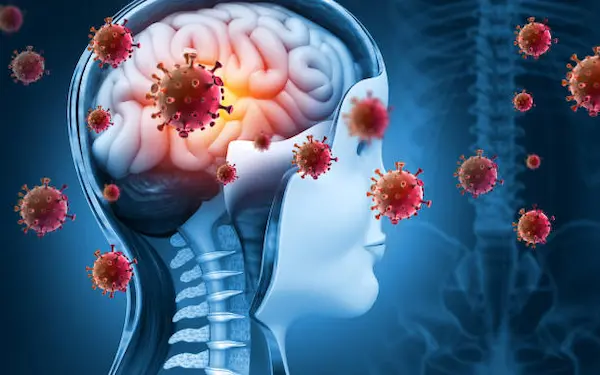
Symptoms of meningitis
Meningitis symptoms come on suddenly, get worse quickly, and some initial symptoms are similar to those of influenza, making diagnosis difficult at first.
Common symptoms of meningitis in older children and adults include:
- High fever, often the first noticeable symptom.
- Severe headache.
- Stiffness or stiffness in the neck, which is a distinctive symptom.
- Nausea and vomiting.
- Sensitivity to light or photophobia.
- Mental confusion or difficulty concentrating.
- Drowsiness or difficulty waking up and lethargy.
- Epileptic seizures, which occur in some cases, especially in bacterial meningitis.
- Loss of appetite or thirst.
Symptoms of meningitis in infants and young children are different or less obvious, making them more difficult to recognize. Possible symptoms include:
- High temperature.
- Lethargy or irritability. The child may appear lethargic and unresponsive, or very irritable and irritable.
- Persistent, high-pitched crying.
- Malnutrition or refusal to breastfeed or eat.
- Vomiting.
- Swelling or protrusion of the fontanelle at the top of the head in infants.
- Stiffness in the body and neck. The child’s neck may be so stiff that it cannot be bent.
- Lack of limb movement.
- Increased drowsiness or difficulty waking up.
- A red or purple skin rash. In cases of meningococcal meningitis, the rash consists of small bruise-like spots that do not disappear when pressed with a glass. The appearance of this rash along with other symptoms indicates a serious emergency.
Methods of transmission of meningitis
The methods of meningitis depend on the type of microbe causing the disease, as:
- Most meningitis, bacterial and viral, is transmitted primarily through respiratory and throat secretions such as coughing, sneezing, kissing, and sharing personal items, through close and prolonged contact with the infected person or carrier of the microbe.
- Touching contaminated surfaces. In some cases, enteric viruses can be transmitted by touching surfaces contaminated with feces and then touching the mouth or nose.
- From mother to child, such as group B streptococci can be passed from a mother to her child during birth.
- Acquired infection from the environment, in fungal meningitis, occurs when fungal spores found in soil, decaying wood, or bird and bat droppings are inhaled.
- Parasitic meningitis, infection is also acquired from sources in the environment, through eating contaminated food, such as eating raw or undercooked shellfish, or produce.Agricultural crops contaminated with it, or swimming in polluted water, such as the roundworm amoeba Naegleria, enters the body through the nose when swimming in warm, polluted fresh water.
Book your consultation now at Neurological Injuries and Stroke Rehabilitation Center At Almoosa Specialist Hospital.
Diagnosis of meningitis
Meningitis is a serious medical emergency, so rapid and accurate diagnosis is crucial to ensure timely initiation of treatment. Diagnosis at Almoosa Specialist Hospital depends on the following steps:
- Medical history, where the doctor asks about the patient’s medical history, including the symptoms he is experiencing, when they started, how they developed, and about any previous medical conditions, recent travel, or contact with infected people.
- Careful clinical examination, where the doctor looks for signs of high fever and neck stiffness.
- Check for signs of Kernig's, i.e. resistance and pain when extending the leg after bending the hip and knee at a 90 degree angle.
- Checking for Brudzinski's signs, which is an involuntary bend of the knees and hips when the doctor bends the patient's neck forward.
- Neurological examination, to evaluate awareness and response, and the presence of any mental confusion, or signs indicating brain injury such as epileptic seizures or weakness in the limbs.
- Look for a rash, especially one that does not disappear when pressed, which may indicate meningococcal meningitis.
Laboratory and radiological tests
To confirm the diagnosis and determine the cause, your doctor may order a number of tests, including:
- Lumbar puncture, which is the basic examination for diagnosing meningitis, where a small sample of the fluid surrounding the brain and spinal cord is withdrawn. It is then analyzed in the laboratory and shows, in the case of meningitis, a high number of white blood cells in the fluid, a high protein level, and a low glucose level. A bacterial culture can be done to accurately determine the type of bacteria and test its sensitivity to antibiotics.
- Blood tests, to determine the severity of the infection and its effect on the body, include: a complete blood count to evaluate the number of white blood cells, which usually rise in cases of infection, and CRP and ESR tests to measure the levels of proteins that rise in the body when there is inflammation.
- Blood culture: To look for the presence of bacteria in the bloodstream, as bacteria can spread from the blood to the meninges.
Treatment of meningitis
Treatment for meningitis depends on the underlying cause of the infection, and treatment often begins in hospital even before a final diagnosis is confirmed, especially if a bacterial infection is suspected. Treatment steps include the following:
Treatment of bacterial meningitis
- Strong intravenous antibiotics are given immediately after the diagnosis is suspected, and even before laboratory culture results appear. Doctors choose broad-spectrum antibiotics such as third-generation cephalosporins, or vancomycin.
- Corticosteroids, such as dexamethasone, in some cases, especially in children and adults with meningitis caused by Streptococcus pneumoniae, to reduce inflammation and swelling around the brain and spinal cord.
- Supportive treatment includes the administration of intravenous fluids to prevent dehydration, antipyretics to control fever, and pain relievers for headaches. The patient may need medications to control seizures if they occur, or treatments to lower intracranial pressure if it rises.
- Isolation: The patient is temporarily isolated to prevent the spread of infection to others, especially in cases of meningococcal meningitis.
Treatment of viral meningitis
It is less dangerous than bacterial, and often improves on its own without specific treatment. Its treatment includes supportive therapy that focuses on relieving symptoms, including:
- Rest: to enable the body to recover.
- Drink plenty of fluids or give intravenous fluids to prevent dehydration.
- Painkillers: such as ibuprofen or paracetamol to relieve headaches and reduce fever.
- Anti-nausea medications: if vomiting is severe.
- Antiviral medications: In rare cases, if the cause is certain treatable viruses such as the herpes virus, the doctor may prescribe antiviral medications such as acyclovir.
Treatment of fungal meningitis includes antifungal medications, in high doses intravenously, depending on the type of fungus, which are usually given for a long period of up to several weeks or months to ensure the elimination of the infection, with supportive treatment for symptoms.
Treatment of parasitic meningitis includes anti-parasitic medications that target the parasite causing the infection, in addition to supportive treatment to treat symptoms and complications.
While treatment for non-infectious meningitis focuses on treating the underlying cause, supportive therapy and corticosteroids may be used to reduce inflammation.
Complications of meningitis
If left untreated, meningitis can lead to a wide range of serious complications, including:
- Permanent brain damage, as a result of severe inflammation or lack of oxygen reaching the brain, which may cause memory problems, learning difficulties, changes in personality and behavior, or even mental disabilities.
- Hearing loss, partial or complete, is a common complication, resulting from damage to the auditory nerves.
- Weakness or loss of vision, as a result of damage to the optic nerves or parts of the brain responsible for vision.
- Epileptic seizures, due to irritation in the brain, and these seizures may become chronic in some cases.
- Partial or total paralysis, in rare cases, as a result of damage to the spinal cord or brain.
- Chronic headache, for a long time even after recovery from acute inflammation.
- Hydrocephalus, i.e. an accumulation of cerebrospinal fluid within the brain, which increases pressure and may require surgery to drain it.
- Problems with pronunciation and speech.
- Septicemia, the result of the spread of a bacterial infection into the bloodstream, is a serious, life-threatening condition that leads to organ failure.
- Kidney failure.
- Acute respiratory distress syndrome, an inflammation of the lungs that causes severe difficulty breathing.
- Changes in mood and behavior, and post-traumatic stress disorder, especially in children and adults who have gone through a severe and frightening illness.
How to prevent meningitis
There are various ways to prevent meningitis, due to its different causes, and include:
- Vaccinations, the most effective method, such as the meningococcal vaccine, pneumococcal vaccine, Haemophilus influenzae type b vaccine, influenza and chickenpox vaccines.
- Good hygiene practices, and wash hands regularly, especially after coughing, sneezing, using the bathroom, and before preparing or eating food.
- Avoid sharing personal items, such as cups, eating utensils, water bottles, and toothbrushes, especially at gatherings.
- Cover the mouth and nose when coughing or sneezing with a tissue or by bending the elbow.
- Avoid touching the face: especially the eyes, nose and mouth, to reduce the transfer of germs.
- Try to avoid close and prolonged contact with anyone showing flu-like or meningitis-like symptoms.
- If you live with someone who has bacterial meningitis, doctors may recommend prophylactic antibiotics for contacts to reduce the risk of transmission.
- Strengthen the immune system, maintain good health, through balanced nutrition, exercise regularly, get enough sleep, and manage stress.
When should you visit a doctor?
Meningitis is a serious medical emergency that requires immediate action and urgent medical assistance. If the symptoms of meningitis suddenly appear, which we mentioned above, you should go to the nearest hospital or call emergency medical services immediately.
FAQs
Can meningitis be cured?
Yes, meningitis can be cured if it is diagnosed and treated early and appropriately, and recovery depends on several factors, including:
- Type of infection: bacterial infection. With early treatment, symptoms improve within days, but complete recovery may take weeks or months, while viral infection heals spontaneously within 7-10 days. As for fungal or parasitic infection, it requires specialized treatment and recovery may be slower.
- Speed of diagnosis and treatment.
- The patient's health and age.
- Possible complications: Even after recovery, some patients may suffer from chronic headaches or problems with memory or concentration.
Is meningitis vaccination necessary?
Yes, meningitis vaccination is necessary, because it protects against dangerous strains of bacteria that may cause fatal complications or permanent disabilities, especially in endemic areas or during outbreaks, and for pilgrims, Umrah performers, or travelers.
Does meningitis affect the brain?
Yes, meningitis affects the brain, especially if the infection is bacterial and not treated immediately. It causes brain tissue damage due to inflammation or lack of oxygen, as well as brain swelling that may cause coma or death.
In conclusion, understanding the complications of meningitis and the seriousness of its impact on public health is crucial, as we have explained how this infection can lead to serious consequences ranging from sensory loss to permanent brain damage. In this context, Almoosa Specialist Hospital plays a vital role in providing integrated health care, including immediate diagnosis and treatment of meningitis and its complications, through its modern technologies and qualified medical team.
Do not hesitate to visit us to obtain optimal advice and treatment, and you can contact us on our numbers listed on the website for more details, reservations, and inquiries.
Sources
Meningitis – who
Everything You Need to Know About Meningitis – healthline