
In the world of modern medicine, minimally invasive heart surgery has become one of the most prominent innovations that changed the concepts of traditional surgical treatment.
In this article, we will review what surgery is, its advantages, steps, and when it is the best option for the patient, while highlighting the experience of Al Mousa Hospital Group in this advanced field.

What is minimally invasive heart surgery?
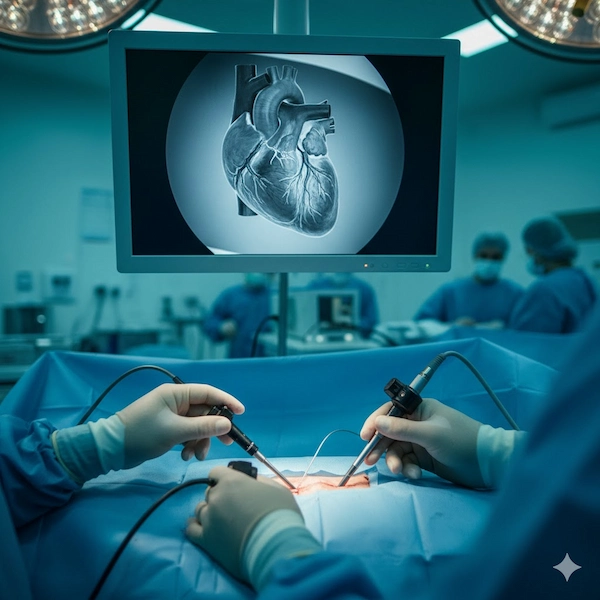
Minimally Invasive Cardiac Surgery (MICS) is an advanced surgical procedure that uses precise endoscopic techniques to access the heart through incisions as small as a few centimetres, rather than the full thoracotomy used in traditional surgery.
This type of surgery reduces damage to muscle and bone tissue, preserves the anatomical structure of the chest, while reducing the possibility of infection or blood loss.
The difference between traditional surgery and minimally invasive surgery
Below is a comparison showing that minimally invasive heart surgery offers greater comfort, faster return to normal life, and better aesthetic results.
|
Comparison |
Conventional surgery |
Minimally invasive heart surgery |
|
Incision size |
From 20 to 25 cm |
From 4 to 6 cm |
|
Blood loss |
high |
منخفض |
|
Hospital stay |
7-10 days |
3-5 days |
|
Scars |
Clear |
Small and unnoticeable |
|
Recovery |
slow (Can return to normal life within 8-12 weeks) |
fast (Can return to normal life within 6 weeks) |
Suitable cases for minimally invasive heart surgery
This surgery is considered appropriate for specific cases determined by the doctor after a comprehensive evaluation of the condition. The most prominent of these cases are:
- Repair or replace heart valves (mitral or aortic).
- Treatment of heart arrhythmia.
- Treating congenital malformations such as hole between the atria.
- Resection of benign heart tumors.
- Coronary artery bypass operations in some cases.
- Cardiac examinations and endoscopy for accurate diagnostic purposes.
- The elderly and other patients who cannot tolerate open surgery.
- Patients with aortic aneurysm.
At Al Mousa Hospitals Group, the patient is evaluated according to his health history, x-rays, and tests to determine the suitability of minimally invasive surgery for his condition.
This surgery may not be suitable for some categories of patients; We mention among them:
- Patients with atherosclerosis.
- Cases that require more than one surgical procedure to treat a number of heart problems combined.
Advantages of minimally invasive heart surgery
There are many advantages that are unique to this surgical procedure; نذكر منها:
- Less pain after the operation.
- Avoid or reduce postoperative complications;
- Faster recovery and return to daily life within weeks.
- Smaller scars and better cosmetic appearance.
- Reduced risk of infection.
- Higher surgical accuracy thanks to the use of endoscopes and cameras.
How is minimally invasive heart surgery performed?
The operation is performed under general anesthesia.
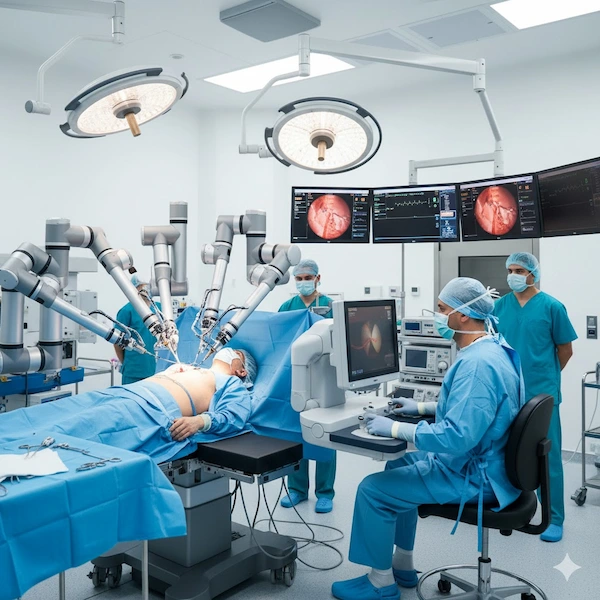
In some advanced medical centers like our hospital group, the surgery is performed using a surgical robot which gives the doctor higher accuracy, reduces the duration of the operation and possible complications.
اقرأ أيضاً: Everything you need to know about heart surgery with only a 5 cm incision
Modern technologies used
Modern techniques in minimally invasive heart surgery include:
- Thoracoscope: A long, thin tube equipped with a high-definition camera is inserted through a small incision to display a detailed image of the heart on a screen, and the surgeon uses long instruments to control the repairs.
- Robotic surgery: Where tiny robotic surgical arms are inserted through small openings, and the surgeon controls their movements remotely via a computer interface.
- Cardiovascular stabilizers: Small mechanical devices that help stabilize the heart or blood vessels during operations on a beating heart.
- Intracardiac ultrasound (ICE): To follow up on the results during the operation.
All of this, combined with improvements in anesthesia and intraoperative cardiac monitoring (such as transesophageal ultrasound), has made minimally invasive procedures safer and more effective.
Post-operative care
After surgery, the patient is transferred to intensive care to monitor his condition for up to 72 hours. Care includes:
- Pain control.
- Monitor heart and respiratory functions.
- Help with early walking.
- Providing nutritional advice and breathing exercises to improve healing.
The hospital follows up with patients after their discharge to ensure their condition stabilizes and a full recovery is achieved.
Who can perform the surgery?
This type of surgery requires special training in endoscopic cardiac surgery and experience using surgical robots.
المضاعفات المحتملة
Despite the advantages, minimally invasive heart surgery is not without risks and limitations. It is a complex surgical procedure; Some (rare) risks are:
- Light bleeding.
- Temporary disturbance of heart rhythm.
- Local inflammation at the wound site.
- Possibility of conversion to open surgery in specific cases.
- Occurrence of clots.
These complications are significantly reduced in specialized centers that have highly qualified medical teams.
Preoperative advice
There are scientific preventive measures that are essential to prepare the body for the operation and reduce the recovery period after surgery. نذكر منها:
- Comprehensive medical evaluation: Performing an electrocardiogram, ultrasound examination, and blood tests to determine the efficiency of the heart and lungs.
- Stop smoking and alcohol: It is recommended to quit at least two weeks in advance to reduce the risk of complications and improve tissue healing.
- Medication review: You must inform your doctor of all medications and supplements, especially anticoagulants, in order to adjust the doses or stop them temporarily.
- Managing chronic diseases: Control blood pressure and sugar levels to reduce the possibility of infection or slow healing.
- Diet: Follow a diet rich in proteins and vitamins to support immunity and accelerate tissue recovery.
- Respiratory exercises: Do light exercises to improve lung efficiency before surgery.
- Psychological readiness: Understand the steps of the process and stages of recovery to reduce stress and increase adherence to the treatment plan.
These points represent the optimal scientific and practical preparation to ensure the success of the operation and reduce the recovery period after surgery.
اكتشف المزيد عن: What are the types of heart x-rays?
Recovery after surgery
- The first stage after the operation: The patient is monitored in the intensive care unit for between 24 and 72 hours, where vital signs, heartbeat, blood pressure and oxygen level are evaluated with high precision.
- Pain control: A combination of customized analgesics is used to reduce pain and improve physical comfort without affecting circulation or breathing.
- Early motor activity: The patient is advised to begin walking gradually during the first days after leaving care, as this contributes to stimulating blood circulation and reducing the risk of venous clots.
- Therapeutic nutrition: A balanced diet is low in fat and rich in proteins and vitamins to support tissue restoration and accelerate wound healing.
- Respiratory care: These include deep breathing exercises and the use of lung stimulators to avoid fluid accumulation and improve oxygenation efficiency.
- Medical follow-up: Weekly and then monthly reviews are conducted to evaluate wound healing and stabilization of heart and lung function, in addition to adjusting medications as needed.
- Psychological support and rehabilitation: An integrated rehabilitation program is provided that includes behavioral and psychological awareness to help the patient gradually return to his daily activities.
Adherence to these precise scientific points contributes to reducing complications and achieving a stable and rapid recovery after minimally invasive heart surgery.
Frequently asked questions
How long does the process take?
It ranges from two to four hours depending on the type of procedure.
When can I return to work?
Usually within three to four weeks after the operation.
Does the operation require a blood transfusion?
Rarely, because blood loss is limited compared to open surgery.
What are the side effects of minimally invasive surgery?
Side effects of minimally invasive surgery are limited and include mild pain at the surgical site, a temporary feeling of nausea, or a slight drop in blood pressure or oxygen level, and they usually go away within a short period under medical supervision.
Cardiac services at Al Mousa Hospitals Group
The group provides an integrated system of cardiovascular services through a specialized center under the supervision of an elite group of adult and pediatric cardiology consultants.
- Cardiovascular disease clinics: It includes medical teams specialized in treating angina, weak heart muscle, and rhythm disorders, with integrated care for the elderly.
- Pediatric Heart Clinic: It is concerned with early detection of birth defects and monitoring the development of the heart muscle in children using the latest imaging devices.
- Cardiovascular Imaging Unit: It includes advanced services such as electrocardiogram (ECG), echocardiogram (ECHO), cardiac stress test, Doppler examination of blood vessels, in addition to a Holter device for continuous heart rate monitoring.
- Cardiac catheterization clinic: It includes a diagnostic and therapeutic unit to perform arterial expansion operations and treat heart attacks with high accuracy.
- Cardiac surgery clinic: Specialized in delicate procedures such as open heart surgery, coronary artery bypass surgery, and valve repair in a sterile environment equipped with the latest technology.
- Cardiomyopathy clinic: It provides periodic follow-up and preventive care for cases of muscle weakness or enlargement and hereditary heart diseases, to ensure the stability of the condition and improve the quality of the heart condition life.
تعرف أيضاً على: Your comprehensive guide to cardiac endoscopy
Conclusion
Minimally invasive heart surgery represents the future of modern medical care, combining high surgical precision with psychological and physical comfort for the patient. Al Mousa Hospitals GroupWe are keen to provide integrated care that combines the latest surgical technologies and a specialized medical team to ensure a safe and quick recovery treatment experience.
If you are looking for specialized advice or want to know how suitable your condition is for this type of surgery, you can Contact us To book an appointment with one of our specialist doctors.
