
The baby's weight at birth is considered one of the most important indicators of his health and proper growth inside the womb. Although each baby has its own individual characteristics, there is a normal range for normal weight, which reassures doctors and parents that things are going well. However, what happens when the baby is born with a weight less or more than this rate?
What is the normal weight of the fetus at birth?
The normal weight of the fetus at birth is the weight of the baby that falls within a healthy and acceptable range, which reflects the healthy growth of the fetus inside the womb.
In general, this weight ranges between 2.5 kilograms and 4 kilograms, as the World Health Organization considers this range the basic reference for evaluating the health of the newborn.
What affects your child's development?
The normal weight of the fetus at birth and its growth over the nine months of pregnancy are affected by intertwined and complex factors, ranging from the mother’s health, her environment, and her lifestyle. These factors can be divided into several main categories as follows:
First: Factors related to the mother’s health and lifestyle
These are the most direct factors that the mother can control in large part, including:
- Nutrition: It is the cornerstone of fetal growth, and a deficiency of some elements affects the health of the fetus, such as folic acid deficiency, which increases the risk of neural tube defects.
- Not getting enough calories, which hinders fetal weight gain.
- Excessive weight gain increases the child's risk of obesity and diabetes later in life.
- General maternal health and chronic diseases, such as uncontrolled diabetes, which increases the risk of congenital malformations and large fetal size, as well as chronic high blood pressure, which causes delayed intrauterine growth, and thyroid diseases.
- The mother is infected with some infections that are dangerous to the fetus, such as German measles, which causes heart, hearing and vision defects, chickenpox, or syphilis.
- Mother’s age: Teenage mothers are more susceptible to anemia and preeclampsia, and may give birth to low-weight babies, while mothers over 35 years old have an increased risk of developing high blood pressure and gestational diabetes, as well as the risk of miscarriage and chromosomal disorders such as Down syndrome.
- Problems related to the uterus and the placenta. Any problem with the placenta hinders the delivery of oxygen and nutrition to the fetus, such as premature placental abruption or placental insufficiency. Also, the presence of fibroids or deformities in the shape of the uterus can limit the fetus’s growth space.
- The mother’s mental health. Stress, anxiety, and acute and chronic depression can affect the growth of the fetus by increasing the secretion of stress hormones such as cortisol, which may be linked to low birth weight and premature birth.
Second: Environmental factors and exposure to harmful substances
These are external substances that can cross the placenta and cause direct harm to the fetus, including:
- Alcohol is one of the most dangerous substances of all;
- Smoking, nicotine and carbon monoxide reduce the amount of oxygen reaching the fetus, leading to low birth weight and premature birth (sudden infant death syndrome).
- Narcotic substances, such as cocaine, heroin, and marijuana, are the cause of serious problems such as placental abruption, premature birth, and low weight, as well as serious withdrawal symptoms for the newborn.
- Some medications are known to cause birth defects, such as some acne medications isotretinoin and blood thinners, so you should always consult a doctor before taking any medication.
- Exposure to high levels of radiation, such as radiation therapy for cancer, can cause birth defects or intellectual disabilities.
- Some chemicals can cause damage to the fetus's nervous system, such as lead and mercury found in some large fish such as shark and swordfish, and pesticides.
Third: Genetic factors
The genetic makeup of the parents determines many of the child’s characteristics, such as height, eye color, and body type, so:
- Genetic disorders. Diseases such as cystic fibrosis or sickle cell anemia can be passed from parents to children.
- Chromosomal disorders are errors in cell division that can lead to conditions such as Down syndrome, which affect physical and cognitive development.
- Father's health: Modern science has begun to show that the father's age, health, and exposure to toxins such as alcohol and smoking can affect sperm quality, lead to developmental problems, and increase the risk of some psychological disorders for the fetus.
Learn about: متى تبدا حركة الجنين والفرق بين حركة الذكر والأنثى
How to calculate the weight of the fetus in the correct way
There is no completely accurate way to calculate the actual weight of the fetus while it is inside the womb, but doctors rely on methods to estimate the weight of the fetus, and these estimates are not 100% accurate, but they give a good indication of its growth and help doctors monitor its health condition.
How to estimate weight using sonar (ultrasound)
It is the most common and accurate way to estimate the weight of the fetus, as the doctor uses the ultrasound device to take specific measurements from different parts of the fetus’s body. Then the computer program attached to the device analyzes these measurements using mathematical equations to obtain the estimated weight of the fetus (EFW- Estimated Fetal Weight), which appears in the ultrasound report.
Measurements include:
- Measuring the fetal head circumference (HC – Head Circumference).
- Bipolar diameter (BPD – Biparietal Diameter), measuring the width of the head from one side to the other.
- Measuring the fetal abdominal circumference (AC - Abdominal Circumference). This measurement is considered an important indicator of fetal growth because it reflects the fat reserve in the liver.
- Measuring the length of the femur (FL – Femur Length).
The accuracy of ultrasound estimates usually ranges within a margin of error ranging from 10% to 20%, meaning that the actual weight may be higher or lower than the estimated weight, and the accuracy of the estimate decreases as the date of birth approaches, especially in large or very small fetuses, or if the position of the fetus does not allow accurate measurements to be taken.
To obtain a more accurate estimate, we advise you to have the measurements taken by the same doctor and on the same device at each visit.
It is worth noting that some doctors may use fundal height measurement to estimate weight, but it is less accurate than an ultrasound, as the doctor measures the distance from the pubic bone to the top of the uterus. This measurement in centimeters roughly corresponds to the number of weeks of pregnancy after the twentieth week. If the measurement is significantly less or greater, this may indicate the need to perform an ultrasound to verify the growth of the fetus.
Book your consultation now at Pediatric Center At Al Mousa Specialist Hospital.
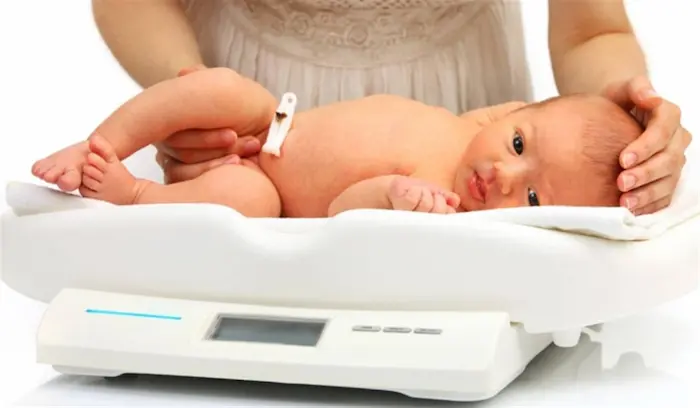
A table containing the baby’s weight for each month of pregnancy
Here is an estimated table of the average fetal weight per month, but it may differ from one fetus to another:
| month | Average weight approx |
| the first | Less than 1 gram |
| the second | About 1-2 grams, about the size of a bean seed |
| the third | 20 - 30 grams, the size of a lemon |
| Fourth | 100-150 grams, the size of an avocado |
| Fifth | 300 - 450 grams, the size of a papaya |
| Sixth | 600 - 900 grams, the size of a cantaloupe |
| Seventh | 1 – 1.5 kg |
| Eighth | 1.6 – 2.4 kg |
| Ninth | 2.5 – 3 kg |
| At birth | 3.5 kg |
It should be noted that the rapid increase in weight of the fetus usually begins from the seventh month onwards, as the fetus acquires layers of fat that help it regulate its body temperature after birth.
Frequently asked questions
When is a baby's weight considered abnormal at birth?
After we have explained the normal weight of the fetus at birth, the baby’s weight is considered abnormal if it is very low or very high compared to the expected rates for his gestational age.
The baby's weight is evaluated for his gestational age on a growth curve. Low birth weight is common and receives the most medical attention, as it is diagnosed when the baby's weight is less than 2.5 kg, regardless of his gestational age.
But more important than weight alone is his gestational age, which leads to the following classifications:
- Small for gestational age, when the baby's weight at birth is less than 90% of babies at the same number of weeks of pregnancy, due to the fetus not growing at the expected rate inside the womb.
- Premature, that is, when the baby is born before completing 37 weeks of pregnancy, as a result of premature birth. These babies are small because they did not have enough time to grow in the womb, but their weight may be normal for their short gestational age.
- High birth weight, when the child exceeds the normal weight of the fetus at birth, i.e. more than 4 kg, and these children are usually called giant babies.
- Large for gestational age, that is, when the birth weight of the baby is greater than 90% of babies at the same number of weeks of pregnancy as a result of poorly controlled gestational diabetes or maternal diabetes before pregnancy.
What is the weight of the fetus that requires a caesarean section?
There is no specific weight for the fetus that requires a caesarean section, as several factors intervene in the decision, the most important of which is the estimated size and weight of the fetus versus the size and pelvis of the mother, previous birth experience, and the health of the mother and fetus.
In general, when the fetal weight is estimated to be 4.5 kg or more in a non-diabetic mother, or 4 kg or more in a mother with gestational diabetes, the doctor begins to seriously discuss a cesarean section due to the increased risks.
Is a baby weighing 4 kg dangerous for natural birth?
In general, a baby weighing 4 kg at birth does not automatically prevent natural birth, but it increases the level of risk and possible complications, which requires careful monitoring and opens the door to discussing a cesarean section.
Doctors fear cases of shoulder dystocia, difficulty delivering the fetal head, or an increased possibility of using suction or forceps to help the baby emerge.
But the decision is not based on weight. The size and structure of the mother's pelvis, the position of the fetus, the mother's health and diabetes, history of previous births and the progress of labor are taken into account.
In conclusion, the normal weight of the fetus at birth remains a vital indicator that reflects the entire pregnancy journey, as genetic and environmental factors interact with the mother’s health to form this number, and understanding these factors and working to improve them is the first line of defense to ensure a healthy and sound start for every newborn.
In this context, the importance of comprehensive medical care and close follow-up that Al-Mousa Specialist Hospital in Al-Ahsa provides is highlighted as a pioneering model in this field, through a medical team specialized in obstetrics and gynecology, a neonatal department equipped with the latest technologies, and specialized post-natal care services.
فلا تتردد في زيارتنا للحصول على الاستشارة والعلاج الأمثل أو الاتصال على الأرقام المدونة على الموقع للمزيد من التفاصيل والحجز والاستفسار.
Sources
10 Factors That Affect A Baby’s Birth Weight – marsden-weighing
Birth Weight – medlineplus