
Cancer represents one of the most prominent health challenges of our time, as the chances of survival and recovery depend largely on early and accurate diagnosis. Detection of tumors is no longer limited to clinical examination or radiological imaging only, but has become primarily dependent on advanced technologies in tumor analysis laboratories, which are no longer just traditional laboratories, but have turned into advanced research centers that use the latest scientific innovations to decode malignant diseases, providing non-surgical tools that help detect the presence of cancer cells or their fragments in very early stages. In this article, we will review for you the latest technologies used in laboratories dedicated to tumor analysis.
What are tumor analysis laboratories and their role in early diagnosis of cancer
Oncology laboratories are medical laboratories that conduct special tests to detect signs of the presence of cancer in the body, such as tumor markers, which are substances produced by cancer cells or healthy cells in the body in response to the presence of cancer.
The main role of oncology laboratories is to help in early diagnosis of cancer, which greatly increases the chances of recovery as it contributes to:
- Detecting initial indicators, as it helps detect an increase in the levels of certain substances in the body that may indicate the presence of cancer cells, even before clinical symptoms appear.
- Monitoring the development of the disease, by monitoring the extent of the patient’s response to treatment, as low levels of significance after treatment may indicate its success.
- Detect recurrence of the disease after recovery, as these tests are used in periodic examinations to monitor the possibility of the cancer returning again.
Learn about: Treatment of stage IV cancer | هل ما زال هناك أمل؟
The latest technologies used in oncology laboratories
The field of tumor analysis is witnessing tremendous development thanks to advances in medical technology, which allows for a more accurate and specific diagnosis of cancer. Analysis is no longer limited to traditional tumor markers, but has expanded to include the study of the molecular and genetic characteristics of the tumor.
The most prominent modern technologies used in oncology laboratories at Al Mousa Specialist Hospital include the following:
- Liquid biopsy
This technology is considered a real revolution in the diagnosis and follow-up of cancer. Instead of taking a sample of tumor tissue like a traditional biopsy, which may be a difficult and painful surgical procedure, the liquid biopsy relies on analyzing a simple blood sample to detect:
- Circulating tumor DNA (ctDNA): Small pieces of DNA from cancer cells that leak into the bloodstream.
- Circulating tumor cells (CTCs): Whole cells that separate from the tumor and travel through the blood.
- Exosomes: These are small vesicles released by cancer cells that carry genetic information.
- Genomic techniques and molecular analysis
These techniques allow analysis of the genetic makeup of the tumor to understand how it arises and develops. Examples include:
- Comprehensive Genotyping (CGP): This is a comprehensive examination of hundreds or thousands of cancer-related genes at one time.
- Next Generation DNA Sequencing (NGS): A technology that allows DNA sequences to be read and analyzed rapidly and on a large scale, revealing cancer-causing genetic mutations.
- Advanced immunological analysis techniques
These techniques are used to analyze proteins and antigens present on the surface of cells, which play a vital role in the interaction of the tumor with the immune system. Examples include:
- IHC immunohistochemistry: It is used to determine the type and source of the tumor, in addition to detecting the presence of some proteins that are targets for targeted therapy.
- Flow Cytometry: It is used in diagnosing blood cancers such as leukemia and lymphoma, as it can determine the types of cancer cells with great accuracy.
- Artificial intelligence (AI) and machine learning technologies
These advanced tools are used to analyze huge amounts of data generated by molecular and genetic analyses. AI algorithms can:
- It identifies hidden patterns in data that are difficult for humans to detect.
- It predicts cancer risk based on a variety of genetic and clinical factors.
- It speeds up the diagnostic process and reduces human errors.
Book your consultation now at Oncology center At Al Mousa Specialist Hospital.
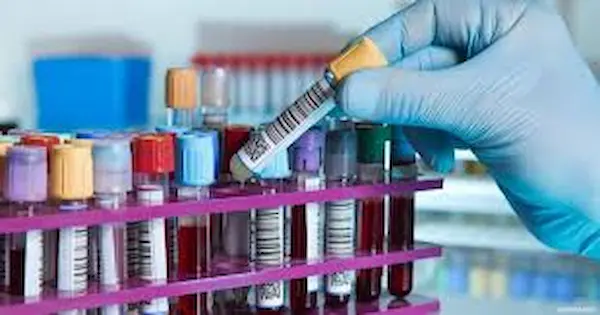
What are the most common tests in oncology laboratories?
Oncology analysis laboratories are an essential pillar in diagnosing, monitoring and following up cancer’s response to treatment. The most common tests in them at Al Mousa Specialist Hospital are divided into several main categories:
- Tumor marker tests
These are substances produced by cancer cells themselves or the body in response to the presence of cancer. They are found in the blood, urine, or body tissues, but it is very important to understand that they are not conclusive diagnostic tools on their own, but rather are used in conjunction with other tests.
Examples include PSA, CA 27.29, CA 15-3, CA 125, and CEA.
- Histological and cellular examinations
It is considered the cornerstone of oncology laboratories for its role in the final diagnosis of cancer, and it includes:
- Biopsy: i.e. examining a sample of suspicious tissue under a microscope to determine whether the tumor is malignant or benign?
- Cytology examination: that is, the examination of individual cells and not entire tissues, the most famous of which is the Pap smear to detect cervical cancer, and the analysis of fluids such as pleural fluid or urine.
- Molecular and genetic tests
These tests have become essential in precision medicine, as they help determine the appropriate treatment based on the genetic makeup of the tumor, and include:
- Immunohistochemical (IHC) analyses: Special antibodies are used to detect specific proteins on the surface of cancer cells, which helps determine the source of the tumor when the tumor is widespread and the underlying source is unknown, and guide treatment.
- Genetic testing, with the aim of looking for specific mutations in tumor genes such as EGFR mutations in lung cancer, BRAF mutations in skin and colon cancer to determine the patient’s eligibility for certain medications.
- Examination of genetic genes in the patient's blood, not the tumor, to detect inherited mutations that increase the risk of cancer, such as the BRCA1 and BRCA2 genes.
- Routine blood tests
Although it is not specific to cancer, it is necessary to evaluate the patient's general health and organ functions, especially during treatment, the most famous of which are:
- Complete blood count (CBC): To detect anemia which may be caused by bleeding from a tumor or bone marrow involvement.
- Measuring the number of white blood cells to determine the strength of the immune system.
- Measure the number of platelets, which are responsible for clotting.
- Kidney functions, such as creatinine and urea.
Learn about: Learn about the best beneficial foods for cancer patients
How do you choose the best oncology laboratories?
Choosing an oncology laboratory is a vital and crucial decision, as the accuracy of the results directly affects the diagnosis as well as the treatment plan.
The choice must be based on strict scientific and professional criteria, and not just on location or cost, such as accreditations, quality, availability of modern technologies, the experience of the work team, and the speed and accuracy of the results.
Here comes the role of the oncology analysis laboratories at Al Mousa Specialist Hospital as one of the most prominent oncology analysis laboratories in the Kingdom of Saudi Arabia in Al-Ahsa, where the hospital pays great attention to its laboratory services, and works to meet many of the aforementioned standards, because:
- Al Mousa Specialist Hospital's laboratory is accredited by the College of American Pathologists, indicating their commitment to global standards of quality and accuracy.
- Oncology laboratories at Al Mousa Specialist Hospital are equipped with the latest analyzers in chemistry, immunology, hematology, anatomical pathology, and molecular diagnostics.
- Within the laboratory there is an anatomical pathology department equipped with techniques such as immunohistochemistry, which indicates the laboratory's ability to accurately analyze tissue samples.
- The laboratory provides a wide range of tests, including all hematology tests that help diagnose blood cancers, immunobiochemical tests that include hormone and antibody tests, as well as genetic services and some genetic tests.
- The hospital's oncology laboratory operates 24 hours a day, 7 days a week, and seeks to provide accurate results in record time, which is very important in emergency cases.
الاسئله الشائعه
What are the names of tumor marker tests?
The list of names of the most important and famous tumor marker tests based on the type of tumor or target organ includes the following:
- PSA Prostate Specific Antigen for diagnosis and monitoring of prostate cancer.
- CA 15-3 Breast cancer specific antigen to monitor and measure response to treatment.
- CA 27.29 Breast cancer antigen 27.29 is an alternative to CA 15-3 and is more specific.
- CA 125 Cancer antigen 125 for basic follow-up of ovarian cancer.
- CEA: Carcinoembryonic antigen for the follow-up and treatment of colorectal, pancreatic, lung and breast cancers.
- AFP alpha-fetoprotein for liver cancer and testicular and ovarian tumors.
- Human chorionic gonadotropin (HCG) for testicular tumors, chorionic tumors, and ovarian germ cell tumors.
- CA 19-9 Cancer antigen 19-9 is specific for pancreatic, gallbladder, bile duct, and colon cancer.
- NSE Neuron-specific enolase for small cell lung cancer and neuroendocrine tumors.
- Chromogranin A for neuroendocrine tumors.
How long do oncology tests take?
The patient always awaits the results with anxiety, but the time for the results of tumor tests to appear depends largely on the type and complexity of the analysis itself. In general, the approximate durations of some tumor tests can be guessed, for example:
- Blood tumor marker tests, such as PSA, CEA, CA 15-3, may take from 24 to 48 hours.
- Histological examinations, such as a biopsy, usually take 5 to 10 working days, and are a complex process that includes several steps.
- Immunohistochemical (IHC) tests, add approximately 2 to 4 additional days after the primary biopsy result.
- Genetic and molecular tests, such as screening for EGFR and BRCA mutations, take from 7 to 21 days and may take up to weeks in some rare tests.
How much do oncology tests cost?
The prices of oncology tests vary greatly due to several factors, including the type of analysis, the place where the analysis is performed, and the technique used. Tests that use advanced techniques are much more expensive than traditional techniques.
We advise you to ask your treating physician, as he is the best source and knows exactly the type of analysis required. He can direct you to the places to perform it, and he may know its approximate cost. You can also contact laboratories or hospitals directly and ask about the price of the analysis with its exact scientific name.
In conclusion, oncology analysis laboratories are no longer just traditional laboratories, but have turned into advanced centers that rely on the latest molecular and genomic technologies, such as liquid biopsy and comprehensive genetic analysis. These technologies not only opened the door to early and accurate diagnosis of cancer, but also paved the way for personalized medicine, where treatment is designed to be effective and appropriate for each individual patient.
If you would like to perform some oncology tests, do not hesitate to visit us to obtain the best advice and service for you, and you can contact us on our numbers listed on the website for more details and reservations.
Medical references
Research Program Overview – centreforcancerbiology
Tumor Marker Tests – medlineplus