
Complaining about pain behind the knee affects the patient’s movement and carrying out his daily activities. The causes of this pain vary, which makes accurate diagnosis very important to determine the appropriate treatment. Follow along with us in this article. We will discuss the possible causes of pain behind the knee and treatment methods in the physical therapy department at Al Mousa Specialist Hospital, in addition to some tips for preventing this annoying pain.
What is pain behind the knee?
Also known as popliteal pain, it is a common complaint, resulting from a variety of causes, ranging from minor injuries to serious medical conditions.
Cases in which pain appears behind the knee vary, such as: pain when bending the knee, pain behind the knee when straightening it, or pain behind the knee when standing or walking.
Despite the different causes of pain behind the knee, there are many similarities between the symptoms, so we advise you to consult a doctor immediately for an accurate diagnosis. Symptoms include:
- Severe pain.
- Fever in the leg.
- Sudden swelling in the leg.
- Inability of the leg to bear the body weight.
- Changes in the appearance of the knee joint.
Causes of pain behind the knee
The lack of ease in correctly diagnosing the complaint of pain behind the knee is due to the presence of a variety of causes, the most prominent of which are:
- Medical conditions
- Baker's cyst: A fluid-filled sac appears behind the knee, causing pain and swelling.
- Popliteal artery entrapment syndrome: It is a rare condition that occurs as a result of the leg muscles pressing on the popliteal artery behind the knee, causing pain and spasms.
- Inflammation of the tendons in the knee, causing pain and swelling.
- Arthritis: such as rheumatoid arthritis or degenerative arthritis.
- Deep vein thrombosis of the leg.
- Injuries
- Meniscus or meniscus tear: A tear in the rubbery cartilage that helps absorb shock in the knee, leading to swelling behind the knee and pain.
- Ligament tear: such as the posterior cruciate ligament or anterior cruciate ligament.
- Tendon injuries: such as tendinitis or rupture.
- Calf muscle tear: especially during exercise.
- Some other reasons
- Excessive and repetitive stress on the knee.
- Incorrect sitting position for long periods.
- Excess weight: Weight increases pressure on the knee and causes pain.
- Gradual sagging resulting from aging.
Learn about the most important Causes of knee pain؟ وكيف يمكن علاجه؟
Treatment of pain behind the knee
Treating pain behind the knee depends mainly on diagnosing the underlying cause, and treating pain behind the knee requires developing an appropriate treatment plan for each individual case.
We, in the Physical Therapy Department at Al Mousa Specialist Hospital, provide a wide range of specialized services for treating pain behind the knee, through a qualified team of physical therapists and using the latest technologies. Treatment of pain behind the knee is divided into the Physical Therapy Department.
To natural remedies, medications, treating the cause and home remedies.
- Natural treatment for pain behind the knee
- Strengthening and stretching exercises to strengthen the muscles surrounding the knee and improve range of motion.
- Manual therapy to reduce pain and improve joint function.
- Using braces and assistive devices to provide support and stability to the knee.
- Treating pain behind the knee with medications
- Pain relievers such as paracetamol or ibuprofen.
- Nonsteroidal anti-inflammatory drugs, such as diclofenac or naproxen, to reduce pain and inflammation.
- Corticosteroid injections. Some cases require corticosteroid injections into the knee joint to reduce inflammation and pain.
- Surgical treatment of pain behind the knee
The doctor decides on surgical intervention in severe cases that have not responded to physical therapy and medications. Surgical intervention involves repairing damaged ligaments or cartilage, or removing Becker's cyst.
- Treating the specific causes of pain behind the knee
- Treatment of Becker's cyst: The doctor uses a thin needle to withdraw fluid from the cyst, or in some cases, surgical intervention is necessary to remove the cyst.
- Treatment of arthritis, which depends on the type of inflammation, includes treatment with medications and physical therapy in mild and moderate cases, while surgical intervention is required in severe cases.
- Treatment of deep vein thrombosis, which requires immediate treatment to prevent serious complications using anticoagulant medications.
- Treatment of anterior or posterior cruciate ligament injury. Complete rest and physical therapy help with recovery. In severe cases, surgical intervention is necessary through an anterior cruciate ligament operation.
- A meniscus tear. Rest, using ice packs, and elevating the affected knee help relieve symptoms and heal faster, but surgery is important if the meniscus tear is severe and does not heal on its own.
- Chondromalacia. Physical therapy and analgesic medications help relieve symptoms, and surgical intervention is the only solution to repair damaged cartilage.
Home treatments and lifestyle changes can also relieve pain behind the knee and speed up healing, but these procedures do not replace consulting a doctor in cases of severe or persistent pain, and they include:
- Maintain a healthy weight to reduce stress on the knee.
- Complete rest and avoid all activities that increase pain.
- Exercise regularly to strengthen the muscles surrounding the knee.
- Apply ice compresses to the knee for 15-20 minutes several times a day.
- Use a compression bandage to reduce swelling.
- Raise the knee above the level of the heart to reduce swelling.
Book your consultation now at Orthopedic center For details and treatment options for pain behind the knee
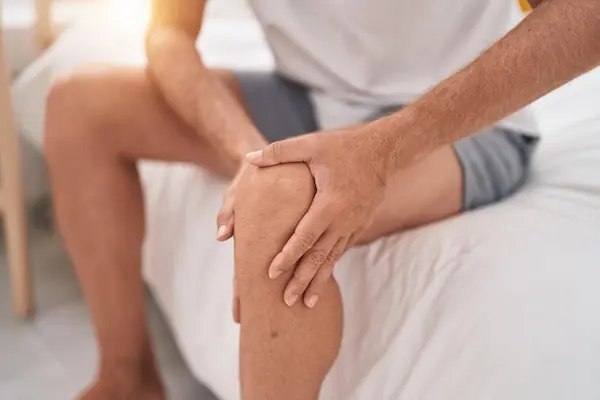
What does pain behind the knee indicate?
Pain behind the knee indicates a problem with one of the components of the knee joint or the tissues surrounding the joint. The most common signs of pain behind the knee include the following:
- Problems with the knee joint itself, such as a meniscus, ligament tear, arthritis, or Baker's cyst.
- Problems with the tissues surrounding the joint, such as tendon injuries, muscle injuries, blood vessel problems in the knee, or popliteal artery entrapment syndrome
- Other causes, such as repeated excessive stress on the knee, or excess weight.
How do I get rid of pain behind the knee?
Getting rid of pain behind the knee depends largely on knowing the main cause of the pain behind and treating it. You can follow some of these steps to relieve pain behind the knee:
- Rest and avoid activities that increase pain, especially when injured.
- Use cold compresses in the first days of the onset of pain. Place ice compresses on the affected area for 15-20 minutes several times a day. Ice helps reduce inflammation and swelling.
- Use warm compresses After the first few days, apply warm compresses to the knee to relieve muscle spasms and improve blood flow to the affected area.
- Raise the affected leg above the level of the heart when sitting or lying down, to reduce swelling.
- Use some over-the-counter medications, such as paracetamol, a painkiller.
If the pain persists or the symptoms worsen, you should go to the doctor immediately because some cases of pain behind the knee require adherence to some medications and physical therapy for a period of recovery. In severe cases, the doctor may decide on surgical intervention to treat the pain behind the knee.
See the best Knee pain treatment When bending and straightening it, I am the best solution to get rid of pain
Does roughness cause pain behind the knee?
Yes, knee roughness can be one of the reasons for feeling pain behind the knee, due to changes in the structure of the joint as a result of the erosion of cartilage in the knee joint, which changes the distribution of pressure within the joint, causing pain that extends to behind the knee.
Bone spurs can also form in the knee joint as a result of roughness. These bumps put pressure on the tissues surrounding the joint and cause pain. In addition, knee roughness leads to inflammation of the tendons and ligaments surrounding the joint, causing pain behind the knee.
Frequently asked questions
Does sciatica cause pain behind the knee?
Yes, sciatica can cause pain behind the knee, because the sciatic nerve, which is affected in sciatica, extends from the lower back to the foot, and passes behind the knee, so the patient can feel pain resulting from sciatica anywhere along the path of the sciatic nerve, including behind the knee.
How do I know that I have knee osteoarthritis?
Knee osteoarthritis is a common bone condition that affects the knee joint and causes pain behind the knee as a result of the erosion of the cartilage that protects the bones. You can detect it if you suffer from these symptoms:
- Pain and stiffness in the knee, gets worse with physical activity, in the morning or after long periods of sitting.
- Difficulty getting up or down stairs, or standing for long periods.
- Difficulty bending or straightening the knee completely.
- You hear a cracking or popping sound when you move the knee.
- You notice swelling in the knee, especially after physical activity.
- Feeling of warmth and heat in the knee.
- Feeling weak in the thigh muscles.
- In severe cases, you may notice a deformation of the knee.
If you are suffering from any of these symptoms, you should visit the orthopedic clinics at Al Mousa Specialist Hospital to consult a doctor and conduct a physical examination of the knee. Some tests may be required for accurate diagnosis, such as:
How to sit for someone who suffers from knee osteoarthritis?
If you suffer from knee osteoarthritis, you must consider some things when sitting to relieve pressure on the joint and reduce the feeling of pain. We advise you to do the following:
- Choose a chair at an appropriate height so that your feet are flat on the floor at an angle of 90 degrees or more, and your knees are not higher than your hips.
- Use a backrest to support your lower back.
- Use armrests to reduce pressure on the knees when standing and sitting.
- Avoid sitting on low chairs or sofas that require significant bending of the knees.
- Keep your back and shoulders straight when sitting.
- Keep your feet level and then place your feet flat on the floor.
- Avoid crossing your legs as it increases pressure on the knees.
- Make sure to change your position every 20-30 minutes to avoid stiff knees.
- Use a small pillow under your knees to relieve pressure on them.
- Do not squat, as it puts too much pressure on the knees.
- عدم الجلوس على الأرض خاصة لفترات طويلة.
- Avoid sitting with your knees bent.
In conclusion, treating pain behind the knee requires accurate diagnosis and receiving appropriate treatment for the condition. If you suffer from pain behind your knee, do not hesitate to contact us on our numbers listed on the website for more information, inquiries, and reservations in the physical therapy department at Al Mousa Specialist Hospital.
The department includes a team of experienced and highly qualified physical therapists, who conduct a comprehensive assessment of the patient’s condition, determine the cause of the pain and the level of injury to determine the appropriate treatment plan. A customized treatment plan is developed for each patient that includes a set of therapeutic techniques and exercises, using the latest technologies and medical devices in physical therapy.
Sources
Posterior knee pain – nih
What’s Causing This Pain in the Back of My Knee – healthline
