
Fractures in children are among the most common injuries that parents face, especially during the early childhood stages and school years, as the child increases his daily activity and movement, which makes the child more vulnerable to trauma. Although children’s bones are more flexible than adults, they are immune to fracture, and need careful medical care to ensure proper healing without affecting the children’s growth. In the following lines, we will learn about the causes of children’s fractures, their types, and appropriate diagnostic and treatment methods. Follow for more details.
What are the common fractures in children?
Common fractures in children vary according to the age and activity of the child, and include the following:
- Fracture of the radial bone near the wrist is one of the most common fractures and often occurs when falling on the outstretched hand.
- A broken collarbone is common after a fall on the shoulder or during childbirth in some cases.
- Fractures of the forearm (radius and ulna) occur as a result of falling or during violent sports.
- Fracture of the humerus near the shoulder or elbow, which is common in cases of falling from a high place.
- A fracture of the tibia (tibia or fibula) often occurs during running, jumping, or in a collision.
- Fracture of a finger or toe, which may occur due to colliding with furniture or falling something heavy.
- Typical fractures for children are such as a “green tibia” fracture where the bone bends but does not break completely, due to the softness of the bone at this stage.
What are the symptoms of fractures in children?
Fractures in children have many different symptoms that are important to recognize and vary depending on the type and location of the fracture, but fractures in children generally include symptoms that come as follows:
- Feeling severe pain at the site of the injury appears immediately after a fall or after the accident, and may increase with movement or touch.
- Obvious swelling around the fracture area due to fluid accumulation or internal bleeding in the surrounding tissue.
- Bruising or skin discoloration may appear blue or purple around the affected area.
- Deformation of the affected limb, such as the arm or leg appearing in an abnormal or tilted position.
- The child’s difficulty or refusal to move the affected limb or constant crying when trying to move it.
- In some cases, a cracking sound may be heard upon injury, and parents may notice a sound at the moment of the fracture.
- Sometimes a slight increase in temperature as a normal inflammatory response of the body.
Learn about: هشاشة العظام عند الأطفال Causes, symptoms, prevention and treatment methods
What is first aid for fractures in children?
There is no doubt that it is important to rely on first aid to treat any injuries or wounds. As for first aid for children’s fractures, it is necessary to reduce pain and avoid aggravation of the injury until medical care is obtained. First aid includes the following steps:
- Calm, reassure and calm the child, because fear may increase stress and pain.
- Do not move the affected part and avoid trying to adjust or move the affected limb so that the damage does not increase.
- Immobilize the affected limb using a temporary splint or piece of wood covered with a cloth, and gently tie it over clothing to reduce movement.
- Elevate the affected limb, if possible, to reduce swelling and reduce internal bleeding.
- Apply cold compresses over the outside of the fracture for 15-20 minutes to reduce swelling, while not applying ice directly to the skin.
- Avoid giving food or drink in case surgical intervention is required later.
- Transport the child to the nearest medical center immediately and carefully without putting weight on the affected limb.
What is the treatment for fractures in children?
Treatment of fractures in children depends on the type, location, and severity of the fracture, but bones in childhood are characterized by rapid growth and fusion, which helps in rapid recovery. Treatment methods include the following:
- Immobilization with a splint or plaster. In most cases, a splint or plaster is applied to stabilize the affected bone and prevent its movement, allowing for natural healing.
- Bone repositioning, or what is known as reduction. In some fractures that cause a deviation in the bone, the doctor may need to manually return the bones to their correct position under local or general anesthesia.
- Surgical intervention is used in complex cases or when traditional methods do not work, during which the bone is stabilized with metal stents or screws.
- Rest and reduce movement, and the child's activity must be reduced to ensure that there is no pressure on the affected area.
- Follow-up with radiology, where periodic examinations are performed to ensure that the bones are healing properly without affecting growth.
- Physical Therapy After Recovery In some cases, physical therapy is recommended to re-strengthen the muscles and improve movement of the affected joint.
- Early diagnosis and treatment is an important factor in ensuring that the child recovers without complications affecting future growth or movement.
Book your consultation now at Orthopedic center At Al Mousa Specialist Hospital.
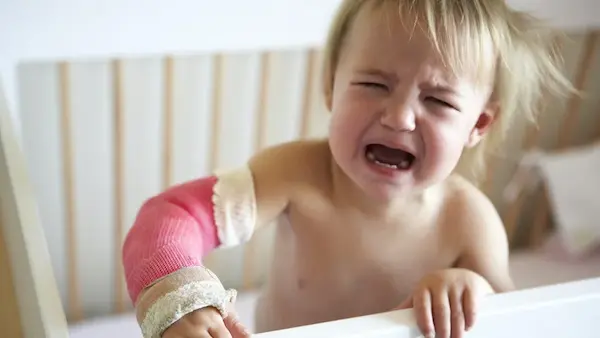
Important tips for caring for children's fractures at home during the treatment period
Here are important tips for caring for children's fractures at home during the treatment period to ensure a quick and safe recovery:
- Adhere to the doctor’s instructions and carefully follow the prescribed treatment plan, whether in terms of the duration of use of the plaster or follow-up appointments.
- Do not wet the plaster or splint, and keep the plaster completely dry to avoid softening or irritating the skin. It can be covered while showering with a tight plastic bag.
- Monitor swelling and changes. Watch for skin color and any unusual swelling, numbness or pain in the affected limb. Notify your doctor if any unusual signs appear.
- Elevate the affected limb and keep the broken limb elevated above the level of the heart as much as possible to reduce swelling.
- Avoid strenuous activities and prevent the child from running, jumping, or using the affected limb until recovery is complete.
- Proper nutrition and provide meals rich in calcium, vitamin D and protein to support bone healing.
- Encourage the child to be patient and help him accept the treatment period by providing enjoyable alternative activities that do not require physical effort.
- Follow up on regular examination appointments to ensure that the bone is healing properly without deviation or delay in healing.
Frequently asked questions
How long does it take for a fracture to heal in children?
The duration of fracture healing in children varies depending on the type and location of the fracture, but it often ranges between 3 to 6 weeks, and may increase in some cases. Children’s bones heal faster than adult bones due to growth activity, and the doctor determines the exact duration depending on the body’s response to treatment.
What are the symptoms of a fracture in children?
Common symptoms include: severe pain at the site of the injury, swelling, bruising, deformation of the limb, inability to move it, or the child crying when trying to touch it. In some cases, a popping sound is heard at the moment of injury, and a slight heat or redness may appear in the area.
How do I know the difference between a fracture and a bruise?
A bruise usually appears as a blue or purple spot with mild swelling and mild pain that gradually subsides, while a fracture causes severe and persistent pain, greater swelling, difficulty or refusal to move the limb, and there may be a clear deformity. In case of doubt, you should go to the doctor to perform an x-ray to confirm.
If you notice symptoms of a fracture or injury in your child after a fall or accident, do not hesitate to go to Al Mousa Specialist Hospital, where the Orthopedic and Emergency Care Department provides a medical team specialized in diagnosing and treating children’s fractures with the latest technologies.
