
If you are feeling pain and want to regain your movement without the need for repeated visits to clinics, and with medical progress and increasing awareness of the importance of self-care, physical therapy at home has become an effective and comfortable option for many. Recovery no longer necessarily requires leaving your home, and with some correct guidance and simple tools, you can begin your healing journey from the comfort of your home. Follow with us this article from Al Mousa Specialist Hospital, about physical therapy sessions at home. We will explore the multiple benefits that physical therapy at home offers, starting from saving time and money to privacy and psychological comfort. We will also delve into the most important techniques.
Benefits of physical therapy at home
Home physical therapy sessions have many important benefits, especially for people who have difficulty moving around or prefer to receive care in a familiar and comfortable environment. The most important of these benefits include the following:
- Providing psychological comfort for the patient, as receiving treatment at home reduces the stress of going to clinics or hospitals for many patients.
- Privacy, as home sessions provide a private environment that allows the patient to focus on treatment without any embarrassment or distraction.
- Save effort and avoid the hassle of traveling to medical centers, especially for the elderly or those who suffer from movement difficulties.
- Saving time and flexibility of appointments, as sessions can be scheduled at times convenient for the patient, making it easier for him to balance treatment with the requirements of his daily life.
- Providing a customized and comprehensive treatment program, where the physical therapist evaluates the patient’s condition in his home environment, which helps him design an accurate and customized treatment plan that suits his daily needs and circumstances.
- Improving the environment, where the therapist provides advice to improve the home environment to be more suitable for the patient’s condition, such as removing obstacles or providing sufficient spaces for movement.
- An opportunity to involve the family, which enhances psychological support for the patient and helps them understand how to help him.
- Helping with treatment adherence and continuity, due to the convenience and flexibility of home physical therapy sessions, which leads to achieving better and faster results.
- It provides an opportunity for direct and continuous communication between the patient and the specialist, allowing accurate monitoring of progress and adjusting the treatment plan as needed.
Learn about: Types of muscle physical therapy techniques And how to start it
Types of conditions treated with home physical therapy
Many patients benefit from implementing the idea of physical therapy sessions at home, and the most prominent types of conditions that are treated with physical therapy at home include the following:
- Cases following surgical operations and injuries, such as in bone and joint surgeries, or fracture and ligament repair operations, and after sports injuries and car accidents.
- After burns to help manage scars and improve skin elasticity and function.
- Cases of strokes, with the aim of restoring motor and sensory functions, improving balance, walking and coordination, and reducing spasms.
- All cases of paralysis, whether hemiplegia, quadriplegia, or spinal cord injury, focuses on improving muscle strength, range of motion, and control of the limbs.
- Conditions of Parkinson's disease, to help maintain balance, reduce muscle stiffness, and improve walking and movement.
- Multiple sclerosis, to manage symptoms such as muscle weakness, fatigue and balance problems.
- Cases of cerebral palsy, especially in children, to help improve motor coordination, strengthen muscles, and develop motor skills.
- Peripheral neuropathy, to deal with pain, numbness and weakness.
- Patients with back, neck and shoulder pain, resulting from a herniated disc, sciatica, vertebrae roughness, or wrong sitting positions.
- Patients with osteoarthritis and arthritis, such as rheumatoid arthritis or osteoarthritis of the knee and hip.
- Cases of carpal tunnel syndrome, to relieve pressure on the nerve and strengthen the muscles of the hand and wrist.
- Fibromyalgia patients.
- Conditions of aging diseases, such as general muscle weakness, loss of balance, osteoporosis, motor lethargy, and walking difficulties.
- Certain respiratory and cardiac conditions, such as COPD, asthma, and after heart attacks or heart surgeries, to assist in cardiopulmonary rehabilitation and improve physical fitness.
- Cases of delay in children's motor development.
Techniques used in home physical therapy
During home physical therapy sessions, the physical therapist relies on a wide range of techniques and tools, some of which are simple and available, and others may be specialized and brought by the therapist with him. The most prominent of these techniques include the following:
Therapeutic exercises
It is one of the basics of any home physical therapy plan, and it is designed specifically to suit each patient’s condition and abilities. The most important therapeutic exercises include the following:
- Muscle strengthening exercises, using your body weight, resistance bands, light weights, or even household items.
- Exercises to increase range of motion for restricted joints, such as active and passive stretching.
- Balance and coordination exercises, especially for the elderly and neurological patients, using balance balls or even just standing on one leg.
- Flexibility and stretching exercises, to lengthen tight muscles and tissues and improve flexibility.
- Aerobic endurance exercises: such as walking in or around the house or using a simple stationary bike if available.
- Functional retraining exercises, to train the patient to perform daily activities safely.
- Breathing exercises, especially for respiratory patients to improve lung efficiency.
Book your consultation now at Physical therapy At Al Mousa Specialist Hospital.
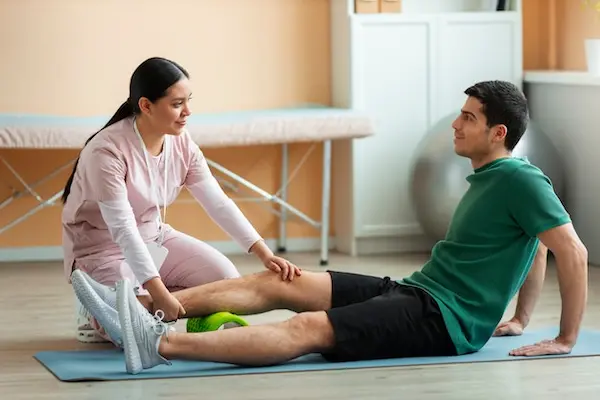
Manual therapy
A physical therapist uses their hands to deliver a range of techniques, including:
- Muscle specific therapeutic massage.
- Joint mobilization, to improve movement of restricted or stiff joints.
- Trigger point release techniques, to relieve pain caused by tension points in the muscles.
- Muscle stretching exercises.
Physical therapy
There are many physical methods that can be used effectively during home physical therapy sessions, including:
- Heat therapy: using warm compresses, hot water bottles, or warm towels.
- Cold therapy: using ice bags or cold compresses.
- Transcutaneous electrical stimulation of nerves and muscles: Using a small, portable device that sends mild electrical pulses through the skin to relieve pain.
- Ultrasound: via portable devices used by a physical therapist
- Use of a portable low-level laser device: To help relieve pain and inflammation and speed up cellular healing.
- Training in using assistive devices, such as a cane, crutches, walker, or wheelchair.
Ways to prepare for physical therapy sessions at home
To get the most out of your home physical therapy sessions, you must prepare effectively for them, including:
- Preparations before the session, such as preparing sufficient space for the therapist to move freely and to perform exercises.
- Make sure the place is well ventilated and lit.
- Wear loose, comfortable clothing that allows freedom of movement.
- Focus as much as possible on the therapist's instructions, instructions, and cooperation.
- Honest communication: Do not hesitate to inform your therapist of any pain you feel while performing exercises or receiving treatment.
- Ask questions immediately, if there is anything you do not understand about the exercises or instructions.
- Adhere to the instructions and follow the therapist’s advice regarding correct postures and how to use assistive devices.
- Apply the therapist’s advice after the session, including practicing the home exercises he advises you to do, following up if you feel any unusual pain, and resting.
Questions to ask before choosing a therapist
Choosing the right physical therapist is a crucial step to the success of your home physical therapy journey, and it is important to ask some questions to ensure that the therapist meets your needs and expectations, which include:
- Qualifications: Make sure the therapist has an accredited degree in physical therapy.
- License verification, because it ensures that the therapist adheres to professional and ethical standards.
- Number of years of experience he has as a physical therapist.
- Ask about specialization or experience in dealing with your specific case.
- Types of techniques and tools used in home physical therapy sessions.
- How long does one session last, and what is the suggested number of sessions for your case?
- How long is the expected recovery time?
- What is the cost of one session?
- What is the cancellation or rescheduling policy for sessions?
- How can you contact him between sessions if you have questions or concerns?
Read also: Learn about natural treatment for osteoporosis
Frequently asked questions
Can I do physical therapy myself?
No, we do not recommend doing physical therapy on yourself completely and without specialist supervision, because it is considered unsafe and may lead to adverse results or worsen the condition. You can only do some simple exercises that can be done at home to support recovery or to maintain general physical fitness after the doctor evaluates your condition and allows it.
What is home physical therapy?
It is a specialized form of health care in which a licensed physical therapist provides therapy sessions to a patient in their home or in a familiar and comfortable environment, instead of going to clinics or hospitals.
Home physical therapy aims to improve mobility, reduce pain, restore physical function, and increase independence for patients who may have difficulty getting around or prefer to receive care in their own environment.
In conclusion, the idea of home physical therapy sessions integrates with the distinguished services provided by Al Mousa Specialist Hospital to provide comprehensive and integrated health care. While the hospital provides the latest technologies and a specialized medical team for cases that require complex interventions, home sessions allow continuity of care and flexibility of recovery in the patient’s familiar and comfortable environment.
Choosing between or combining these two options depends on the nature of the individual case, the severity of the injury, and the specialists’ recommendations. Do not hesitate to visit us to obtain optimal advice and treatment. You can contact us on our numbers listed on the website for more details, reservations, and inquiries.
Sources
Everything You Need to Know About At-Home Physical Therapy – healthline
How to Do Physical Therapy at Home – midamericaortho