
Do you feel pain and discomfort in your pelvic area?
Therefore, physical therapy can help you rehabilitate the muscles, ligaments, and nerves in that area, in order to restore their strength and flexibility.
If you would like to know what conditions require pelvic physical therapy?
What is a natural treatment for the pelvis?
Also known as pelvic floor physical therapy, it is a specialized branch of Physical therapy It focuses on evaluating and treating conditions related to the pelvic floor muscles (a group of muscles and connective tissue that helps support the reproductive system, colon, rectum, and urinary tract) and surrounding structures.
Physical therapy helps to strengthen or relax the pelvic floor muscles, in order to prevent, treat, or control pelvic floor disorders.
This procedure contributes to the treatment of many problems, such as:
- Pelvic problems.
- Bladder.
- Uterine prolapse.
- Pregnancy pain.
- Difficulties in sexual intercourse.
- الأمعاء.
It can also help children and adults improve their core, urination and defecation control and sexual function.
Cases that require pelvic physical therapy
You may need pelvic physical therapy if you experience any of the following symptoms
- الإمساك.
- Frequent urination.
- Overactive bladder.
- Difficulty controlling bowel movements or urination.
- Pain during intercourse in women.
- Erectile dysfunction in men.
- Pelvic organ prolapse, which may be felt as swelling in the vagina.
- Chronic pain in the vulva area.
- Vaginismus.
- Lower back pain.
- Third or fourth degree perineal tear after birth.
- Endometriosis.
- Levator anus syndrome.
- Pregnancy and postpartum problems.
Learn about: Water physical therapy To improve mobility and relieve pain naturally
Benefits of physical therapy for the pelvic muscles
Undergoing pelvic physical therapy may provide you with many benefits, including:
-
Improve bladder control
Performing pelvic physical therapy may significantly improve bladder control, helping people with urinary incontinence by strengthening the pelvic floor muscles and reducing leakage.
-
Improve bowel control
This procedure helps manage bowel problems, such as constipation, bowel incontinence, and pain associated with bowel movements, by improving muscle coordination and strength.
-
Pain relief
Treatment may relieve chronic pelvic pain, lower back pain, and pain associated with intercourse by using techniques such as manual therapy, myofascial relaxation, and trigger point massage.
-
Support during pregnancy and postpartum
Pelvic health physical therapy is beneficial for pregnant and postpartum women because it addresses problems such as pelvic girdle pain, rectal muscle relaxation, and recovery from cesarean sections or natural birth.
-
Support for pelvic organ prolapse
Undergoing pelvic physical therapy helps manage the symptoms of pelvic organ prolapse by strengthening the muscles that support those organs and relieving feelings of pressure or heaviness.
- Rehabilitation after surgery
Physical therapy is essential for people recovering from pelvic surgeries, such as hysterectomy or prostatectomy, as it helps manage pain and restore normal function.
-
Trunk strength and stability
Strengthening the pelvic muscles contributes to trunk stability, which leads to improved posture, reduced back pain, and injury prevention.
-
Urinary tract cancer rehabilitation
This procedure may help manage and relieve the pain resulting from السرطان. كما يساهم في تحسين الوظيفة الجنسية، وذلك من خلال علاج مشكلات، مثل جفاف المهبل، وضعف الانتصاب.
-
Prostate cancer rehabilitation
Many men may experience erectile dysfunction after prostatectomy.
-
Enhance self-confidence and improve mental health.
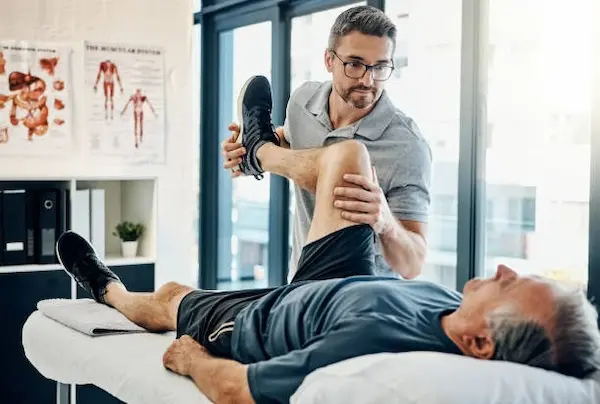
Physical therapy exercises to strengthen the pelvic muscles
If you need pelvic physical therapy, your doctor may recommend the following exercises
-
Kegel exercises
They are common exercises to strengthen the pelvic floor muscles by tightening and relaxing them.
You can perform Kegel exercises through the following steps
- Start by contracting your pelvic floor muscles for 5 seconds.
- Keep breathing during that stretch.
- Relax your muscles slowly and completely for 5 seconds.
- Repeat this process at least 3 times daily.
- Stop exercising if you feel tired, and then practice later.
-
Trigger point treatment
This technique relies on applying pressure to a point on your body (called trigger points) internally or externally, and the doctor may inject an anesthetic into that area.
-
Exercise to activate the transverse abdominal muscle
It has been proven that exercise to activate the transverse abdominis muscle (such as planks and vacuum) contributes to increasing the activity of the pelvic floor muscles without the need to train the pelvic muscles directly.
-
Heel slippage
The heel slide exercise encourages pelvic floor contractions while targeting the deep abdominal muscles.
- Start by lying on the floor with your knee bent.
- Inhale through your ribcage, then exhale through your mouth, letting your ribs compress naturally.
- Slowly move your right heel toward your buttocks, but keep your foot flat on the floor.
- Return your leg to the starting position.
- Repeat the previous steps with the other leg.
-
Tapping your toes
This exercise contributes to core stability and encourages pelvic floor contractions.
- Start by lying on the floor with your knee bent.
- Inhale through your rib cage, then exhale through your mouth.
- Lift your pelvic floor with your hands, and stabilize your core muscles.
- Bring your right foot toward your stomach.
- Slowly lower your leg to the starting position.
- Repeat the steps with the left foot.
- Repeat the exercise 12 to 20 times.
Book your consultation now at Physical therapy At Al Mousa Specialist Hospital.
-
Happy baby pose
This exercise is a great addition to a pelvic physical therapy routine, especially when focusing on stretching and relaxation.
- Start by lying on the floor with your knee bent.
- Bring your knee toward your stomach at a 90-degree angle with the soles of your feet facing up.
- Hold the outside or inside of your feet.
- Open your knee until it is slightly wider than your torso.
- You can stay in this position for several breaths.
- Diaphragmatic breathing
Diaphragmatic breathing enhances the connection between the diaphragm and the pelvic floor.
- Start by lying on a yoga mat or exercise mat.
- Practice a few seconds of progressive relaxation.
- Place one hand on your stomach, and the other on your chest.
- Inhale through your nose to expand your stomach for two to three seconds.
- Exhale slowly.
Also learn about the latest Physical therapy techniques.
The role of physical therapy in treating chronic pelvic pain
Performing pelvic physical therapy plays an important role in treating chronic pain, through the following
- Strengthening and rehabilitating the pelvic floor muscles.
- Restore flexibility and function of the pelvic muscles and joints.
- Improve bladder and bowel control.
- Enhance sexual function.
- Manage the condition, reduce pain levels.
- Treating pelvic problems.
- Restoring normal movement
How is the condition of the pelvis assessed before starting treatment?
If you suffer from chronic pelvic pain, your doctor may advise you to undergo the following tests to evaluate your condition and find out whether you need pelvic physical therapy or not:
Tests include the following
-
External examination
Through this examination, the physical therapist can evaluate the condition of the following
- vertebral column.
- الوركين.
- الساقين.
- Feet.
- The strength of your core muscles.
- Your movement patterns.
You may be asked to perform certain movements to help detect muscle imbalances, weakness, or other problems that may be contributing to your symptoms.
-
Internal examination
The doctor may advise you to undergo an internal examination of the pelvic floor, through the following
The physical therapist will insert one or two gloved fingers into the vagina or rectum to feel the internal organs. This examination will help identify painful or tight areas, as well as determine the location of the internal organs.
Which helps explain your symptoms.
Read also: Home physical therapy sessions: Techniques used and preparation methods
He may also advise you to undergo an ultrasound examination.
Frequently asked questions about pelvic physical therapy
If your doctor advises you to undergo pelvic physical therapy, you may have many questions in mind, such as:
How do I know if my pelvis is weak?
You may have weak pelvic muscles if you have any of the following problems
- Anal fecal incontinence.
- Loss of bladder control.
- Decreased vaginal sensation.
- Feeling bloated in the vagina.
- Chronic constipation.
- Kidney or bladder infections.
What are the causes of pelvic imbalance?
Pelvic imbalance may occur due to the following factors
- Traumas, injuries.
- Poor posture habits, sitting on a sofa that is too soft, unsupportive.
- Skeletal leg length difference.
- Muscle imbalance and weakness.
- Weak trunk strength.
- الحمل.
Is physical therapy only suitable for women?
No, pelvic physical therapy is also suitable for men, because it helps treat erectile dysfunction by enhancing blood flow and improving muscle strength in that area.
In conclusion, dear reader, you now realize how undergoing pelvic physical therapy can help improve your quality of life and restore your mobility.
This is so that the best doctors can help you evaluate the condition of your pelvis and determine a program that includes many exercises that contribute to strengthening your pelvic muscles and restoring your natural movement.
Sources
What Is Pelvic Floor Therapy? – webmd
Benefits of Pelvic Health Physical Therapy – aptapelvichealth
