
The separation of the nail from the flesh is considered one of the most common health problems that affect the nails in the hands or feet and causes noticeable discomfort and pain. This separation may be due to a direct injury, a fungal or bacterial infection, or even chronic medical conditions such as psoriasis or thyroid disorders. Symptoms begin with a change in the color of the nail and the appearance of a gap between it and the skin, which requires rapid intervention to avoid aggravation of the condition. In the following lines, we will learn with Al Mousa Specialist Hospital about the separation of the nail from the flesh, its causes, symptoms,
What is the separation of the nail from the flesh?
Separation of the nail from the flesh is a medical condition known scientifically as onycholysis, which occurs when the nail separates either partially or completely from the skin or from the tissue under the nail (the nail bed). Separation of the nail from the skin begins from the tip of the nail and gradually moves to the root, which leads to a change in the color of the nail in addition to the appearance of a clear gap between the nail and the skin. This condition can affect the fingernails or toenails, and the separation results from multiple causes such as trauma, infection.
The difference between temporary and permanent nail separation
There are a number of differences between permanent nail separation and temporary nail separation, and the difference lies in the possibility of the nail recovering and reattaching to the skin of the finger or not, and the difference becomes clear as follows:
| Temporary nail separation | It occurs as a result of simple causes, such as a mild injury, local irritation, or a treatable infection. In this case, the nail can grow back and adhere to the skin over time, provided that proper care is obtained and the underlying cause is treated. The nail usually returns to its normal condition within several months. |
| Permanent nail separation | It may be the result of severe damage to the nail bed, chronic diseases such as psoriasis, immune disorders, or repeated injuries. In this case, the nail does not stick together normally, and it may require continuous medical intervention or even complete removal of the nail in some cases. |
What causes the nail to separate from the flesh?
The question comes here: What are the reasons for the nail to separate from the flesh?
- Direct injuries, such as hitting a nail, getting it stuck in a door, or having a heavy object fall on it.
- A fungal or bacterial infection that weakens the structure of the nail and causes it to lift from the skin.
- Constant exposure to chemicals such as detergents or nail polish and removers.
- Skin conditions such as psoriasis or eczema that affect the nails.
- Chronic diseases such as thyroid disorders, anemia or diabetes.
- Malnutrition and lack of vitamins such as iron, zinc and biotin.
- Bad habits such as nail biting or using nails as a tool.
- Taking certain medications, such as chemotherapy or certain anti-infective or epilepsy medications.
Learn about: Hand eczema A comprehensive guide to understanding symptoms and effective treatment methods
How is nail separation diagnosed?
The separation of the nail from the flesh is diagnosed through a number of simple and precise steps. The doctor also relies on the clinical examination in addition to analyzes in some cases. The stages of diagnosis include the following:
- The doctor examines the shape of the nail and the surrounding area to determine the degree of separation, its appearance, and the color of the nail and the skin underneath.
- The doctor asks about your medical history, including whether there has been a previous injury, repeated exposure to chemicals, or the presence of chronic diseases such as psoriasis or thyroid disorders.
- Conducting laboratory tests, such as a swab under the nail to detect the presence of a fungal or bacterial infection, blood tests to determine whether there is a hormonal imbalance or a deficiency in vitamins or minerals such as iron and zinc, and skin tests when needed if the doctor suspects the presence of chronic skin diseases such as eczema or lichen.
Methods of treating nail separation from flesh
We are well aware that ingrown toenails cause you to feel a lot of pain and may make you unable to sleep. Therefore, you would like to know effective treatment methods. Treatment methods for ingrown toenails depend on the main cause of the condition and the degree of separation. Treatment methods include the following:
- Trim the separated nail carefully. The separated or damaged part of the nail is trimmed to avoid tearing or getting it stuck to things. It is preferable for this to be done by a doctor or specialist to avoid infection.
- Gently clean the nail and the surrounding area using warm water and mild soap, then dry it well and apply a topical antibiotic to prevent infection.
- In the event of a fungal infection, a topical or oral antifungal is used, and in the event of a bacterial infection, an appropriate antibiotic is prescribed depending on the type of infection.
- Avoid irritating substances such as detergents, nail polish, and removers, and wear gloves when using chemicals.
- Take vitamins and minerals such as biotin, zinc, and iron if there is a proven deficiency that contributes to nail weakness.
- Use a protective bandage to cover the affected nail and protect it from contamination or blows during the healing period.
- If the separation is due to chronic diseases such as psoriasis or a thyroid disorder, the underlying medical cause must be treated.
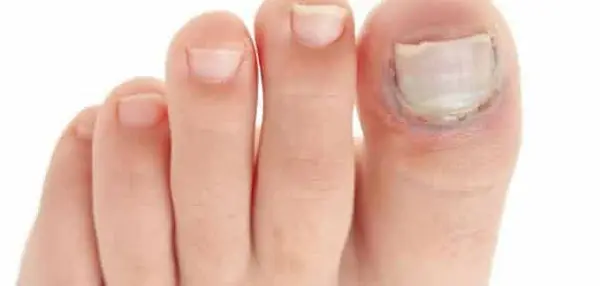
Tips for taking care of split nails
There are a number of important tips available for caring for split nails, which help speed up healing and prevent infection or worsening of the condition. The most prominent of these tips are as follows:
- The nail should always be kept clean and dry to reduce the chances of bacteria or fungi growing.
- Gently trim the sharp edges of the separated nail to prevent it from tearing or getting caught on clothing.
- Use a bandage or medical tape to cover the nail and protect it from blows or contamination.
- Avoid using nail polish and removers until completely cured.
- Wear gloves when cleaning the house or handling chemicals.
- Do not try to remove the detached part by force, but let it fall or grow naturally.
- Moisturize the skin surrounding the nail with a suitable cream to avoid cracks and dryness.
- Eat a diet rich in vitamins and minerals, especially iron, zinc and biotin, to promote nail growth.
- See a specialist if you notice severe redness, discharge, or increased pain, which may be a sign of an infection.
- Be patient. It may take several months for the nail to return to normal growth, depending on the severity of the injury and the location of the nail.
Book your consultation now at مركز الجلدية والتجميل At Al Mousa Specialist Hospital.
When is nail separation a serious sign?
Nail separation is a serious sign when it is associated with chronic health conditions or troubling symptoms that indicate the presence of a deeper problem that requires medical intervention. The most prominent cases in which separation is dangerous are:
- When nail separation occurs repeatedly for no apparent reason, it may indicate a thyroid disorder or an immune disease.
- If the separation is accompanied by a permanent change in the shape or color of the nail, such as the appearance of black or blue lines underneath it.
- When there is severe pain, swelling, or purulent discharge, which indicates the presence of a bacterial infection that requires immediate treatment.
- If the breakup is part of other symptoms such as hair loss, weight loss, or chronic fatigue.
- When separation occurs as a result of skin diseases such as psoriasis or lichen planus, with more than one nail affected.
- If the nail does not grow back or does not adhere to the skin after several months, this may indicate permanent damage to the nail bed.
Frequently asked questions
How long does it take for a nail to fully grow?
In order for the nail to fully grow, it takes a period that varies depending on the location and type of nail. The hand nail needs between four and six months to fully grow from the root to the tip, but the toenail needs a longer period of up to nine months or more. This also depends on a number of factors, including age, general health condition, nutrition, and the speed of blood circulation. Nail growth can also be delayed in the presence of skin diseases or poor blood flow, so taking good care of nutrition and general health helps to accelerate the process of natural and healthy nail growth.
Does the nail grow back after being pulled from the roots?
Yes, in most cases, the nail grows again after being removed from the roots, but this depends on the integrity of the nail bed, which is the tissue directly under the nail. If the nail bed is healthy and not severely damaged, the nail will grow again gradually. However, if the nail bed is exposed to deep injury or scarring, the nail may not grow normally or may grow in a distorted form. The process of complete nail growth takes several months, ranging from 4 to 6 months for fingernails, and up to 9 months or more.
With Al Mousa Specialist Hospital, if you suffer from the problem of the nail separating from the flesh, book your appointment immediately for diagnosis and to begin treatment with a distinguished medical team of the highest quality of competence, to ensure obtaining the best medical service.
المصادر:
Onycholysis – clevelandclinic
What to Know About Onycholysis – healthline
