
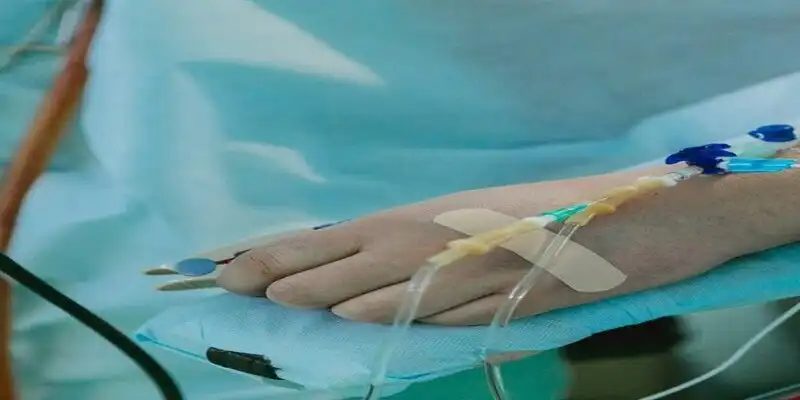
Symptoms of cancer vary depending on its type and stage, but some signs may indicate its deterioration, such as unexplained weight loss and the inability to speak, concentrate, or know those around him. Therefore, in the following article, we explain to you the most important signs of deterioration in a cancer patient, and what are the most dangerous types?
What are the signs of deterioration in a cancer patient?
In the final stages of cancer, the patient's condition deteriorates greatly, and he shows very serious signs indicating the imminence of death, but they may differ from one person to another, and below we explain to you the most common ones:
- Feeling abnormally weak and tired.
- An intense need to sleep all the time.
- Inability to wake up (semi-unconscious).
- Severe loss of appetite and inability to eat or swallow liquids.
- Severe weight loss.
- Decreased urination rate or inability to control the bladder and bowel, leading to urinary or fecal incontinence.
- Dry mouth and lips.
- Cold extremities.
- Skin color changes to blue, especially in the extremities.
- The presence of involuntary movements in any muscle or tremors in the face, hands or feet.
- Lips droop sometimes.
- Irregular breathing, which may speed up or slow down.
- Presence of gurgling or rattling sounds while breathing.
- Not knowing the time, place, or identity of the people around him.
- Hallucinations, such as seeing people or hearing voices that do not exist.
Learn more about:
How long does a cancer patient deteriorate?
There is no specific period for the deterioration of a cancer patient, as it depends on the type of disease and its location in the body. Some people live for years even after entering the fourth stage of cancer.
What are the most dangerous types of cancer in order?
In the following lines, we mention to you the most dangerous types of cancer that affect men and women, according to statistics conducted in 2025 AD.
The most dangerous types of cancer among men:
- Lung.
- Prostate cancer.
- Colon and rectum.
- Pancreas.
- Liver.
- Leukemia.
- esophagus.
- Bladder.
- Lymphoma.
- Brain and nervous system.
The most dangerous types of cancer among women:
- Lung.
- the breast.
- Colon and rectum.
- Pancreas.
- Uterus and ovaries.
- Liver.
- Leukemia.
- Lymphoma.
- The brain.
Don't wait until your symptoms get worse – book a consultation now with a specialist in cancer care. Oncology center At Almoosa Hospital For comprehensive medical care and careful follow-up of the patient’s condition.
What type of cancer has no cure?
Doctors use radiotherapy and chemotherapy with cancer to treat it or reduce its spread, but there are types that are not treated, but we only control its spread, such as: pancreatic cancer, lymph nodes, or some types of brain.
How to deal with the deteriorating condition of a cancer patient
In the final stages of cancer, the patient needs special care and patience in dealing with him and feeling his pain and weakness. Below we offer you some tips for dealing with him:
- Give the patient painkillers regularly, under medical supervision, of course.
- Move the patient from side to side every 2 or 3 hours to reduce the possibility of developing bedsores, especially if he sleeps for long hours or is unconscious.
- Use foam or medical mattresses so that the patient feels comfortable while sleeping.
- Elevate the patient's head on two pillows while he sleeps if he cannot breathe well.
- Rub the patient's hands and feet or make sure to warm them if he suffers from cold extremities.
- Massage the patient's body once a day to improve blood circulation and make him feel more comfortable.
- Give the patient fluids or nutritional solutions if he cannot eat.
- Place cool, moist towels on the patient's head, face, and body to moisturize and make him feel comfortable.
- Apply moisturizer to the patient's lips to reduce dryness.
- Try to talk to the patient calmly and remind him of the time, place, and people to support his concentration.
- Constantly show the patient support and love to improve his psychology.
In the end, we presented to you the signs of deterioration of a cancer patient. We hope that you adhere to the previous advice so that you can deal with him well without harming him. You should also always communicate with his doctor to monitor the symptoms well and control them as much as possible.
FAQs
What are the indicators that a cancer patient is approaching death?
It is difficult to determine the moment of death of a cancer patient, but there are indicators that his death is approaching, as well as signs of the cancer patient’s deterioration, which include the following:
- Feeling tired and general weak.
- Spend most of the time sleeping.
- Loss of appetite and weight.
- Changes in breathing, either becoming fast or slow.
- Changes in organ functions such as kidney and liver function.
- Coldness and paleness of the extremities.
- Difficulty concentrating and confusion.
- Mood changes, feeling sad or angry and anxious.
- Decreased urine output.
Why does a cancer patient relapse?
Relapse means the return of cancer again after its apparent recovery. This is due to:
- Some cells remain untreated in the body.
- Some cancer cells remain dormant in the body, and after a long period they multiply again.
- Cancer cells become more resistant and spread more.
- An unhealthy lifestyle helps cancer return again.
- Some genetic factors increase the risk of cancer relapse.
How long does a cancer patient live after it spreads in the body?
It is not possible to determine the exact length of time that a cancer patient will live after the cancer has spread, as this depends on several factors, such as:
- Type of cancer.
- The extent of the cancer.
- The patient's general health condition.
- Treatment options available.
Doctors try to try to improve the quality of life for a cancer patient and relieve symptoms as much as possible to try to increase the length of time that the patient lives.
When does cancer not respond to chemotherapy?
Doctors suspect that the cancer is not responding to chemotherapy if:
- The tumor continues to grow and spread during chemotherapy.
- New symptoms appear during treatment.
- Symptoms do not improve.
Medical sources
This information was based on: