
Sinusitis is not just a long-term cold or a passing headache, it is a common medical condition that affects the quality of daily life, from breathing and sleep, to concentration and overall mood.

What are sinuses?
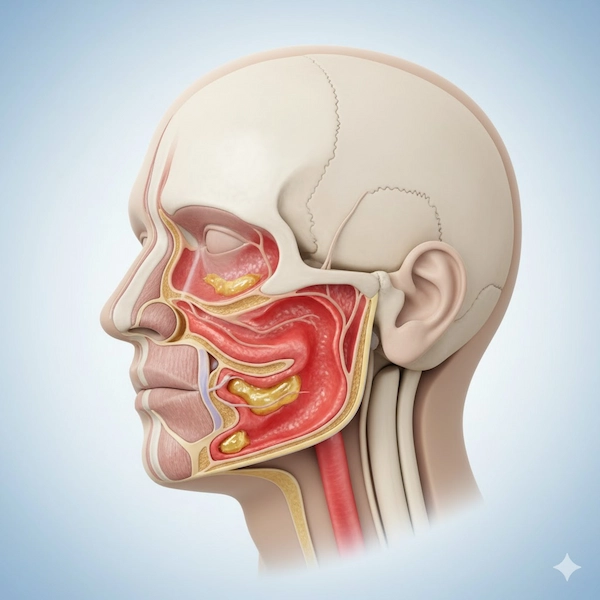
The sinuses are four groups of air cavities located inside the facial bones, and are covered by a thin mucous membrane responsible for humidifying and purifying the air before it enters the lungs. These pockets include:
- Frontal sinuses: It is located above the eyes inside the forehead.
- Maxillary sinuses: Located behind the cheeks.
- Ethmoidal sinuses: Between the eyes.
- Sphenoid sinuses: Behind the nose, deep in the skull.
These sinuses work in harmony with the nose to filter air, play a role in reducing head weight, and improving voice tone.
What is sinusitis?
Sinusitis is a condition that occurs when the lining of these cavities becomes swollen or inflamed, leading to blockage of the airways and accumulation of mucus secretions. Inflammation can be:
- sharp: It appears suddenly and lasts less than 4 weeks.
- Chronically: It lasts for more than 12 weeks.
- Repeatedly: It happens several times a year.
There are many causes of inflammation, including viral or bacterial infection, allergies, deviated nasal septum, or the presence of polyps.
The role of the center in treating sinusitis
In our center, sinusitis is not viewed as a passing condition, but rather as a functional disorder that requires comprehensive evaluation and personalized treatment. The center includes an elite group of nose and sinus specialists who use the latest technologies such as:
- High-resolution sinusoscopy.
- Balloon therapy to expand the airways.
- Thermal frequency to shrink nasal polyps.
- Immunotherapy for chronic conditions associated with allergies.
Each treatment plan is designed specifically for the patient's condition, with careful follow-up to ensure continuous improvement.

Types of sinusitis
Sinusitis is classified into several types according to the duration, severity, and frequency of symptoms. Here are the main types:
1- Acute sinusitis
- Duration of injury: Less than 4 weeks.
- the reason: Mostly a viral or bacterial infection after a cold.
- Symptoms: Severe congestion, headache, yellow or green discharge, and facial pain.
- Treatment: It includes rest, decongestants, and in some cases antibiotics.
This type is very common, and often resolves without complications if treated early.
2- Subacute sinusitis
- Duration: From 4 to 12 weeks.
- the reason: Persistent infection or acute infection not adequately treated.
- Symptoms: Similar to acute but less severe, with persistent congestion and discharge.
- Treatment: It requires more careful evaluation, which may include imaging of the sinuses and use of cortisone sprays.
3- Chronic sinusitis
- Duration: More than 12 weeks.
- the reason: Chronic allergies, deviated nasal septum, polyps, or weak immunity.
- Symptoms: Permanent congestion, recurring headaches, loss of sense of smell, and general fatigue.
- Treatment: It often requires specialized intervention, such as immunotherapy or endoscopic surgery.
This type greatly affects the quality of life, and requires periodic follow-up with an ear, nose and throat specialist.
4- Recurrent sinusitis
- Duration: Multiple shifts during the year, each less than 4 weeks.
- the reason: Weak immunity, constant exposure to irritants, or structural problems in the nose.
- Symptoms: The same symptoms of acute inflammation are repeated several times.
- Treatment: It includes prevention, strengthening immunity, and may require adjusting the nasal septum or removing polyps.
Almoosa Hospitals: Accurate diagnosis for each type
In our center, a general diagnosis of a sinus condition is not limited to Rather, the type is precisely determined by:
- Endonasal endoscopy.
- CT scan of the sinuses.
- Analysis of secretions when needed.
- Allergy tests.
This precise determination ensures that the most appropriate treatment is chosen, and reduces the possibility of symptoms recurring or the condition developing into a chronic condition.
The difference between viral and bacterial sinusitis
When you have sinusitis, symptoms may seem similar at first: congestion, headache, nasal discharge, and facial pain.
Viral sinusitis
- the reason: It often occurs after a cold or flu
- Duration: It lasts 7 to 10 days
- Symptoms:
- Nasal congestion.
- Clear or yellowish secretions.
- Mild to moderate headache.
- Mild or no fever.
- Gradual improvement without aggressive drug treatment.
- Treatment:
- Comfort
- Drink fluids
- Steam inhalation
- Use saline sprays
- No need for antibiotics
note: More than 90% of acute sinusitis cases are viral, and resolve spontaneously within days.
Bacterial sinusitis
- the reason: The development of a viral infection or prolonged sinus obstruction.
- Duration: Lasts more than 10 days or worsens after initial improvement.
- Symptoms:
- Dense yellow or green nasal discharge.
- Severe pain in the face or teeth.
- Throbbing headache.
- High temperature.
- Bad breath.
- General fatigue.
- Treatment:
- Suitable antibiotics depending on the type of bacteria.
- Cortisone sprays to reduce inflammation.
- Analgesics and antipyretics.
- Medical follow-up to avoid complications.
alert: Using antibiotics without accurate diagnosis may lead to bacterial resistance and health complications.
Read also: Sinus headache treatment: causes and treatment step by step
Sinusitis and allergies: an intertwined relationship
Although sinusitis and allergies are two separate conditions in terms of cause, the relationship between them is close and complex.
How do allergies lead to chronic sinusitis?
Nasal allergies occur as a result of an immune reaction to substances such as dust, pollen, or animal dander. This interaction leads to:
- Swelling of the mucous membranes inside the nose and sinuses.
- Increased mucus secretions.
- Clogged sinus openings.
- Poor drainage and accumulation of secretions.
As this condition continues, the sinuses become an ideal environment for bacteria to grow, leading to chronic or recurring inflammation.

The difference between seasonal and permanent allergies
|
Type |
Description |
Irritants |
Symptoms |
|
Seasonal allergies |
They appear in certain seasons such as spring or fall |
Pollen and seasonal dust |
Sneezing, runny and itchy nose, and mild headache |
|
Permanent allergy |
It lasts all year long |
Household dust, animals, and mold |
Chronic congestion, recurring headaches, and partial loss of sense of smell |
Persistent allergies are more closely associated with chronic sinusitis, because they cause persistent blockage in the nasal passages.
Also learn about: Treating a runny nose is the best way to get relief
When does sinusitis become an emergency?
Although most cases of sinusitis are mild or moderate, there are certain symptoms that require immediate medical intervention.
Danger signs that call for emergency
If any of the following symptoms appear, You should go to the emergency department immediately:
- Swelling around the eye or eyelid
It indicates that the inflammation may extend to the tissues surrounding the eye, and may cause double vision or severe pain.
- Sudden, severe headache that does not respond to painkillers
It may be an indication of pressure within the sinuses or the beginning of inflammation in the membranes surrounding the brain.
- Temperature rises above 39°C
Especially if it lasts more than two days, it may indicate an active bacterial infection that needs urgent antibiotics.
- Neck stiffness or disturbance of consciousness
These are rare but serious signs, and may indicate meningitis resulting from the spread of infection.
- Severe pain in the face or teeth that is difficult to bear
Especially if it is accompanied by thick secretions and bad breath.
When should you go to the emergency room?
- If symptoms persist for more than 10 days without improvement.
- If the condition worsens after initial improvement.
- If any of the above danger signs appear.
- If the patient is a child, suffers from weak immunity, or chronic diseases.
Do not wait until symptoms worsen. Early intervention avoids complications and speeds up recovery.
The most common questions about sinusitis
Is sinusitis contagious?
Viral infections associated with sinusitis may be contagious, but the infection itself is not directly contagious.
Can sinusitis be treated permanently?
Yes, especially if the cause is accurately identified.
Can sinusitis affect the eyes?
In some advanced cases, the inflammation may extend to the area around the eye, causing swelling or pain in the eyelids. This is considered an emergency that requires immediate medical intervention.
Are children susceptible to sinusitis?
Yes, especially after a cold or due to allergies.
Can sinusitis be prevented?
Yes, via:
- Cleaning the nose with saline solution.
- Avoid smoking and pollutants.
- Treat allergies early.
- Strengthen immunity with nutrition and good sleep.
- Use air humidifiers in winter.
in the endSinusitis is not just an annoying condition, but rather a disorder that affects the quality of daily life, from breathing andsleep To focus and mood.
Find out more about: Causes of seasonal allergies and how to treat them
By properly understanding the types of inflammation, its causes, and methods of prevention, the patient can avoid complications and gradually regain his comfort.
Feel free to Book your appointment todayAnd say goodbye Almoosa team Helps you regain your normal breathing, quality of life, and peace of mind.
