
Skin tags are a common skin problem that many people face without warning. They appear in the form of small, tender bumps on the surface of the skin in areas such as the neck, underarms, or eyelids. Although they are painless and do not pose a health risk, their appearance may cause psychological discomfort for some, especially if they are prominent or multiple. The likelihood of their appearance increases with age or due to repeated friction in some areas of the body. In the following lines with Al Mousa Specialist Hospital, we will review everything you need to know about tags.
What are skin tags?
Skin tags are small, soft, non-cancerous skin growths that appear on the surface of the skin and are connected to it through a thin neck. They also take the form of small, nipple-like lumps that are the color of the skin or slightly darker. They appear in areas such as the neck, under the armpit, under the breasts, eyelids, or in the groin, especially in places where there is frequent friction between the skin or clothing. Skin tags are considered harmless and do not cause pain, but they may cause discomfort cosmetically or if
Causes of the appearance of skin tags
Growths appear as a result of a group of factors that affect the skin, and the most prominent reasons for the appearance of these growths are the following:
- Constant friction between skin folds or between skin and clothing, especially in areas such as the neck, underarms, and under the breasts, contributes to stimulating the growth of growths.
- The genetic factor plays a major role in the appearance of polyps, as the probability of their appearance increases if there is a family history of them.
- Obesity is associated with increased friction between skin folds, which increases the chances of these growths appearing.
- Hormonal changes during pregnancy or due to certain hormonal disorders can lead to the appearance of skin tags.
- People with diabetes are more likely to develop skin tags due to disturbances in skin metabolism.
- As we age, the skin becomes more susceptible to the appearance of skin tags due to changes in its elasticity and skin cell activity.
Learn about: Cutaneous leishmaniasis | كل ما تحتاج معرفته عن العدوى والعلاج
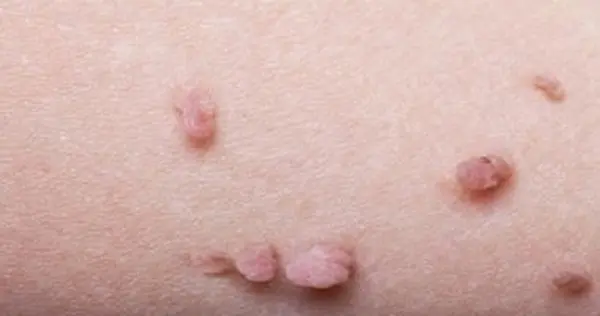
Locations of skin tags
Skin tags appear in areas where there is frequent friction between the skin or between the skin and clothing. The most prominent locations of their appearance include the following:
- The neck is considered one of the most common areas for growths to appear due to constant movement and friction, especially with clothing or accessories.
- Under the armpits, because there is constant friction in this area, especially in people who are overweight.
- Skin tags appear on the eyelids, causing visual discomfort or discomfort.
- Under the breasts, especially in women, as a result of repeated friction between the skin and clothing or between skin folds.
- The inner thigh is a highly vulnerable area due to constant contact while walking.
- In some cases, skin tags may appear in the sensitive genital area as well.
- Face or back, although it is less common, it can sometimes be observed in some people.
Are skin tags contagious or cancerous?
Skin tags are not contagious and are not transmitted from one person to another through touch or shared use of tools. They are benign growths that arise as a result of internal causes such as friction, hormonal changes, or genetic factors.
From a medical standpoint, skin tags are not cancerous and do not turn into cancer in most cases. They are benign tumors that do not grow quickly and do not spread to other parts of the body. However, it is preferable to consult a dermatologist if the shape or color of the tag changes or begins to bleed, to rule out any rare possibilities of similar cases that may require a careful examination.
When should you worry about the appearance of the appendix?
Although skin tags are usually harmless, there are some cases that require concern and a visit to a doctor, especially if unusual changes appear in the shape of the appendix. The most prominent signs that require attention are:
- If the appendix becomes very dark or suddenly changes color to red or black.
- The appearance of blood or abnormal secretions from the appendix for no apparent reason.
- If the skin tag begins to cause persistent pain or severe itching.
- When the skin tag begins to grow rapidly or noticeably in a short period.
- If the appendix borders become irregular or asymmetrical.
- When a large number of growths appear in a short time, it may be a sign of a health condition that needs evaluation.
In such cases, you should see a dermatologist to conduct the necessary examination and rule out any serious health problems or similarities with other types of skin tumors.
Book your consultation now at مركز الجلدية والتجميل At Al Mousa Specialist Hospital.
Medical methods for removing skin tags
Certainly everyone who suffers from the appearance of skin tags on his body asks himself about medical methods for removing them. In fact, there are many effective and safe medical methods for removing skin tags. Choosing the appropriate method depends on the size of the appendix and the location of its appearance, as well as on the patient’s general health condition. The most prominent of these methods are the following:
- Cryocautery, or what is known as freezing, uses liquid nitrogen to freeze the skin tag until it dies and falls off within several days. It is an effective method, especially for small tags.
- Surgical excision, where the doctor cuts the appendix using medical scissors or a scalpel under local anesthesia. It is suitable for large appendages or in sensitive places.
- Electrocautery, where an electrical device is used to heat a precise tip with which the excess is burned and removed. It is an accurate method and reduces the possibility of bleeding.
- Laser is used to remove growths with high precision and without direct contact, and it is one of the cleanest and fastest methods of recovery.
- Tying with medical thread. In some cases, the base of the appendix can be tied with a special thread to cut off blood flow to it, which leads to it withering and falling off within days.
All of these methods are performed in dermatology clinics by specialists. The recovery period is short, and the possibility of side effects or scars is reduced when you adhere to the instructions after the procedure.
Frequently asked questions
Is there a cream to remove skin tags?
Yes, there are some topical creams and lotions that are used to remove skin tags, but their effectiveness is limited and often not guaranteed, especially for large tags or in sensitive areas. Also, using them without medical supervision may cause irritation or inflammation, so it is always preferable to consult a dermatologist before using any product to remove tags.
Are skin tags dangerous?
Skin tags are mostly not dangerous and do not pose a health threat. They are benign tumors that do not usually turn into cancer, but if changes in color or size occur or bleeding appears, it is recommended to see a doctor to confirm the diagnosis and rule out any other similar conditions.
Can the appendix come back after it is removed?
The same skin tag does not return after its complete removal, but it is possible for new skin tags to appear in the same area or in other areas, especially if the causative factors such as friction, weight gain, or hormonal disorders persist, so it is recommended to follow up with a doctor if the condition recurs in an annoying manner.
If you suffer from skin tags and want to get rid of them, do not hesitate to book an appointment with Al Mousa Specialist Hospital to remove them immediately using the latest technologies.
المصادر:
Skin Tags – clevelandclinic
All you need to know about skin tags – medicalnewstoday
