
Have you ever felt like your muscle movements have become stiffer or that your limbs are responding slowly and as if they are resisting you?
What is spastic paralysis?
It is a neurological disorder resulting from a defect in motor control, causing an increase in muscle tension and stiffness, which hinders normal movement and affects motor functions.
From a medical standpoint, spastic paralysis is the most common type of movement disorder within the category of cerebral palsy. It is considered a chronic condition that requires continuous monitoring and rehabilitation to maintain motor function. Treatment depends on specialized physical therapy programs, relaxing medications or interventions to achieve functional balance and quality of life.
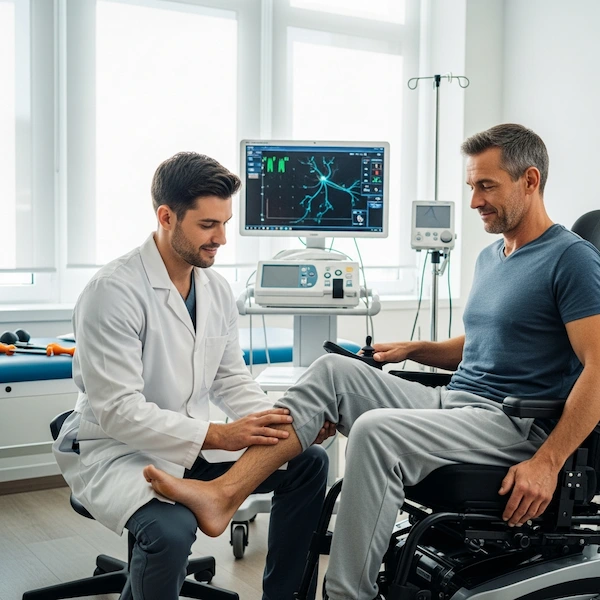
Types of spastic paralysis
Its types are divided into different types based on the extent of the spread of spasms in the body, which helps determine their effect on the motor abilities of those affected. Below are the most important classifications of this type of paralysis As follows:
Spastic hemiplegia
This type of spasticity affects one side of the body, often the arm and leg on the same side, causing imbalance and difficulty using both limbs in daily activities.
Spastic diplegia (diplegia)
This type of paralysis is concentrated in the legs only, while the arms and face remain in a relatively normal condition. It is often observed in children born prematurely, as a result of incomplete development of the nervous system.
Spastic quadriplegia
This type of paralysis is the most complex, affecting all four limbs, trunk muscles, and sometimes the face, causing severe motor weakness and difficulty in muscle control, and requires comprehensive rehabilitative support.
Spastic monoplegia (monoplegia)
This type affects only one limb of the body, either an arm or a leg, without affecting the rest of the limbs. It is also considered a relatively rare type, and is often discovered early due to the clarity of symptoms in the affected limb.
Spastic triplegia
This type of motor spasm affects three limbs irregularly, which requires a careful clinical examination to evaluate the condition and determine the most appropriate treatment plan.
Symptoms and causes of spastic paralysis
After understanding the nature of paralysis resulting from muscle spasms, the next step comes, which is identifying its symptoms and causes to understand and diagnose it accurately. Read on to learn the details.
Symptoms of spastic paralysis
The severity of symptoms varies from one case to another, but the basic feature is common she:
- Increased muscle tension and difficulty controlling movement.
- Noticeable stiffness in the muscles, especially in the legs or arms, which limits freedom of movement and affects balance and walking.
- Mobility may remain present to varying degrees, but is often with significant difficulty.
- In advanced stages, the patient may lose the ability to walk or perform voluntary movements.
- The appearance of recurrent muscle contractions or involuntary movements that increase with physical activity.
- Difficulty performing fine tasks, including grasping objects or putting on clothes, due to poor muscle coordination.
Over time, Persistent cramping may result to me:
- Change in joint position.
- Minor deformities resulting from chronic muscle tension.
Causes of spastic paralysis and their impact on treatment
In order to reach an effective treatment for this disease, we must first determine the exact cause behind its appearance, as cases vary according to neurological, genetic, or environmental factors that help the doctor choose the most appropriate treatment.
From here, the causes can be classified according to main axes that vary depending on the timing of their occurrence and their impact on the nervous system
First: brain injuries before or during birth
This category is one of the most common causes, as problems with pregnancy or childbirth affect the brain cells responsible for movement. Include ما يلي:
- Lack of oxygen during birth, which leads to damage to the brain cells responsible for motor control.
- Maternal brain infections, for example meningitis or intrauterine infection, which may impair the development of the fetus's nervous system.
- Premature birth increases the risk of infection due to incomplete brain development.
- Genetic factors play an important role, as some genetic mutations may lead to a disorder in the development of nerve cells in the child.
Second: brain injuries after birth
The injury may occur in later stages of a child’s life as a result of accidents or diseases that affect the integrity of the brain. Among them:
- Head injuries resulting from accidents or falls may cause permanent dysfunction of the brain's motor centers.
- Also, brain infections, the most important of which are encephalitis or cases of brain poisoning, may directly affect neurological functions.
- Strokes or cerebral bleeding may cause damage to the nerves responsible for muscle control and motor coordination.
Third: brain development disorders
In some cases, the brain does not develop normally during pregnancy, and this leads to poor neural communication and difficulty in muscle control. These disorders include structural malformations or congenital defects in brain development.
Fourth: Environmental and health factors
The environment surrounding the mother's health during pregnancy directly affects the safety of the fetus. These factors include the next:
- Viral infections during pregnancy, which include rubella or severe influenza, may harm developing brain cells.
- Malnutrition, especially folic acid deficiency in early development, may lead to central nervous system abnormalities and increase the risk of spastic paralysis.
إقراء إيضا عن : Neurological injuries and stroke rehabilitation center
How to diagnose spastic paralysis at Al-Mousa Specialist Hospital
Diagnosis requires precise and systematic steps to ensure proper evaluation and develop an appropriate treatment plan, and through our medical team, a comprehensive diagnostic approach is adopted Includes ما يلي:
Take a detailed medical history
The treating physician begins by collecting accurate information about... the next:
- The onset and development of symptoms.
- The effect of the condition on daily activities.
- Having a family history of similar conditions, in case there may be genetic factors.
الفحص العصبي السريري
The doctor conducts a comprehensive evaluation, including: التالى :
- Muscle strength and severity of spasms.
- Nervous reactions and motor coordination.
- Walking pattern, balance, and joint movement.
Medical imaging tests
Imaging techniques are used to detect possible neurological changes, مثل:
- Magnetic resonance imaging (MRI) To image the brain and spinal cord with high accuracy.
- Computed tomography (CT)It is used as a complementary or alternative solution to MRI, to precisely determine the influence of neural structures, especially when MRI cannot be performed.
Genetic tests
In cases where a genetic defect causing spasticity is suspected, genetic tests are performed to identify possible mutations or defects.
Additional neurological examinations
- تخطيط كهربية العضل (EMG)It is used to measure electrical activity within the muscles, and helps detect imbalances between nerve signals and muscle response.
- Nerve Conduction Studies To evaluate the speed and efficiency of nerve signal transmission in peripheral nerves, it is used to rule out or confirm the presence of other neuropathies.
Exclude similar cases
To ensure an accurate diagnosis, doctors rule out disorders similar to spasticity, for example multiple sclerosis, spinal cord compression, and some types of hereditary or metabolic neuropathies, due to the similarity of symptoms.
Treatment of spastic paralysis at Al Mousa Specialist Hospital
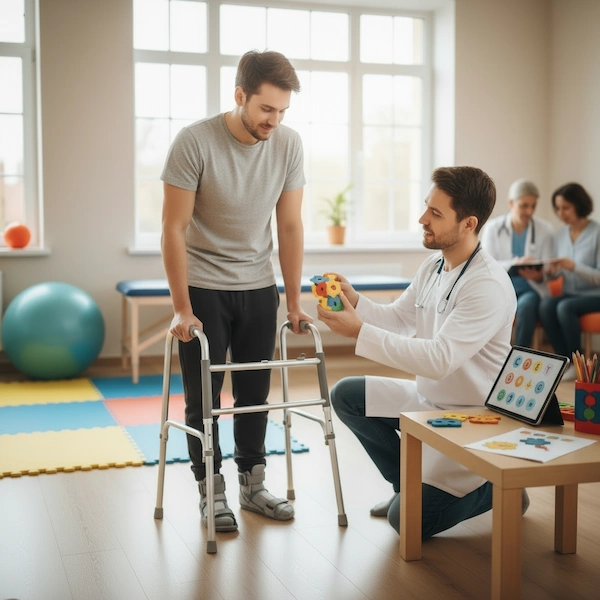
After reaching an accurate diagnosis and determining the extent to which motor functions are affected, the next stage begins, which focuses on rehabilitation and improving the quality of life. In this context, a comprehensive rehabilitation program is developed that is specifically designed to suit the needs of each patient.Clarifying the most important approved treatment axes فيما يلى :
Physical and rehabilitation therapy
This therapeutic aspect is based on a set of specialized therapeutic exercises Which aims to me:
- Improve balance and muscle coordination.
- Strengthening weak muscles.
- Training the patient to sit and walk using modern support devices.
Advanced technologies are also relied upon within the center, including:
- Electrical muscle stimulation to improve muscle response and reduce the severity of spasms
- Manual therapy to stimulate natural movement and improve joint flexibility.
Occupational therapy
This treatment method focuses on improving the patient's ability to carry out precise life tasks, by training him to control hand and finger movements, and developing his motor skills necessary for daily activities. This includes:
- تناول الطعام باستخدام أدوات مناسبة.
- Performing tasks Personal care.
- Using the hands in fine activities such as drawing or writing.
- To achieve the best results, customized aids and techniques are used that are designed to suit the patient's needs and make it easier for him to perform tasks independently and safely.
Speech and language therapy
This axis includes therapeutic sessions aimed at improving the patient’s abilities in speech and verbal and non-verbal communication, especially in cases where the central nervous system is affected by speech functions. It is used in these sessions the following :
- Alternative communication techniques such as signs or images.
- Customized language support devices, selected according to the level of language impairment and the patient’s ability to interact.
Drug and surgical treatment
Treatment includes relaxing and anti-spasmodic medications, and advanced cases may require surgical interventions.
We would like to clarify that these procedures are carried out under the full and direct supervision of doctors specializing in neurology and orthopedics, as part of a comprehensive treatment plan that is prepared based on an accurate assessment of the individual’s health condition.
Psychological and family support
Psychological support is one of the basic pillars of the treatment plan, because it has a major role in improving the patient’s response to rehabilitation and improving his quality of life. To achieve this, Done:
- Involving family members in the rehabilitation program from the early stages.
- Providing practical guidance for dealing with the condition at home.
- Providing emotional and community support to the patient and his family.
Given what was presented, it is clear that spastic paralysis is a condition that requires medical awareness and specialized intervention to ensure accurate diagnosis and effective treatment that improves the life of the affected person.
So, start the path of recovery Al Mousa Health HospitalWe are keen to provide the best care to achieve your comfort and improve your quality of life.
Frequently asked questions
Does spasticity cause paralysis?
Not always, but persistent spasm may hinder movement and affect the functional performance of the muscles, similar to the symptoms of paralysis in advanced or untreated cases.
What is the most severe type of paralysis?
Quadriplegia is the most severe, affecting all four limbs and the trunk, and may involve the breathing and facial muscles, severely limiting motor ability.
How long does a patient with cerebral palsy live?
Life expectancy may be normal in many cases, especially with good medical care, but it may be affected depending on the severity of the disability and accompanying complications.
What is the difference between paralysis and spasticity?
Paralysis means partial or complete loss of movement or sensation as a result of nerve damage, while spasticity is involuntary stiffness or contraction of the muscles that hinders movement but does not cause its complete loss. The basic difference is that paralysis stops movement, while spasticity only makes it difficult.
قد يهمك إيضا : The importance of physical therapy