
Teething is the first stage of baby teeth development, and usually begins between the ages of 4 to 9 months.
Frequent crying, disturbed sleep, mild fever, and excessive saliva are all common symptoms, but they may confuse parents and prompt them to search for effective and safe solutions.
In this article, we provide you with a comprehensive guide to teething children, including a table of teething according to age, common symptoms, methods of relief, cases that require a visit to the doctor, and the difference between normal and abnormal teething.
Teething schedule for children by age
Teething appears gradually according to an approximate schedule, which varies from one child to another As shown:
| Approximate age | The type of teeth that appear |
| 6 – 10 months | Lower central incisors |
| 8 – 12 months | Upper central incisors |
| 9 – 13 months | Upper and lower lateral incisors |
| 13 – 19 months | First molar |
| 16 – 22 months | Fangs |
| 23 – 33 months | Second molar |
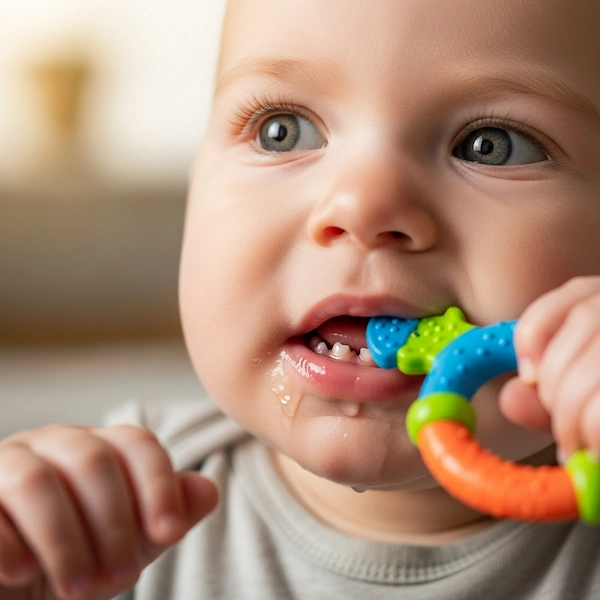
Baby teeth usually appear at the age of 2.5 to 3 years, and there are 20 teeth in them.
Common teething symptoms
Symptoms vary from one child to another, but there are frequent signs that indicate the start of teething as follows :
- Swelling and redness of the gums.
- Increased saliva secretion.
- The child's desire to bite or rub the gums.
- Sleep disturbance or frequent crying.
- Loss of appetite or food refusal.
- Mild fever or slight increase in temperature.
- Redness or skin irritation appears around the mouth due to the accumulation of excess saliva during the teething stage.
- Tightening of the ear or cheek due to internal pain.
It is important to differentiate teething symptoms from symptoms of other illnesses such as the common cold or viral infection.
The difference between natural and abnormal teething
| the condition | Natural teething | Abnormal teething |
| Appearance time | Between 4 - 12 months | After the age of one year without any tooth appearing |
| Gum shape | Minor swelling and redness | Bleeding, abscess, or excessive swelling |
| الأعراض المصاحبة | Itching, salivation, slight crying | High fever, diarrhea, widespread rash |
| Number of teeth | They appear gradually according to the schedule | Delayed or irregular appearance of teeth |
| Growth pattern | Symmetrical between both sides | Teeth appear on one side only |
It is recommended to consult a doctor if teething is delayed after the age of one year, or if unusual symptoms appear that indicate a growth disorder or nutritional deficiency.
إقراء إيضا عن : Vaccination programme
Ways to relieve teething pain at home
Some simple methods help calm the child and relieve pain without resorting to medications:
- Cold teethers
It is used to relieve itching and pressure on the gums. It is preferable to put it in the refrigerator, not the freezer, to avoid tissue damage.
- Gently massage the gums
Using a clean finger or damp cloth helps soothe swelling and stimulate circulation.
- Offer teething biscuits
Made from natural ingredients like rice flour and banana, it helps baby bite safely.
- Use prescription teething gel
It is used to temporarily numb the gums, but you must consult a doctor before use to avoid harmful substances.
- Maintain oral hygiene
Cleaning up excess saliva reduces rashes around the mouth and keeps the baby comfortable.
- Provide bite-safe toys
It relieves stress and keeps the child occupied in a positive way, especially during the day.
The goal is to calm the child without resorting to painkillers except when necessary and under medical supervision.
Situations in which the use of teething gel or teethers is prohibited
- Children under 4 months old.
- The presence of ulcers or abscesses in the gums.
- History of allergy to local anesthetics.
- Using frozen teethers or teethers made from unsafe materials.
- Having problems swallowing or breathing.
It is always best to consult your pediatrician or dentist before using any cosmetic or therapeutic product at this stage.

Teething children within early smile design
In some cases, doctors notice problems with the eruption or shape of teeth since teething. Which allows early intervention:
- Evaluating the shape and symmetry of baby teeth.
- Monitor problems such as overlap or skew.
- Plan a future calendar if necessary.
- Providing nutritional advice that promotes healthy tooth growth.
Early intervention reduces the need for later cosmetic procedures and promotes normal jaw and bite development.
The difference between teething and oral developmental delay
In some cases, delayed teething may be confused with delayed oral development, so... It is important to differentiate between:
| Item | Late teething | Oral growth retardation |
| Number of teeth | No teeth appeared until the age of one year. | Teeth are present, but there are problems with speech or chewing |
| Jaw shape | طبيعي | It may be small or inconsistent |
| Nutrition | Natural | Difficulty chewing or swallowing |
| The need for intervention | Dental examination | A comprehensive examination of the jaw and oral muscles |
A comprehensive evaluation is recommended when any abnormality in oral function appears, not just the number of teeth.
Teething of children in special cases
Some babies need special follow-up during teething. مثل:
- Premature babies
Their teething may be delayed due to delayed general growth, and the schedule must be adjusted according to the actual date of birth.
- Children with genetic syndromes
Such as Down syndrome or cleft lip, where a delay or defect in the eruption of teeth is observed, and it is advisable to follow up with a specialized pediatric dentist.
- Children who underwent For chemotherapy Or radioactive
Their tooth development may be affected, and they need periodic evaluation and close follow-up.
Genetic factors and their impact on the timing and form of teething
This section answers mothers' questions about differences in the timing of teething between children, even within the same family.
What determines the timing of teething?
- Genetics play a big role in determining when teeth appear.
- Babies whose parents are late with teething are often late as well.
- Some families show a consistent pattern in the shape or arrangement of teeth.
Do baby teeth look similar to permanent teeth?
- In many cases, yes.
- Overlapping or misalignment of baby teeth may indicate the need for future braces.
Is it possible to intervene early to modify the genetic pathway?
لا يمكن تغيير الجينات، لكن يمكن التدخل في التغذية، المتابعة الطبية، والتقويم الوقائي لتقليل التأثيرات السلبية.
مجموعة الموسى الصحية: رعاية متخصصة في مرحلة التسنين
In our center, we provide integrated support to mothers during the teething stage. Includes:
- فحص دوري لنمو الأسنان واللثة
Using 3D digital imaging, we evaluate gum shape, tooth eruption, and jaw symmetry.
- Evaluation of delayed teething or abnormal appearance of teeth
نُحدّد ما إذا كان التأخر طبيعيًا أو يحتاج إلى تدخل غذائي أو علاجي.
- Prescribing the appropriate teething gel according to the child’s age
We take into account the gel composition, the child's age, and allergy history, to ensure safety and effectiveness.
- Providing nutritional advice to strengthen baby teeth
Such as foods rich in calcium, phosphorus, and vitamin D, which promote tooth and jaw growth.
- Monitor the development of the jaw and bite to ensure healthy growth
In our center, we not only monitor the appearance of teeth, but... We also rate:
- Upper and lower jaw symmetry.
- Occlusal pattern (is it natural, oblique, or open?).
- Possibility of overlap or deviation in baby teeth.
- The extent to which teething affects speech and chewing.
This follow-up helps in early detection of orthodontic problems or oral developmental disorders, reducing the need for subsequent interventions.
Frequently asked questions about teething babies
Can baby teeth appear in a color other than white?
Yes, in some rare cases, teeth may appear grayish or yellow due to calcium deficiency or exposure to an injury during development. It is recommended to undergo an examination to determine the cause.
Does teething affect a child's speech?
Not directly, but if there is a defect in the arrangement of the teeth or the development of the jaw, this may affect the output of letters later on.
Can permanent teeth appear before the baby teeth fall out?
In rare cases, yes, and this condition is known as “shark tooth,” and it requires simple intervention to extract the baby tooth and guide the permanent tooth.
Is there a relationship between teething and iron or vitamin D deficiency?
A deficiency of these elements may delay teething or weaken the structure of teeth, so a nutritional examination is recommended if the appearance of teeth is delayed.
Can early orthodontics be used for baby teeth?
In very specific cases, such as severe overbite or jaw problems, preventive braces are used for children, but the decision is made after a comprehensive evaluation.
When do you need medical intervention during teething?
It is preferable to consult a doctor during teething if the appearance of teeth is delayed after a year, or abnormal symptoms appear such as high fever or persistent diarrhea. You should also consult a doctor if you notice an abscess, bleeding gums, or loss of appetite and weight.

Teething is a natural part of baby's development, but it can be stressful for both parents and baby.
in Al Mousa Health GroupWe accompany you step by step, from the first tooth until the completion of the smile, with medical expertise, humane care, and modern technologies.
قد يهمك إيضا : Neonatal Intensive Care Unit (NICU)
