
If you suffer from annoying pain that surrounds your head like a compressed band, and tension headaches creep into your day, distracting your focus and sapping your energy, then you are not alone, as tension headaches are one of the most common types of headaches, especially among women. We present to you this article from Al Mousa Specialist Hospital. We will guide you step by step on the quickest ways to relieve pain, the best relaxation techniques, in addition to simple preventive tips to change your daily routine to become less susceptible to this type of headache. Continue reading with us.
What is a tension headache?
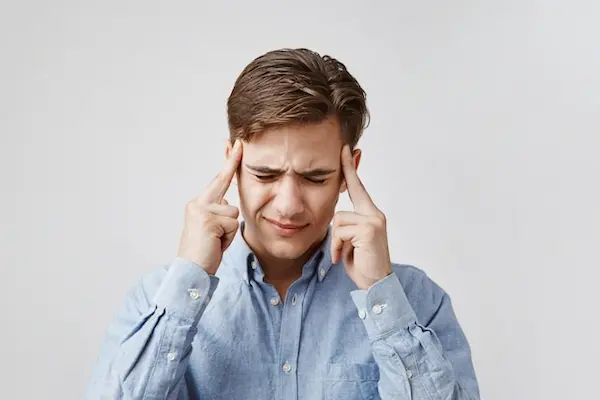
It is a very common type of headache, known as a tension headache. The sufferer often describes it as a feeling of mild to moderate pain that resembles a narrow band pressing around the head or on the sides and back of the head. It is more common among women than men.
Types of tension headaches, in terms of frequency, include:
- Occasional tension headaches, which occur less than 15 days a month, and an attack may last from 30 minutes to a full week.
- Chronic tension headaches, which occur more than 15 days a month and for at least three months, and the pain is present for long hours a day or even continuously.
Causes of tension headaches
The exact cause of tension headaches is still not fully understood, but there are many factors that are believed to contribute to its occurrence. In most cases, this type of headache is related to tension and muscle tension, but the causes are much broader than that.
The main factors leading to tension headaches include the following:
- Stress and stress are the common and main trigger for tension headaches, because they lead to tension in the muscles of the neck, scalp, and face, causing headaches.
- Muscle tension in the neck, scalp, and face resulting from wrong body positions, such as sitting for long hours in front of the computer in an incorrect position, or sleeping in strange positions.
- Physical stress, excessively strenuous exercise or lifting heavy weights in the wrong way.
- Teeth grinding, whether during sleep or wakefulness, which causes stress to the jaw muscles.
- Problems with the temporomandibular joint. Any defect in this joint can lead to pain that extends to the head.
- Lack of sleep and fatigue.
- Eye muscle strain, spending long periods of time staring at computer screens or smartphones without rest, or having vision problems.
- Not eating regularly or not drinking enough water.
- Excessive caffeine intake or sudden withdrawal from it.
- التدخين.
- Increased sensitivity to pain.
Read also: Get to know Causes of constant headaches And how to prevent it
Symptoms of tension headache
The most prominent symptoms that indicate that you may be suffering from a tension headache include:
- A pressing or pulling pain as if there is a tight band pressing around your head, a weight on your forehead, or a pull at the back of your head and neck.
- The pain is usually non-pulsating, usually continuous and constant, and is mild to moderate. It may be annoying, but it is rarely debilitating.
- The pain is usually concentrated on the sides of the head, the forehead, or the back of the head and neck, and the pain may extend to the scalp and shoulders.
- The pain does not worsen with usual physical activity.
- Mild sensitivity to light or sound, but you are unlikely to experience both in the same attack.
- Tenderness when touching the muscles in the scalp, temples, neck, or shoulders.
- Problems with concentration and sleep.
Treatment of tension headaches
Treatment at Al Mousa Specialist Hospital depends on the severity and frequency of headaches, and includes a combination of medications and lifestyle changes, including:
العلاج الدوائي
- Painkillers and anti-inflammatories such as aspirin, ibuprofen, naproxen, and paracetamol.
- Painkiller combination: which combines painkillers with caffeine such as Acamol Extra to enhance its effectiveness.
- Preventive medications, such as tricyclic antidepressants, such as amitriptyline, are common in preventing chronic tension headaches, and other antidepressants, such as mirtazapine or venlafaxine, may be used in some cases.
- Muscle relaxants: These may sometimes be prescribed to relieve severe muscle tension
Home remedies and self-support
- Rest and relaxation.
- Apply a warm or cold compress to the forehead, neck, or scalp to relieve tension.
- Light massage of the temples, neck, and shoulders can reduce muscle tension.
- Warm baths or showers.
Book your consultation now at مركز العلوم العصبیة At Al Mousa Specialist Hospital.
Ways to prevent tension headaches
Methods of preventing tension headaches are the key to lasting relief. Knowing the triggers and modifying lifestyle can significantly reduce the frequency and severity of headaches. The main methods of prevention include managing stress and psychological pressure, including:
- Practice relaxation techniques such as deep breathing, mindful meditation, or yoga, as these practices help calm the nervous system and reduce muscle tension.
- Planning, organizing, and managing tasks and time effectively can reduce feelings of stress.
- Reducing stress by identifying sources of stress and working to reduce them or change the way you interact with them.
- Make time for yourself to practice your hobbies, spend time with loved ones, or any activity that you enjoy and helps you relax.
- Adequate and regular sleep.
- Avoid skipping meals and keep blood sugar levels stable.
- Drink enough water as dehydration can cause headaches.
- Limit caffeine and nicotine.
- Exercising regularly to help reduce stress, improve mood, and relieve muscle tension.
- Taking care of the correct body position and muscles while sitting and sleeping.
- Do gentle neck and shoulder stretching exercises regularly, especially if you sit for long periods or use electronic devices a lot.
- Ensure regular neck and shoulder massage sessions can help relieve muscle tension.
- Treating teeth and jaw problems.
- Keeping a headache diary and recording when a headache occurs, what you were doing before it, what you ate or drank, and your stress level, helps identify and avoid personal triggers.
Learn about: What is the difference between migraine and regular headache?
How does tension headache work?
The course of a tension headache can take different forms between individuals, but in general, episodic tension headaches usually respond well to analgesics, while chronic tension headaches may need preventive treatment with medications, such as low-dose tricyclic antidepressants, as well as stress management techniques and lifestyle changes.
Episodic tension headaches usually do not prevent a person from fully practicing their daily activities, and in about 25% of cases, recurrent episodic tension headaches can develop into chronic tension headaches, especially if the underlying triggers are not dealt with effectively.
Frequently asked questions
What do tension headaches look like?
Sufferers of tension headaches describe the pain as being like a band or band around the head, where you feel as if something is pressing or squeezing your head tightly. It can be felt on either side of the forehead or extends across it entirely. It is constant and continuous with pressure or tension, and is not intermittent pulsating like a migraine, and does not worsen with physical activity.
How do I get rid of tension headache pain?
To relieve tension headache pain, you can follow over-the-counter painkillers such as paracetamol, or non-steroidal anti-inflammatory drugs (NSAIDs) such as ibuprofen and naproxen.
But you must be careful not to overuse these medications, and do not take them more than two to three days a week, because excessive use can lead to rebound headaches, which are chronic headaches resulting from dependence on painkillers.
How do I know if my headache is psychological?
Psychological headaches, or what is medically known as tension headaches, have signs that indicate them. They are often linked to psychological triggers, as you feel the headache or it gets worse during periods of stress, anxiety, emotional stress, or daily pressures.
You will also notice that the headache becomes less severe after practicing relaxation and meditation techniques, or after spending a relaxing time, and is characterized by a feeling similar to a compressive band or collar surrounding the head. You may feel tightness or pain when touching the muscles of the neck, shoulders, or scalp.
In conclusion, tension headaches are not just a passing pain, but rather an echo of daily pressures, stress, and even unhealthy lifestyles. In this article, we have reviewed its nature, symptoms, and available methods of prevention and treatment.
Al Mousa Specialist Hospital is committed to providing the highest levels of integrated and comprehensive health care, thanks to a team of doctors specialized in neurology and pain management, who have extensive experience in diagnosing and treating various types of headaches, as well as the latest diagnostic and therapeutic technologies.
Do not hesitate to visit us to obtain optimal advice and treatment, and you can contact us on our numbers listed on the website for more details, reservations and inquiries.
Sources
Tension headache – medlineplus
Tension Headaches – healthline
