
A tear is one of the most common injuries for many people and usually occurs due to jumping from a high place and many other reasons. It affects most of the muscles of the body, especially the lower back and shoulders. Upon injury, the patient feels severe pain with an inability to move the affected part and other symptoms that require immediate treatment to avoid worsening the condition and ensure recovery as quickly as possible, while making sure to know the appropriate treatment method by consulting a doctor.
How can a muscle tear be treated?
There are many ways through which muscle tears are treated, which are as follows:
First: physical therapy
This is done by practicing some exercises approved by the physical therapist, which are usually stretching exercises as well as exercises to strengthen the muscles.
Second: Surgery
Surgery is resorted to when other methods of treatment fail, and this is usually when the tear causes complete separation of the muscle, in serious and acute cases, where the muscle is fixed by the surgeon, which is usually the leg bone or the pelvic muscle.
Third: Home treatment
There is also home treatment, during which a set of therapeutic procedures are followed, which are as follows:
- Taking some painkillers such as acetaminophen, ibuprofen, etc.
- Work to relieve pain and swelling by applying cold compresses to the injury site several times a day.
- Use a compression bandage to relieve pain.
- Complete rest and not doing any strenuous physical activities.
- Raise the affected area above the level of the heart in order to get rid of swelling.
Duration of treatment for muscle tear
The duration of treatment for muscle tears varies depending on the type and degree of injury. Here are the most important details:
First: mild muscle tear
A mild muscle tear requires rest and recovery within a period not exceeding 20 days in order for the muscle to fully heal.
Second: serious muscle tear
More serious muscle tears take longer to heal than milder tears, which take approximately one to three months.
Treatment of torn muscles in the back
The methods that can be followed in order to treat back muscle tears in a correct manner are varied and include all of the following:
First: Medical treatment
- This is done by taking painkillers and taking a rest.
- Obtain medications to relax muscles and reduce spasm, but they are taken according to the doctor’s instructions.
- Surgery in serious cases in which the degree of back tear is severe.
Second: Home treatment
- Wear compression bandages to reduce swelling.
- Complete rest and not doing any great effort or hard work.
- Do a set of stretching exercises, as well as massage in a specific way.
- Walk gently to strengthen the muscle, maintain the integrity of the spine, and relieve pain.
- Use cold water compresses and warm compresses on the back alternately in order to reduce pain and stimulate blood circulation.
You can find out the best ways Treatment of toe tears To avoid complications
He presents Musculoskeletal Rehabilitation Centre Al Mousa Hospital offers advanced services that help you restore movement and muscle function efficiently and safely.
Treatment of muscle tear in the hand
Muscle tears in the hand can be treated through a group of methods, which are as follows:
- Wear a corset or splint prescribed by the doctor for quick recovery and reduced pain.
- Use cold compresses on the hand for at least 10 minutes several times a day for 3 days.
- Raise the hand to be higher than the level of the heart, using a pillow.
- Use warm compresses to stimulate blood circulation as well as relieve pain and swelling.
- Do some exercises and massage to strengthen the hand muscles, such as stretching exercises.
- Commitment to taking the medications prescribed by the doctor, especially painkillers.
- Surgery is the last stage and depends on the degree and severity of the tear.
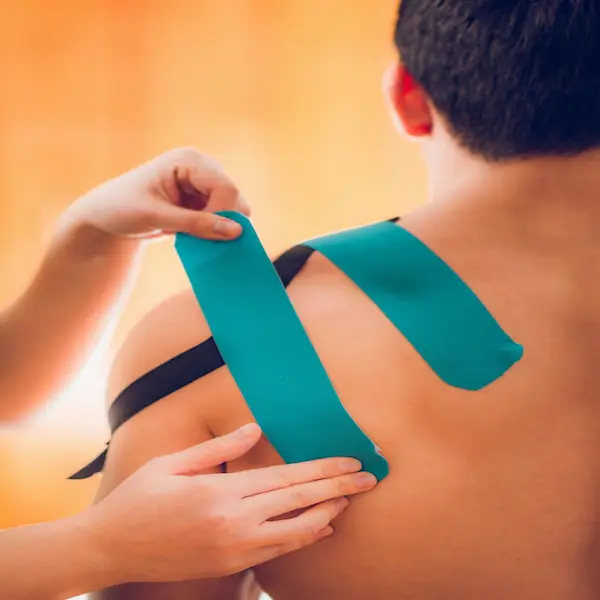
Treatment of muscle tears in children
Treatment of muscle tears in children differs from adults and is as follows:
- Ensure that the child is completely comfortable and does not move the affected part.
- Make sure to apply cold compresses, preferably with ice, on the affected area.
- Use a compression bandage to prevent the affected part from moving and apply pressure to reduce swelling.
- Take painkillers, especially Neurofen, but after consulting a doctor.
- Try to raise the affected area above the level of the heart.
Medications to treat muscle tears
There is a group of medications that are prescribed by doctors to treat muscle tears, which are as follows:
First: painkillers
- Naproxen.
- Ibuprofen.
- And aspirin.
- Paracetamol.
Second: Muscle relaxant medications
- Orphenadrine.
- Methocarbamol.
- Metaxalone.
Third: Various medications
- Prednisone.
- Rituxan.
- Methotrexate.
- Cyclosporine.
- Azathioprine.
اسئلة شائعة
How do I know if I have a muscle tear?
The presence of severe pain, swelling, muscle spasms, and hypersensitivity in the affected area, the appearance of some bruises, and loss of muscle function in the affected part.
Is massage good for tears?
Yes, many studies have confirmed that massage helps regenerate affected cells and tissues and eliminates pain, which helps heal quickly.
How do you differentiate between a muscle strain and a tear?
A tear differs from a muscle strain in terms of severity, as a muscle tear results from a complete rupture of muscle fibers, while a strain results from a simple tear in the muscle.
What are the cases in which massage is prohibited?
Massage is prohibited in cases of severe muscle tears, fractures, varicose veins, severe pain in the spine, people with heart disease, during pregnancy, in the presence of urinary stones, in addition to burns and skin infections, and immediately after surgical operations.
Muscle tear is considered one of the most common types of injuries among many people. It usually occurs when one of the muscles is overused repeatedly and without rest, or one of the incorrect movement patterns is used. Therefore, a group of traditional methods of treatment are resorted to, such as rest and not exhausting the site of the injury when it is of the first degree, but when the matter is serious, physical therapy, medications, or surgery are used if the condition is advanced.
The article was reviewed by Dr. Walid Wanas, Sports Medicine Consultant
Medical references
Muscle strain injury – pubmed
Muscle Strain – webmd
