
Protrusion of the foot bone, also known as hallux valgus, is a common problem that causes deformity of the foot and pain that increases over time.
What is the protrusion of the foot bone without surgery?
Medically known as hallux valgus or bunion, it is a change in the shape of the foot that occurs as a result of a deviation of the bone of the big toe outward, resulting in a pronounced protrusion in the joint at the base of the toe.
With this protrusion, the foot loses its natural balance, and weight distribution may change while walking or standing, resulting in constant friction when wearing shoes.
The prominence of the bone increases gradually if it is not dealt with, and affects the aesthetic appearance of the foot, which may cause psychological discomfort for some, especially with the difficulty of wearing elegant or tight shoes.
In general, protrusion of the foot bone is a functional and morphological issue that begins with a simple change in the alignment of the joint and then develops to affect walking and the external appearance of the foot, so it is best to monitor it early to reduce its future effects.
Reasons for the protrusion of the foot bone without surgery
There are many causes for a protruding bone in the foot (bunion), and it often occurs as a result of the accumulation of factors that affect the shape of the foot and the position of the bones over time, and not necessarily due to a direct injury.
-
Genetics
Genetic factors play a big role;
-
Wearing inappropriate shoes
Wearing narrow-toed shoes or high heels for long periods puts pressure on the toes and pushes the big toe inward, causing the bone to protrude.
-
Imbalance of weight distribution on the foot
Some people put excessive weight on the front of the foot while walking, especially those who suffer from flat feet or curvature of the joints, which causes an imbalance in the natural alignment of the bones.
-
Standing and walking for long periods
Constant pressure on the feet without rest may contribute to joint and tissue stress, and increase the possibility of deformities such as bony prominence.
-
Joint diseases
Some conditions, such as rheumatoid arthritis or osteoporosis, affect joint health and increase the chances of bone misalignment and bunion formation.
-
Muscle and ligament disorders
Weakness of the muscles or ligaments that hold the joint in place can cause the big toe bone to gradually slide outward.
Learn about: Learn about rare bone diseases
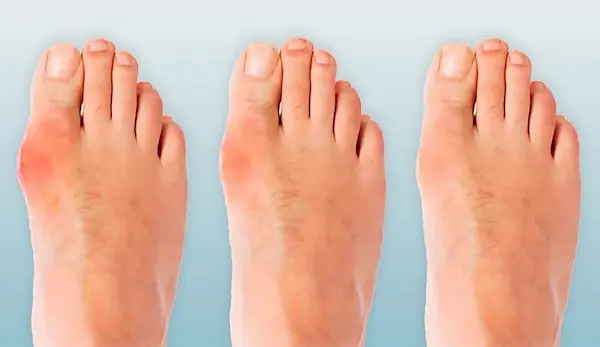
Symptoms of protrusion of the foot bone without surgery
The most prominent symptoms of foot bone protrusion are:
- A visible bump appears at the base of the big toe
The first thing the affected person notices is a noticeable protrusion at the base of the big toe (inner side of the foot).
- Deviation of the big toe towards the rest of the fingers
A characteristic sign of a protruding bone is that the big toe no longer remains in its normal alignment, but rather begins to lean toward the second toe.
- Pain in the protruding joint area
The patient often feels mild to moderate pain in the protrusion area, which increases with walking or wearing tight shoes.
- Redness or swelling around the protrusion
As a result of constant friction with the shoe, a slight swelling may appear in the skin over the bone, which may be accompanied by redness or a feeling of heat.
- Change in foot shape and difficulty wearing usual shoes
Because of the protrusion, the width of the foot changes, and the affected person finds it difficult to wear closed or narrow-toed shoes, especially high heels or formal shoes.
- Stiffness in the big toe joint
Over time, the big toe joint begins to lose its flexibility, limiting its normal movement and making it painful or uncomfortable to move.
Complications of protrusion of the foot bone without surgery
If the protrusion of the foot bone is neglected and not treated, it may lead to several complications that affect daily comfort and foot function, even without undergoing surgery.
- Permanent foot deformity:
As the deviation continues and is not corrected, a permanent change in the bone structure of the foot occurs, which is difficult to correct by non-surgical means.
- Joint damage and cartilage erosion:
Chronic friction wears down joint cartilage (osteoarthritis), causing deep pain in the joint and difficulty moving it even at rest.
- Skin or tissue infection “Cellulitis”:
Due to severe friction, wounds resulting from skin corns, or chronic ulcers.
- Poor balance and increased risk of falling:
Due to irregular weight distribution, balance becomes unstable, which may increase the possibility of falling, especially in older people.
- Secondary deformities of adjacent fingers:
Such as hammer toe or claw toe, as a result of the foot compensating for the deviation of the thumb and changing the mechanics of walking.
- Painful growth of corns between the toes or under the feet:
They occur as a result of uneven pressure on the sole of the foot, and may require therapeutic intervention or removal.
- Chronic bursitis:
It is an inflammation of the synovial sac surrounding the joint, which becomes chronically painful and swollen and makes it difficult to wear shoes.
- Restriction of movement and loss of flexibility in the foot:
Advanced deformities affect the movement of the entire joint and reduce the ability to bend or extend the finger.
- Negative psychological impact on appearance and confidence:
Some patients feel embarrassed by the shape of the foot, which affects their self-confidence or prevents them from wearing open shoes.
Book your consultation now at Orthopedic center At Al Mousa Specialist Hospital.
Diagnosis of foot bone protrusion without surgery
This condition is diagnosed through several precise medical steps, and its goal is to determine the degree of deviation and the extent of its impact on the joint, tendons, and surrounding tissues, to determine the most appropriate treatment.
-
الفحص السريري:
The doctor begins by visually examining the foot and noting any protrusion or deviation in the big toe.
- Walking and locomotion assessment:
The doctor observes the way the patient walks and whether he avoids putting pressure on the painful side.
-
Medical history:
The doctor asks about the onset of symptoms, when they appeared, and the extent to which they increase over time.
-
X-ray:
X-rays determine the degree of deviation between the bones of the foot, and the rays show if there is erosion in the joint or the beginning of roughness.
-
Additional tests in some cases:
In some cases, ultrasound imaging is used to examine soft tissues if deep infections are suspected.
Treating protrusion of the foot bone without surgery
There are a variety of known methods that help relieve symptoms and improve daily comfort. Among the most important methods of treating foot bone protrusion without surgery are:
-
Change the type of shoe
- It is recommended to wear comfortable, wide-toed shoes to reduce pressure on the protrusion and to treat the protrusion of the foot bone without surgery.
- Low-heeled shoes and flexible soles help relieve pain.
- Avoid tight or high-heeled shoes as they exacerbate the condition. To treat the protrusion of the foot bone without surgery.
- Customized medical shoes can be used to comfort the foot and improve balance.
-
Splints and spacers between the fingers
- Silicone spacers or night splints are used to keep the big toe in its natural position.
- Help reduce friction between fingers and relieve pressure on the joint.
- Can be worn during sleep or during the day as directed by your doctor.
- Effective in mild to moderate cases to reduce the development of aberration.
-
Cold compresses and cooling techniques
- They are used to reduce inflammation and pain around the protrusion.
- Apply to the swollen area for 10 to 15 minutes several times daily.
- Reduces swelling caused by friction or prolonged standing.
- A simple yet effective way to get quick relief.
-
Physical therapy and stretching exercises
- Physical therapy contributes to improving joint flexibility and strengthening the foot muscles.
- Exercises include gently moving the big toe and stretching the tendon.
- In some cases, electrical stimulation techniques are used to relieve pain.
- It is recommended to exercise regularly under medical supervision.
-
Anti-inflammatory medications
- It is used to reduce pain and inflammation associated with bone protrusion.
- These include non-steroidal anti-inflammatory drugs such as ibuprofen.
- It is taken for short periods when the pain becomes severe. It is preferable to consult a doctor before use.
- It does not treat the cause but improves daily symptoms.
-
Use of foot supports (medical insoles)
- Specially designed to distribute pressure evenly on the foot.
- It reduces pressure on the prominent area and helps straighten walking posture.
- Available in some pharmacies or made according to foot sizes.
- It is considered one of the most important methods of treating protrusion of the foot bone without surgery and preventing the condition from worsening.
-
الحفاظ على وزن صحي
- Excess weight puts extra pressure on the feet and worsens symptoms.
- Following a healthy lifestyle and doing light exercise helps relieve stress.
- Losing weight reduces the chances of developing a protrusion or needing surgical intervention later.
Learn about: Learn about natural treatment for osteoporosis
How to prevent foot bone protrusion without surgery
To avoid the occurrence of a bunion and resort to methods of treating the protrusion of the foot bone without surgery, it is preferable to follow these methods for prevention:
- Wear comfortable, wide-toed shoesAllows freedom of movement of the toes.
- Avoid standing for long periodsTo prevent increased pressure on the joints and fingers.
- maintain a healthy weight, Excess weight doubles the pressure on the feet, which accelerates the appearance of deformities.
- Monitor foot shape earlyIf there is a family history of pimples, visit a doctor quickly.
- Do simple foot exercises, To strengthen the muscles of the foot and fingers, and maintain bone alignment.
Frequently asked questions
Is there a treatment for protrusion of the foot bone?
Yes, there is a treatment for protrusion of the foot bone without surgery for simple and moderate cases, such as wearing suitable shoes and using braces and orthotics. In advanced cases, the doctor may resort to a surgical solution to correct the deviation.
What is the treatment for excess bone in the heel?
Treating foot bone spurs without surgery includes rest and reducing pressure on the foot, using padded shoes or medical insoles, daily stretching exercises, ice compresses to relieve pain, and anti-inflammatory medications.
What causes bone loss in the leg?
Bone loss in the foot is often caused by genetics, wearing ill-fitting shoes, foot deformities, standing too long, being overweight, or arthritis.
In conclusion, it can be said that treating protrusion of the foot bone without surgery provides effective solutions to relieve pain and improve movement without the need for surgical intervention.
Sources
NHS- Bunions
Bunion Institute– Non-Surgical Solutions for Bunions: Tips for Relief and Prevention
