
Acne scars are one of the most annoying skin problems for men and women alike. Pimples may disappear, but their scars and marks remain that remind us of them day after day. Treating acne scars is no longer just a dream, but has become an available reality thanks to the development of modern medical products and cosmetic treatments. In this article, we review with Al Mousa Specialist Hospital methods for treating acne scars that suit different types of scars, whether they are red, brown, or in areas such as the back, in addition to advanced medical treatments and ideal exfoliants that help you regain your clear skin with confidence and safety.
Treating the effects of red pimples
The effects of red pimples usually appear after the inflammation disappears, and are the result of dilation of blood vessels under the skin, especially in sensitive or fair skin. To treat them, there are several effective options, including using creams containing niacinamide or azelaic acid, as they work to calm inflammation and gradually improve skin color. Natural aloe vera gel can also be used to soothe redness and reduce irritation.
Among the methods for treating acne scars, there is also a toner that contains chamomile or green tea extract, which are natural ingredients that are effective in reducing inflammation. As for those looking for faster results, laser technology such as V-Beam or Intense Pulsed Light (IPL) sessions offer a unique solution to reduce redness quickly and efficiently. It is important to use sunscreen daily, because exposure to sunlight increases the persistence of redness and the difficulty of treating it. It is advised not to tamper with pimples while they appear to avoid increasing redness and leaving a permanent effect.
Learn about: Ways to remove acne, symptoms, causes and types
Treating the effects of brown pimples
Brown effects are known as post-inflammatory pigmentation, and they are very common, especially in dark skin, and may take a longer time to fade. To treat them, you can start using chemical exfoliants that contain alpha hydroxy acids (AHA), such as glycolic or lactic acid, as they help accelerate the exfoliation of surface skin cells and skin regeneration. Topical creams that contain hydroquinone, arbutin, or kojic acid are also considered effective in lightening dark spots, and are used in varying concentrations under supervision.
Natural methods for treating acne scars include lemon juice or topical vitamin C. These have a clear effect, but they must be used with caution and gradually to avoid irritation. They should not be used during direct exposure to the sun. For difficult cases, one can resort to cold peeling sessions or TCA peeling with medical concentrations under the supervision of a specialized dermatologist.
Treating the effects of acne on the back
The effects of pimples on the back may be stubborn due to the nature of the thick skin in this area, and usually appear in the form of brown spots, red scars, and even small holes. It is recommended to use an exfoliating body wash that contains salicylic acid or glycolic acid once or twice a week, as it helps in exfoliating the surface layer of the skin and getting rid of dead cells that increase the visibility of the effects.
Using creams that contain retinoids, such as adapalene, helps renew skin cells and lighten pigmentation over time. It is also possible to use back sprays that contain antibacterial and anti-inflammatory agents, such as niacinamide or zinc PCA.
As for medical treatments, they include chemical peeling sessions on the back areas using acids such as TCA or Jessner’s Peel, which work effectively to clarify the skin and unify its color. Fractional Laser can also be used to stimulate collagen and reduce scars in advanced cases.
Medical and cosmetic treatments to treat acne scars
Medical and cosmetic treatments provide faster results and greater effectiveness for treating acne scars, especially in deep or chronic cases. Among the most prominent methods of treating acne scars are:
- Medical chemical peeling using strong acids such as trichloroacetic acid (TCA) or salicylic acid, which is applied in dermatology clinics to exfoliate the upper layers and stimulate the growth of new cells.
- Cosmetic lasers, such as Fractional CO2 or Erbium laser, are advanced technologies that smooth scars and stimulate collagen production to restore skin elasticity.
- Microneedling using devices such as the Dermapen that create tiny holes in the skin to stimulate self-repair, and can be combined with PRP plasma or nourishing serums.
- Filler injections are used to fill the voids and temporarily restore the smooth appearance of the skin.
All methods of treating acne scars must be carried out under specialized medical supervision after evaluating the type of scar, its depth, and the type of skin. It is also required to use it with an effective sunscreen to avoid any additional pigmentation.
Book your consultation now at مركز الجلدية والتجميل At Al Mousa Specialist Hospital.
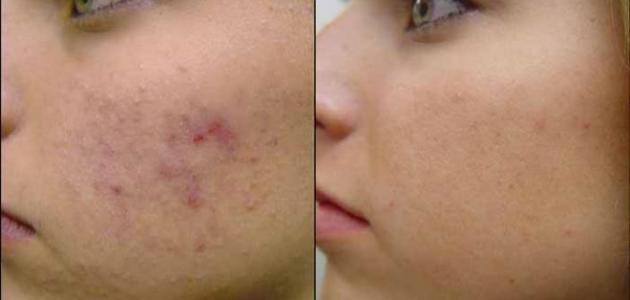
How long does it take to treat acne scars?
The duration of treatment for pimple marks varies according to the type of effect, its depth, and skin type. It also depends on the type of treatment used. In general, the red marks disappear within 4 to 8 weeks using simple topical creams or light treatments.
As for brown pigmentation, it takes from two to six months for treatment, especially if it results from severe infections or only lightening creams were used, while scars or deep pits may take from 3 to 9 months depending on the type of cosmetic treatment used, such as laser or filler. It should be noted that natural treatments take longer, while medical devices provide faster results but often require several sessions. Maintaining treatment, using sunscreen, and avoiding touching or tampering with pimples are all factors that speed up the result and reduce the chance of the effect returning.
Frequently asked questions
What is the best exfoliant for acne breakouts?
The best exfoliants for removing acne scars include those that contain alpha hydroxy acids (AHA), such as glycolic acid, or beta hydroxy acids (BHA), such as salicylic acid, as they help exfoliate the skin and stimulate cell regeneration.
Is two acres useful for causing pimples?
Yes, Tretinoin cream is effective in reducing the effects of pimples thanks to its ability to renew skin cells and regulate sebaceous secretions, but it needs to be used regularly and under medical supervision to avoid irritation or excessive dryness.
Do not let the effects of pimples affect your self-confidence. Start the journey of safe and effective treatment now with an elite group of dermatologists at Al Mousa Specialist Hospital. Book your appointment today and prepare for clear and radiant skin again.
المصادر:
How to Best Treat Acne Scars – healthline
What’s the best treatment for acne scars? – mayoclinic