
Cutting a finger nerve is one of the subtle injuries that greatly affect the sensation and movement of the hand. When this injury occurs, rapid medical intervention is necessary and important to avoid complications. In the following lines, with Al-Mousa Specialist Hospital, we will discuss together the methods of treating finger nerve cut, starting from diagnosis to surgery and rehabilitation, in order to ensure the best chance of recovery and restoring the function of the finger naturally.
Methods of treating finger nerve amputation
Methods of treating a finger nerve cut vary depending on the severity of the injury and the location of the cut. These methods include the following:
العلاج الجراحي
- Direct nerve restoration, in which the two ends of the cut nerve are sutured using tools under a surgical microscope, is an ideal option if the cut is recent and the distance between the two ends is short.
- Nerve grafting is in cases where the two ends of the nerve cannot be brought closer together and in which part of another nerve, for example from the leg, is taken to fill the gap.
- The use of a nerve conduction tube, whether artificial or biological, is used in some cases to direct nerve growth between the two parties.
Physical therapy
Physical therapy Rehabilitation: After surgery, the rehabilitation program begins, which includes exercises to improve finger movement and prevent stiffness, electrical stimulation to stimulate the nerve to grow, in addition to the exercises necessary to restore sensation and motor function.
Medical follow-up
Through periodic examinations, the progress of recovery is monitored, and sensation and movement are evaluated over time. In some cases, there is a need for repeat surgery if there is no improvement. It should be noted that the faster the diagnosis and treatment, the greater the chances of a full recovery.
Degrees of finger nerve transection
The degrees of finger nerve transection are classified according to the severity of the injury and its effect on the structure and function of the nerve, and include the following classifications:
- First degree: This is the mildest degree, and there is a temporary interruption in the conduction of nerve signals without interruption in the nerve itself. This degree is often caused by pressure or sprain, and improves automatically within days or weeks without the need for surgery.
- Second degree: In which the nerve axis is damaged while the outer covering remains intact, the patient loses sensation and movement, but the nerve can grow again. It also needs careful follow-up and heals spontaneously or needs supportive treatment.
- Third degree: In which both the axon “neuron” and the nerve sheath are partially damaged, and complete recovery often does not occur automatically, and surgical intervention is often recommended to repair the damage.
- Fourth degree: There is a complete tear in the nerve with damage to the surrounding tissue. It also requires surgery to reconnect or graft the nerve.
- Fifth degree: This involves a complete rupture of the nerve and all its coverings, and no healing can occur without careful surgical intervention.
Types of surgeries to treat finger nerve cuts
The types of surgeries to treat a severed finger nerve vary according to the type and degree of injury, and according to the distance between the two ends of the severed nerve. The following are the most prominent types of surgeries used:
- Direct suturing: This type of surgery is used if the cut is recent and the distance between the two ends of the nerve is short. With direct suturing, the doctor brings the two ends of the nerve closer together and sutures them with very fine threads under a surgical microscope. This is an ideal method for minor injuries and early injuries.
- Nerve grafting, which is an appropriate surgery when there is a gap between the two ends of the nerve, and it is not possible to bring them closer together without tension. In this procedure, part of another nerve in the body is taken, mostly from the saphenous nerve in the leg. It is used in cases of complete severing or chronic severing.
- The neural tube is used either artificially or biologically to guide nerve growth from one end to another, and is separated by relatively small gaps of less than 3 cm. It is an alternative to nerve grafting to reduce the harm that results from taking a nerve from one place to another.
- Surgical exploration is performed to evaluate the extent of damage in unclear cases, and determines whether the nerve is partially or completely cut. It can also be followed by any other type of surgery, depending on the result.
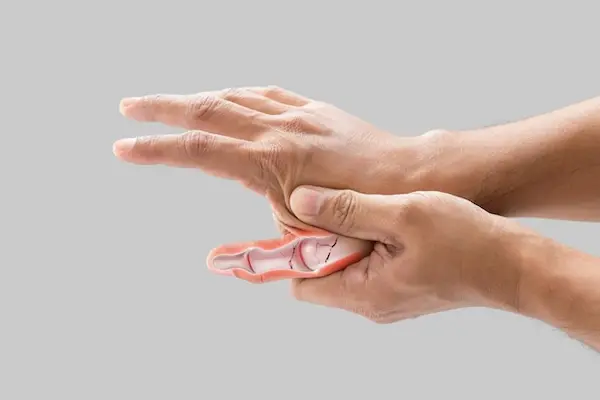
Symptoms of a finger nerve cut
Symptoms vary depending on the severity of the injury and the type of nerve affected, sensory, motor, or both, and include the following:
- Feeling of numbness or permanent numbness in the tip of the finger or part of it, and the inability to distinguish touch, heat or cold in the affected area.
- When the motor nerve is affected, the affected person loses the ability to move the finger or part of it normally.
- Feeling sharp pain or a stinging sensation, especially at the beginning of the injury or when touching the affected area.
- An open wound on the finger with or without bleeding, often accompanied by an immediate loss of sensation in the limb beyond the site of the cut.
- Non-healing of the wound or change in skin color.
- Weakness in response to stimuli such as pressure or pricking of the affected part of the finger.
Book your consultation now at Orthopedic center At Al Mousa Specialist Hospital
Ways to prevent nerve cut in the hand
To prevent cutting a nerve in the hand, you need to be careful and follow some safe procedures, the most prominent of which are:
- Wear protective gloves when using sharp tools or while working in dangerous environments such as workshops or kitchens.
- Be very careful when using knives, scissors, or any sharp instruments to avoid deep cuts.
- Ensure you know the correct way to use industrial devices or tools, in order to avoid injuries resulting from misuse.
- Sharp tools should be kept in places out of the reach of children.
- Organizing the work or home environment, reducing clutter, while providing sufficient space for movement, reduces the possibility of any sudden accidents.
- Use hand protectors when playing sports that expose the hand to injury, such as basketball or boxing.
- Superficial wounds that may develop should not be neglected, and medical follow-up is important when a deep injury is suspected.
Can a finger nerve cut be treated without surgery?
In some simple cases, a finger nerve cut can be treated without surgery, but this depends on the type and severity of the injury, and if the cut is partial or if the injury is temporary pressure on the nerve, the nerve may improve spontaneously over time without the need for surgical intervention. In these cases, it is recommended to rest, use a splint to protect the finger, and get physical therapy to stimulate healing and improve nerve function.
In cases of complete severing or severe rupture of the nerve, the nerve does not heal on its own, and surgical intervention in that case is necessary to reconnect the ends of the nerve and enable it to grow again. Therefore, an accurate diagnosis from a specialist doctor is the basis for determining whether the severing of the finger nerve can be treated without surgery, or if surgery is necessary to ensure the restoration of movement and sensation.
Frequently asked questions
What happens if a finger nerve is cut?
If the nerve in the finger is cut, the affected person loses the ability to feel the part that the nerve supplies, and movement can be affected if the nerve is responsible for muscle control, thus leading to numbness or permanent numbness, in addition to weakness in the movement of the finger or the inability to use it normally. The affected person can feel acute pain or a stinging sensation at the site of the injury. If the cut of the finger nerve is not treated, especially if the cut is complete, the problem worsens to the point of permanent loss of nerve function in the fingers.
How long does it take for the hand nerve to heal?
The healing time of the hand nerve depends on the details of the injury, the degree and type of treatment used. It should be noted that the nerve grows slowly at an approximate rate of about 1 mm per day. In simple cases, it does not require surgery, and it may improve within a few weeks to several months. In the event of a complete cut and surgery is performed, this takes a period ranging from 6 months to a year or more for complete recovery, depending on the length of the damaged nerve or the body’s response to treatment and rehabilitation. Regular follow-up and physical therapy also play an important role in accelerating recovery and improving results.
Is cutting a nerve harmful?
Yes, cutting a nerve is considered serious damage, as it leads to loss of sensation as well as movement in the area supplied by the affected nerve, and this is accompanied by disturbing symptoms such as numbness or pain that resembles an electric shock, if the finger nerve is not treated, especially if the cut site is completely, as the injury can turn into permanent weakness or partial paralysis of the finger, with the loss of the affected person’s ability to use the finger normally. Therefore, early diagnosis and rapid therapeutic intervention are considered necessary and important to reduce complications and restore nerve function.
Al Mousa Specialist Hospital is one of the most prominent medical institutions that have greatly proven its worth in the region. It has a medical staff of qualified and experienced people in all specialties. If you want to treat a finger nerve amputation as quickly as possible and with the best results, book your appointment to begin treatment according to your condition.
المصادر:
Nerve Injury – handcare
Peripheral nerve injuries – mayoclinic
