
The problem of spinal curvature is not only a matter of posture and shape, but rather it is a medical condition that greatly affects an individual’s life, and there is more than one type. In this article, we will review the types of spinal curvature, their causes, symptoms, and various treatment methods at Al Mousa Specialist Hospital.
What are the types of spinal curvature?
The spine appears naturally straight when viewed from the back, and slightly curved when viewed from the side. When the spine is curved, it takes on several other positions. Types of spinal curvature include the following:
- Scoliosis is a lateral curvature of the spine, in which the spine appears in the shape of the letter “S” or “C.” It is a three-dimensional curvature, which leads to a tilt of the shoulder and hip due to the tilt of the pelvis so that one side appears higher than the other. It results from a neuromuscular condition or birth defects.
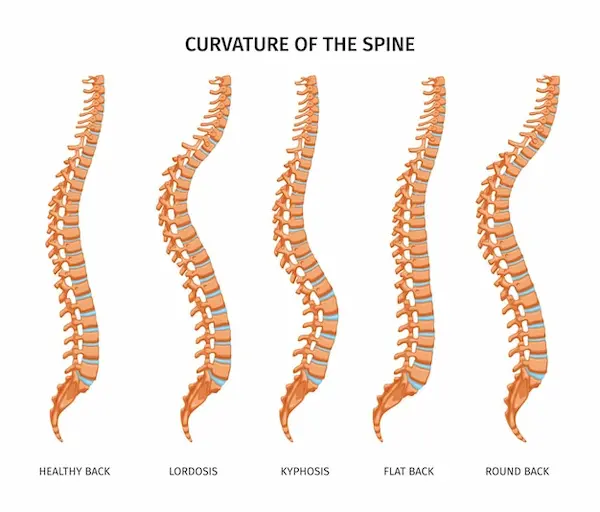
- Kyphosis is an excessive forward curvature of the upper spine in the chest area, resulting in a hump in the back.
- Lordosis is an excessive inward curvature of the lower lumbar spine, causing the abdomen and buttocks to protrude. It may be caused by obesity, pregnancy, osteoporosis, or degenerative disc disease.
Check out Rehabilitation of spinal cord injury patients
What are the symptoms of types of spinal curvature?
Types of spinal curvature vary in symptoms based on the shape and severity of the curvature. Symptoms of the types include the following:
- Appearance deformities include scoliosis, uneven shoulders or hips, with one side of the back or rib cage protruding more than the other, and a tilt of the body to one side.
- Appearance abnormalities include kyphosis, a rounded back or a hump in the back, with a noticeable curvature of the upper back, and a forward tilt of the head.
- Appearance deformities include lordosis, protrusion of the abdomen and buttocks, and excessive curvature of the lower part of the back, with the back arched inward excessively.
- Chronic pain in the back, especially in the upper part in kyphosis and in the lower part in lordosis, especially in severe cases.
- Back muscle stiffness.
- Feeling constantly tired and exhausted due to the extra effort the body makes to maintain balance.
- Difficulty breathing, in severe cases, due to the effect of the bend on the lungs.
Causes of spinal curvature
The causes of spinal curvature vary depending on the type of curvature, but in general, the most prominent causes of spinal curvature types include the following:
- Genetic factors.
- Certain neuromuscular diseases such as cerebral palsy, muscular dystrophy, or polio.
- Spinal deformities present from birth.
- Spinal injuries or tumors.
- Poor posture, especially when sitting or standing for long periods.
- Deformities in the growth of the spinal vertebrae.
- هشاشة العظام.
- arthritis.
- السمنة.
- Degenerative disc disease.
Get to know Congenital spinal deformities Its causes, types, and treatment methods
What is the normal curvature of the spine?
The natural spine is not straight, but rather contains natural curves that help distribute body weight and provide flexibility and movement. These natural curves are in:
- Internal curvature in the neck area.
- External curvature in the chest area.
- Internal curvature in the lower back.
- External curvature in the sacrum area.
When looking at the spine from the side, it should appear a moderate “S” shape, as these curves are balanced, but when looking at it from the front or back, the spine should appear straight.
How do I keep my back straight?
Maintaining a straight back requires constant awareness of the correct body position, whether sitting, standing or sleeping, and trying to strengthen the muscles supporting the spine. You can follow some of the following tips.
- While standing, stand straight, with weight distributed evenly on both feet, keep your shoulders relaxed and slightly pulled back, tighten your abdominal muscles to keep your back straight, keep your head up, and avoid looking down for long periods.
- While sitting, sit straight, with your back resting on the chair, make sure your feet are flat on the floor, do not sit for long periods, and take short breaks to stretch, avoid sitting on soft chairs that sink into them, and use hard chairs.
- While carrying objects, bend your knees when lifting heavy objects, avoid bending at the waist, and carry objects close to your body.
- While sleeping, use a supportive mattress and a suitable pillow, avoid sleeping on your stomach, and try to sleep on your back or side.
- Regularly do back and shoulder strengthening exercises and stretching exercises.
- Maintain an appropriate healthy weight
- Avoid carrying heavy bags on one shoulder.
- Choose comfortable shoes, because high-heeled shoes can affect your back posture.
Treatment of types of spinal curvature
Treatment methods for different types of spinal curvature vary and depend on several factors, including:
- Bending type.
- The intensity of the bend.
- Patient's age.
- Cause of bending.
- The presence of symptoms such as pain, difficulty breathing, or neurological problems.
Book your consultation now at Orthopedic center مستشفى الموسى التخصصي.
Different treatment methods for spinal curvature include the following:
- Observation and follow-up: In minor cases that do not cause symptoms and do not develop quickly, especially in children and adolescents during the growth period, observation is carried out through regular examinations and X-rays to monitor the development of the curvature.
- Non-surgical treatment, such as bracing, for children and adolescents who are still growing and have moderate curvature to prevent the curvature from worsening rather than completely correcting it.
- Physical therapy and exercises, to strengthen the back and abdominal muscles to improve support for the spine.
- Pain relievers and anti-inflammatories, to relieve pain and discomfort associated with spinal curvature.
- Spinal injection, using steroid injections or local anesthetic to relieve pain resulting from pressure on the nerves.
- Surgical treatment, in severe cases of spinal curvature that exceeds a certain degree and continues to deteriorate despite conservative treatment, and causes severe pain or problems with breathing or nerve function, includes spinal fusion, implantation of extension rods, vertebral body ligation, and laminectomy.
When does the back curvature stop?
The curvature of the back stops, or more precisely, its progress and increase in most cases stops after the end of the growth period at the age of 16 to 18, that is, after puberty, or when the cause behind it stops, depending on the types of curvature of the spine.
In types resulting from osteoporosis, the curvature may continue to increase until the matter is treated. In cases resulting from obesity or pregnancy, posture can be improved and the curvature reduced through weight loss and exercise.
At the conclusion of this article, we emphasize the importance of understanding the different types of spinal curvature and methods of treating them. Early diagnosis and appropriate treatment can prevent the worsening of these conditions and improve the quality of life of those affected.
If you suffer from any of the symptoms of spinal curvature, it is necessary to consult a doctor specializing in orthopedic or spine surgery, and Al Mousa Specialist Hospital offers specialized services to treat spinal curvature, as part of a wide range of orthopedic and spine surgery services provided by the hospital, with a specialized medical team of orthopedic and spine surgeons with experience in diagnosing and treating various types of spinal curvatures, including scoliosis, kyphosis, and lordosis.
To obtain more information about treating spinal curvature at Al Mousa Specialist Hospital, you can visit the hospital’s website or call the center directly on our numbers listed on the website.
Sources and references
Types of Spine Curvature Disorders – spineaz
Spinal curves – medlineplus
