
Venous insufficiency is a health problem resulting from poor blood flow in the veins from the extremities (especially the legs) towards the heart.
Almoosa Health Group offers you this article to find a simplified explanation of the causes and symptoms of varicose veins, methods of diagnosing and treating it, in addition to the most important tips for preventing it and answering some common questions.
What is venous insufficiency?
Venous reflux disease means the inability of the veins to return blood to the heart with the required efficiency. The common name for the disease is varicose veins, varicose veins, or venous reflux; Venous Insufficiency; CVI). Veins have one-way valves whose function is to prevent blood from returning in the opposite direction.
Venous reflux often occurs chronically in the legs due to the influence of gravity and distance from the heart.
Types of chronic venous insufficiency
Venous insufficiency can be classified according to the affected veins in the legs. The most important of which are:
- Deep veins: Large veins located deep in the leg between the muscles, transport most of the blood from the legs to the heart.
- Superficial veins: Veins close to the surface of the skin and can sometimes be seen when they are dilated (such as varicose veins visible under the skin).
- Perforating veins: Or the ligament, which are veins that connect the deep and superficial veins to allow blood to pass between the two systems.
Varicose veins may occur in the superficial veins only (causing visible varicose veins), in the deeper veins, or in both depending on the cause and severity of the condition.
Learn about: Cardiovascular Center
Causes of venous insufficiency
Varicose veins occur as a result of multiple factors that affect the integrity of the veins and their valves. the following:
- Previous deep vein thrombosis (DVT): Blood clot in the deep veins of the leg is the most common cause of chronic venous reflux, as the clot causes damage to the valves.
- Chronic varicose veins: The chronic presence of varicose veins in the legs weakens the efficiency of the venous valves and may lead to venous insufficiency over time.
- Lack of movement (sitting or standing for a long time): A sedentary lifestyle, such as sitting at a desk all day or standing for hours, hinders the return of blood and contributes to its stasis in the veins.
- Obesity and pregnancy: Excess weight, as well as pregnancy (especially frequent), increase pressure on the veins of the legs and impair venous blood flow.
- Aging and genetic predisposition: With age or a family history of vein diseases (such as varicose veins), the walls of the veins and their valves weaken, and the possibility of venous reflux increases.
- Previous leg injuries or surgeries: A severe leg injury or surgery may damage the veins or affect normal blood flow, leading to venous insufficiency in the affected area.
- Smoking: Smoking negatively affects the health of blood vessels and increases blood viscosity and the risk of venous clots.
- Other diseases and conditions: Some health problems increase the risk of clots and varicose veins, such as hereditary blood clotting disorders or cancer.
What are the symptoms of venous insufficiency in the leg?
Varicose veins in the legs lead to a group of characteristic symptoms and signs as a result of blood congestion and poor venous circulation. But in general Include:
- Swelling (edema) in the ankles and feet: Swelling or edema increases toward the end of the day or after prolonged standing, and subsides when the legs are raised.
- Pain or heaviness in the legs: The patient complains of a feeling of fatigue or heaviness in the leg muscles, which increases when standing or sitting for a long time and decreases with rest and raising the feet.
- Nocturnal muscle cramps: Especially painful cramps in the leg muscles during the night.
- Skin changes: The skin of the leg may become dry or itchy, with a dark brown color, especially around the ankle.
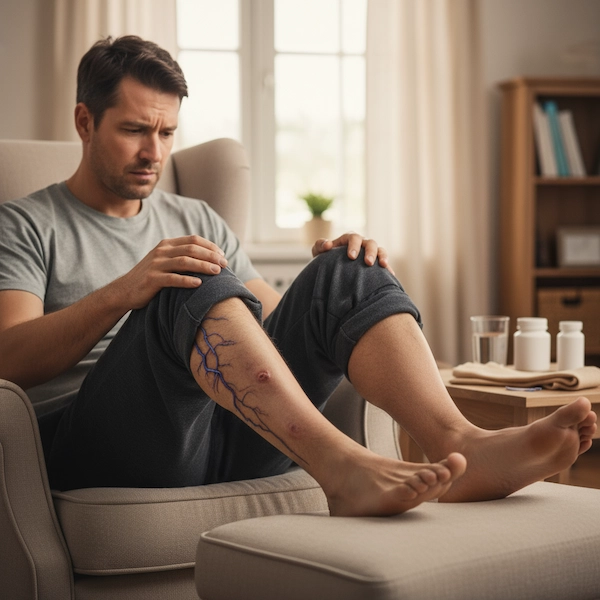
- Protrusion of superficial veins (varicose veins): The appearance of swollen, twisted veins under the skin in the legs (often behind the leg or knee), which is a common sign of varicose veins.
- Chronic skin ulcers: In advanced cases, painful open sores can form around the ankle area (venous ulcers) due to lack of blood supply to the skin and non-healing of the wounds.
Over time, symptoms may worsen if the cause is not treated.
Complications of venous insufficiency
Failure to treat chronic venous reflux and neglecting it for a long period may result in the development of more serious problems. The most important of them are:
- Chronic leg ulcers: Persistently high venous pressure prevents minor wounds from healing, and chronic open ulcers form (especially near the ankles) that may become inflamed and cause severe pain.
- Skin and tissue infections: Fluid accumulation and poor circulation can lead to cellulitis (a bacterial infection of the skin) in the affected leg, causing redness, heat, and pain in the affected area.
- Bleeding from varicose veins: Dilated superficial veins under the skin become susceptible to bleeding with the slightest injury or scratch due to the high pressure inside them and the weakness of their walls.
- Formation of new clots: Venous blood stasis may contribute to the formation of blood clots in the veins.
- Pulmonary embolism (pulmonary embolism): In rare cases, a venous clot can travel from the leg into the pulmonary circulation, causing a dangerous blockage of a lung artery.

How to diagnose venous insufficiency
Diagnosis of varicose veins depends on clinical evaluation and simple imaging examinations to ensure the efficiency of the veins and valves. One of the common methods of diagnosis The following:
- Clinical examination: The doctor examines the legs and notes swelling, change in skin color, and the presence of varicose veins or ulcers.
- Ultrasound imaging (Doppler): A non-invasive examination that is essential for diagnosing vein diseases.
In specialized centers such as Almoosa Hospitals Group, these examinations are performed with the latest equipment and by experts in vascular medicine to ensure accurate diagnosis.
What is the treatment for venous insufficiency in the leg?
Depending on the severity and cause of the condition, your doctor may recommend one or a combination of the following treatment options Among them:
Conservative treatment
It includes simple procedures to improve venous circulation and relieve symptoms, Especially in the early stages the next :
- Lifting legs: It is recommended that the patient lie down and raise his legs to a level higher than the heart several times a day (by placing a number of pillows under the ankles with the knee bent) to drain the accumulated blood and reduce swelling.
- Wear compression stockings: Elastic medical stockings compress the leg and help support the veins and push blood up.
- Regular exercise and weight loss: Walking and daily leg exercises help activate the leg muscles and improve blood circulation. Losing excess weight also contributes to reducing pressure on the veins of the legs and improving the efficiency of blood circulation.
- Avoid sitting or standing for long periods: Frequent movement during the day is recommended.
Drug treatment
Medications are used to help treat the causes and complications of venous reflux and improve blood flow. It is one of the most important medications that a doctor may prescribe The following:
- Antibiotics: In the case of skin ulcers or leg dermatitis, antibiotics help treat the infection, prevent the spread of infection, and speed up the healing of the ulcers.
- Diuretics: It works to reduce excess fluid retention in the body by increasing urine excretion, which reduces swelling of the legs.
- Anticoagulants and blood thinners: Such as heparin or warfarin, etc., to prevent the formation of new clots (especially for those with a history of clots).
Interventional (non-surgical) procedures
When there are damaged superficial veins or prominent varicose veins that do not respond to conservative treatment, modern medical procedures can be used that do not require major surgery. like:
- Sclerotherapy:
Injecting a special chemical into the affected superficial veins (such as varicose veins), which leads to the vein wall becoming fibrous and gradually closing.
- Laser or thermal frequency therapy:
Two similar techniques aim to close damaged large veins from the inside. Local anesthesiaThen, thermal energy is used to permanently close the damaged vein.
Surgical treatment
In advanced cases that do not respond to other treatments, doctors at our hospitals may resort to surgery to remove or repair damaged veins; One of these surgical techniques the next :
- Ligation & Stripping Surgery:
A traditional surgical procedure in which the affected vein is tied, cut, and then partially or completely withdrawn through small surgical incisions.
- Minimally invasive procedures:
It involves using an endoscope or very small surgical incisions to remove affected superficial veins or close damaged perforator veins without major surgery (such as endoscopic closure of abnormal perforating veins).
Frequently asked questions about venous insufficiency
Can walking help treat venous insufficiency?
Yes, walking activates the leg muscles that push blood towards the heart, which improves blood circulation and relieves the symptoms of venous reflux.
Does venous insufficiency cause shortness of breath?
Untreated varicose veins may cause clots that travel to the lungs, causing a pulmonary embolism that leads to shortness of breath and chest pain.
Does drinking more water help treat venous insufficiency?
Adequate hydration maintains normal blood viscosity and improves blood flow, which reduces swelling and helps reduce symptoms of venous reflux.
Is chronic venous insufficiency dangerous?
It is usually not dangerous, but in advanced stages it may cause skin infections, chronic ulcers, or increase the risk of clots.

Conclusion
Understanding venous insufficiency and dealing with it in a timely manner will prevent its complications and give you a more comfortable and healthier life. Almoosa Hospitals Group, We are keen to provide specialized care under the supervision of doctors and vascular experts who possess the latest diagnostic and therapeutic technologies.
Do not ignore the symptoms, early treatment makes the difference.
Read also about : Varicose veins treatment program
